by A57SC / Is the Brondeel Expedition the key to the story of the Belg. Coupé ?- Part 3: Stanleyville
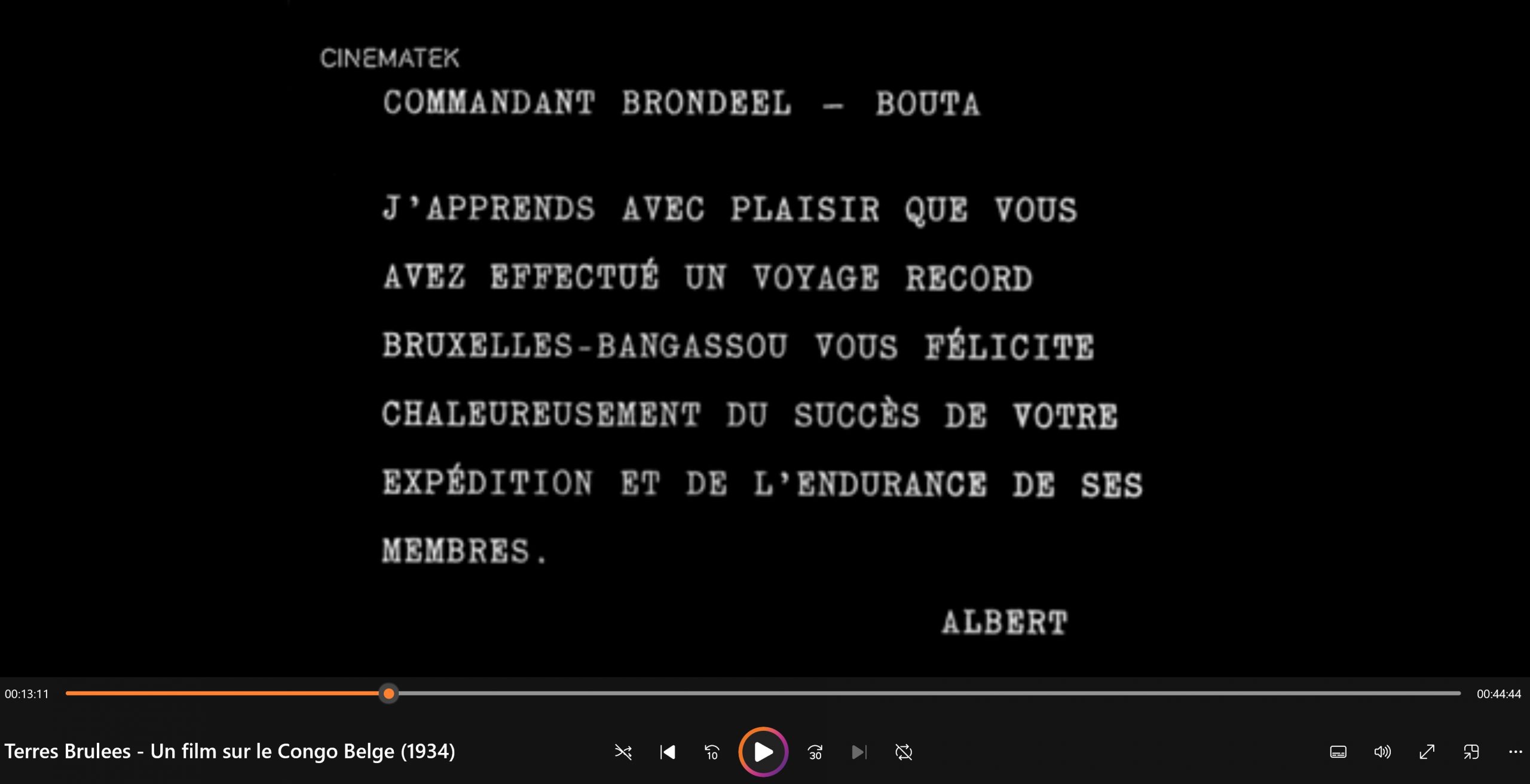
Mr. Paul Neuray starts the chapter on Stanleyville (currently: Kisangani) with a statement that the city’s nickname “Stan” was more popular than its proper name. Stanleyville was the capital of the eastern province. Mr. Neuray describes it as “worthy of its great governors” and “ready to grow even bigger”. However, he notes that the expedition found “Stan” in the state of stagnancy caused by a crisis and by administrative reorganization. The sights described in the article include well-defined avenues, charming villas with gardens full of flowers, cemented tennis courts becoming noisy just after the end of the excessive heat and a cannon of a great caliber which was a war trophy from the battle of Tabora. Among the signs of crisis one could notice smaller number of customers in luxury stores and an empty high-class hotel. The sweet and sour landscape is completed by a picture of a lumberjack from Ardennes holding his axe next to a wild boar. According to Mr. Neuray, the river Congo seemed to be particularly impressive near Stanleyville. The expedition members could see a stone stele dedicated to the memory of lieutenant Dubois who died in that place on the 26th of August 1886. It inspired a mention about a Scottish officer, Mr. Walter Deane who “had really tried to save” Mr. Dubois. Mr. Neuray dedicates some paragraphs to the market of “Stan”- filled by a noisy crowd looking at “all containers of the world”- from a bowl made of dried soil to an ornate basin. The products could be described as countless and hard to describe, bargains- as extreme. Mr. Neuray noticed large amounts of salt, some elegant people walking around and a stolid police agent waiting for a moment when his intervention would be needed. In an Arab village nearby Mr. Neuray noticed people wearing white, thin houppelandes, lingering on the doorsteps of comfortable huts. The leader lived in a two-story house. A tricolor flag hovered in its window. As the expedition moved closer to the Wagenia Falls, the river Congo seemed to foam and roar harder. On its banks and in the center of its riverbed there were scaffolds made of barely squared logs. An excited crowd surrounded a place where the canoes were launched. The Wagenias of Binakulu would reveal their fish traps and Messrs. Dekeukeleire and Rents were ready to document that. At first, things were happening slowly, with canoes approaching the middle of the river. The movement of the paddles accelerated. The current of the river required “a superhuman effort”. Mr. Neuray states that initially the canoeists “fought and won”. Then the water became stronger and carried them away. Tireless, they went back upstream. The river seemed even more dangerous as it was fringed with foam. However, the Wagenias reached their destination. Having been already impressed by the strength of the indigenous people, the expedition members saw some other fishers jumping into the water and overcoming the power of the current with a flawless crawl to retrieve the fish traps. A triumphant reveal of a “kisengesenge” (a fish called “captain”) was the climax of the scene. Mr. Neuray describes the “captain” as an animal with a dreadful jaw which should strike terror to smaller organisms. The action-packed story about the fights against the river is followed by a paragraph about the chants of the fishers. The journalist describes the initial sound as “monotonous chant that could pinch one’s innards”. “Then, the voices swelled into a vigorous crescendo”- he adds. As the tone got lower, the journalist got an impression of hearing a prayer to the deities of the river. He describes the chant as a homage to the life-giving water. Then, he proceeds to sounds and smells of nature itself. From the sound of thunder to the clouds of foam, probably of the Tshopo falls. The river Tshopo is a tributary of the river Congo. Mr. Neuray describes the Tshopo falls as “captivating spectacle”. “No indigenous people, just nature”- he adds. “Contemplating a mass of water which was falling to dust at their feet” took the expedition members some hours. They found the view really beautiful. Then, they went on from watching nature to experiencing civilization as Stanleyville was the center of Congolese education. A professional school created by Marist brothers was shown to them by a proud missionary. Mr. Neuray describes the visit as too brief, yet showing what can be achieved by people who work with energy and dedication. A cathedral, placed on top of high stairs, was dominating a valley bordered by palm trees “erected like masts”. Mr. Neuray claims having seen “proofs of Belgian colonial virtues” at every step. He adds that Stanleyville had asked for nothing but development and that the city’s full growth was stopped by the crisis. Yet, the expectations kept being high. Mr. Neuray illustrates that with a scene in “a model hospital” to which the rescuers brought an indigenous person with wounds caused by members of a secret society called Anyoto. Anyoto who are known as “leopard men” were attacking people to murder them and leave traces which would give the impression of a leopard attack. The victim seen by the expedition members was almost bled dry. Mr. Neuray was convinced that the person would die the next day. On the 13th of February the Expedition members received a telegram from the King Albert. The correspondence was as follows:
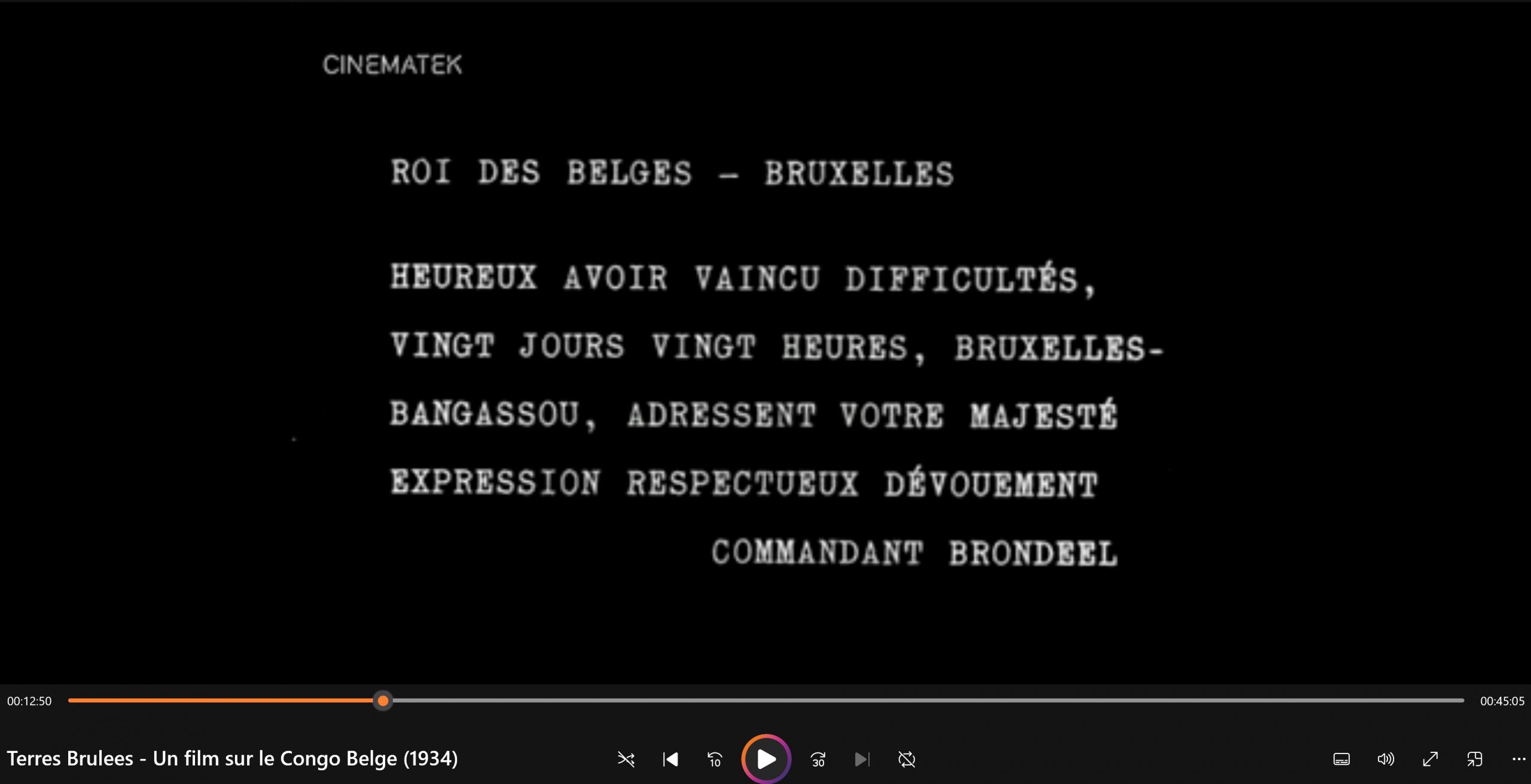
(the telegram sent by Commandant Brondeel from Bangassou)(the telegram from the King, received by the expedition members in Stanleyville)
Four days later the king died, but Mr. Brondeel and his colleagues learned about that after a week.
Andrzej Szczodrak
Many thanks to: Uwe, Ante and Valentin Mrs. Viviane De Jaeger Mr. Jean-Luc Ernst
The Goyvaerts family Mr. Marc Duhoux Mr. Michel Jacquemart, Dr. Pierre Jacquemart Mr. Marc René Crahay Mr. Rob Van den Broeck Mrs. Françoise Quatrus Mr. Paul Grant
by A57SC / Is the Brondeel Expedition the key to the story of the Belg. Coupé ?- Part 2: In Bangassou and in Congo
The expedition members deserved a rest, so they stayed in Bangassou for a day. They met missionaries- Fathers of the Holy Spirit whose vicariat was in Bangi. The mission was about 50 years old. Its station in Bangassou was led by Father Fayet who had served three years in army and experienced four years of war. All the resources of the station were at disposition of Mr. Brondeel and his colleagues. Moreover, the administrator named Darré “welcomed them the best possible way”. A Belgian merchant named Van Doorslaer provided rooms and beds for those who could not be hosted by the mission. Mr. Brondeel sent a telegram to the King: “Happy for having overcame the difficulties, twenty days, twenty hours, Brussels-Bangassou. Sending your majesty the expression of respectful devotion”. Mr. Neuray’s first memory from Congo are singing paddlers and omnipresence of tam-tams. The journalist recalls that the expedition members felt excitement with “the African extension of their homeland” mixed with fear of disappointment. They noticed a neat village at the beginning of their long travel through the edge of the Congo Rainforest. Mr. Neuray describes the forest as “born on the Belgian shore with soil, water and the Sun as its parents”. He says that the forest used to rule the world of animals and men but the things changed when the Europeans arrived. They replaced trails with roads, built cities on enlarged clearings. In the words of Mr. Neuray “The forest seemed to be defeated but it was ready to take its revenge” with its diffuse and cloudy light and with its overwhelming humid heat. The journalist compares the woodland to a cathedral in which tree peaks serve as dome while trunks, branches and leafs form the walls that welcome rays of light as golden ornaments. When they reached another village, they saw a pallet on the ground and “myriads” of colorful butterflies. The insects crashing into the windscreen of the car made Mr. Neuray think about nature as a field of constant fight. He saw indigenous people as those who combine two attitudes: contemplating the combat with resignation and wondering what to do. Arriving to Monga, the expedition members came across the first Belgian customs post since Alger. They were grateful to “kind Mr. Devos who reduced the formalities to minimum”. They crossed the river Bili with a ferry looking at the foam around the rocks and listening to thunder-like sounds. Then, they arrived to Bondo to see the houses of the mission with their high roofs, the fathers using a little motorcycle and the river Uélé which gave the name to the district. Through a rail crossing they entered the domain of Vicicongo. The railroad was parallel to their route. They reached a stop marked by a white box with square walls. There was a bridge, dedicated only for trains. Mr. Brondeel and his colleagues took two tours of the Likati river with two ferries. At crossroads near Bifur the road and the railroad, coming from Bondo, split into two paths: to Buta and to Aketi. Aketi was an industrial and commercial center with a port, a railway station, warehouses and factories. Having taken the Aketi direction, the expedition members made a stop. Mr. Neuray describes the place of their rest as located “at the feet of a giant of a forest”. He recalls the colorful peak sparkling with colors of twirling parakeets, and the dimness making this “dappled symphony” more dazzling. The stop of the caravan attracted curiosity of the indigenous people. However, Mr. Neuray describes the Congolese as mistrustful and not as affectionate as the inhabitants of the French-governed regions. He even quotes one of the expedition members who said “They are just like Belgian peasants”. Another impression comes from the reactions to an albino. An initial confusion of Mr. Brondeel’s colleagues is contrasted with a deep respect of his compatriots. On the road to Buta, the expedition members had some near-crashes with birds. Then, they witnessed a sentinel presenting arms. Mr. Neuray describes the scene with the words “a flash of the bayonet lit the night”. As Mr. Brondeel and his people arrived to the Hôtel des Vicicongo (i.e. a hotel of Congo railways), the auditorium was as bright as in the daylight. After the hardships of travel the comfort of the hotel seemed exquisite. The Uélé district was governed by commissary named Pierre Bougnet described by Mr. Neuray as “active and friendly”. Buta was the capital of the district. It used to be a hub for economic activity before being touched by a crisis. Mr. Neuray describes the city as dying, with “an atmosphere of malaise that seems to weigh on the banks of Rubi”. However, he remarks that there are people who refuse to despair and who fight the bad luck with tenfold energy. Some major economic challenges for Buta could have been linked to the perspective of moving of the main Vicicongo roadside workshop from Buta to Isiro. Mr. Neuray notes that the management of the railway company was rather reluctant to perform the operation. However, the decision became necessary because of the processes resulting from the extension of the line towards east. Mr. Neuray points out that cotton and coffee farming would stay in Buta and that the station would see loads of these products on trains departing towards Aketi and Matadi. In Buta the expedition mechanics made a revision of the vehicles “with their own means and with the means placed at their disposition by Mr. Wery, the boss of exploitation of the central Vicicongo workshop”. It was needed as “the material” had covered 9000 kilometers. While the “technicians” worked on the vehicles, others went on tour of Buta. They saw a Premonstratensian mission erecting a church bell that towered over a school and an orphanage. The city had also two banks (Banque du Congo Belge and Banque Belge d’Afrique) and many well-endowed shops. Another place visited by the expedition members was the military camp led by commandant Van Pee who organized a parade to honor Mr. Brondeel and his men. According to Mr. Neuray, commandant Van Pee was really proud of his Azandé (Zandé) soldiers. Having been told that the trucks had come from Belgium, the soldiers approached the crew with fearful curiosity. Mr. Neuray describes the camp as closed environment with separate barracks for households and for single people, kitchens, workshops (among which there was a carriage repair workshop) and an office “that was not leaving any paperwork to Europe”. While visiting the facilities of the camp, Mr. Brondeel and his colleagues were surrounded by a group of noisy kids. The sound of a trumpet and a salute to the flag marked a change of the guard. Mr. Neuray asked himself why weren’t the African soldiers of Belgium more numerous. “Maybe some day we will need them”- he notes. The next chapter of Mr. Neuray’s reportage focuses on the Uélé district. The author starts with describing the region as “disadvantaged” from that point of view, despite “very extensive road network” and constantly developed railways. The article is full of numbers. At the beginning, it informs about the increase of produced cotton- from 17300 tons in 1932 to 21700 in 1933. The predictions for 1934 were at 31000 tons. As for the coffee, Mr. Neuray notes the rise from 996 tons in 1932 to 2136 tons in 1933. The numbers for palm oil are 575 tons (1932) and 1312 tons (1933). The amount of gold, dug by companies named “Colomines”, “Sokeno” and “Forminière” rose from 337 to 386 kilograms. Another mentioned material is ivory. Mr. Neuray remarks that there had been a change in the export laws, but in 1933 the production reached 2967 kilograms, compared to 2245 in 1932. He notes that the statistics of Vicicongo (the railway) and of Unatra (Union Nationale des Transports Fluviaux, a government-controlled company which provided river transport services) indicated the increase both in import and in export. This remark is supported by the numbers reflecting the traffic in the port of Aketi. Then, Mr. Neuray describes the road network of the region. There were 1176 of main routes, 2753 of secondary routes and 1912 of private routes. Such infrastructure was used by the drivers of 127 passenger cars and 270 trucks. A reference to « La Croisière noire » (“The Black Journey”), which reached Buta on the 6th of march 1925, helps Mr. Neuray to describe the development of the network. At the time when Citroën organized that expedition, the only road which allowed car traffic was the royal route Congo-Nile. Then, the infrastructure was developed- from breaches in the forest to a road network clearly visible on the maps. However, the roads, which were perfect in the beginning, experienced degradation due to traffic, tornadoes and lack of proper maintenance. The railway network, with a gauge of 600 centimeters, was operated by a company named Société des Chemins de Fer Vicinaux du Congo (Company of Minor Railways of the Congo). The company was known under a nickname “Vicicongo”. Mr. Neuray estimates the importance of railways as equal to the road network. He describes two main branches: Aketi-Mawa and Bondo-Aketi. The first of them was 431 kilometers long in early 1934. It was to be extended towards Isiro and reach the length of 560 kilometers in April that year. It had also a fork towards Titule. Mr. Neuray compliments the plan according to which the network was constructed and its execution. In the opinion of the journalist, the elements like bridges, stations and repair workshops had been built properly and in well-chosen places. Another sector of Congolese economy circumscribed by the expedition member is the banking industry. Mr. Neuray emphasizes its role in export financing. He begins with La Banque Belge d’Afrique which had an important office in Buta. The journalist writes that the institution had had a big impact on the economical development of the Uélé district. Mr. Neuray expresses an opinion that the credits provided by the bank allowed the planters to focus on the production and on the development of the plantation. As an example, he links the improvement of the quality of the Robusta coffee with the larger number of bank deposit operations involved in the trade of this type of coffee beans. He refers to the fact that Robusta was (and still is) slightly less rated than Arabica, describing Congolese Robusta as not actually inferior to the more renowned species. He finds it better than many South-American coffees. In the next paragraph, he says that Robusta is one of two main sources of Uélé’s wealth, along with cotton. 1934 marked the fifteenth anniversary of introduction of cotton in the region (it was the year of fifteenth cotton harvest campaign). Mr. Neuray highlights the fact that all of about 300000 planters were indigenous. They had learned the whole process: weeding, threshing, harvesting and sun exposure. So, it was possible to see cotton flocks spread out on the raised racks, losing their moisture in the sun. Mr. Neuray describes the cotton picking as “one of the most pleasant spectacles” as men, women and children put the raw cotton in the baskets that they had made with their own hands. They could bring it home as a light burden, placed on their heads. So, they were walking in long processions along the roads to bring the harvest to their villages. The expedition members have passed or crossed paths with many of these people, noticing especially the girls. A honk would be frightening for some of them and cause laugh with others. The expedition members wondered why did the indigenous people not walk side by side. They said that there had always been someone with soft feet. In his summary of cotton market Mr. Neuray informs that the farmers, who always cultivated some food crops alongside cotton, sold the raw cotton as grains or flock for 60 centimes per kilogram. In 1930 the crop had costed 1 franc 20 centimes in Bas-Uélé and 1 franc 10 centimes in Haut-Uélé. Three kilograms of raw cotton were needed to make one kilogram of ginned cotton. Therefore, Mr. Neuray calculates the real price of a kilogram of cotton to 1 franc 80 centimes and a revenue to around 70 francs a year. The revenue allowed to pay a tax of 25 francs and keep 45 francs for other expenses. Except money, the farmers received 10 grams of salt for each kilogram of cotton. The chiefs asked for a bonus of two centimes per a kilogram of cotton harvested during their chiefdom. Some of them could earn about 23000 francs that way. Every two years 6000 tonnes of breeding seeds (3000 tonnes per year) were distributed for free in breeding stations in Lakulu, Poko, Ibambi, Bafuka. They came from the selection station placed in Bambeka. The two-year cycle was chosen despite the fact that cotton was sown yearly. The cotton market could have been really attractive as companies had given tools to the farmers, spending about 3 millions. Mr. Neuray writes about a “monopoly” for buying reserved to companies (as there was more than one, it should be called “Oligopoly”): • Cotongo (Coton du Congo) • N.A.H.V (Nieuwe Afrikaanse Handels-Vennootschap) • B.G.K or “Belgika” • Socobom • Cotonepo. He adds that the price of the Congese cotton was 20 to 30 centimes higher than of the material imported from America (for medium staple cotton: >26 mm and ˂ 28 mm), concluding that it was no longer needed to enforce the Congese cotton on the Belgian market. The product earned a position which could not be questioned. Mr. Neuray calls it “justice”. The next article begins with an information that the caravan had covered 345 kilometers from Buta to Stanleyville in less than 8 hours thanks to an excellent road which was only cut by numerous and inevitable culverts. They needed five ferries, on rivers Rubi, Tele, Aruwimi, Lindi and Tschopo. The last three of these rivers were tributaries of the river Congo. In front of the locality of Banalia, Aruwimi flowed fast, as a large stream. It was divided into two branches by an isle formed by shiny rocks. On the right and on the left of the road there were forest reserves- about 3 kilometers long and about 500 meters deep. The expedition members reached the « Réserve forestière Prince Léopold » (located on the 29th kilometer of the road Stanleyville-Buta, established by Order P.O. no 23 from the 13th of April 1927). Mr. Neuray describes it as a place where the forest “becomes more dense, more beautiful and more bushy”. He suggests that the “magnificent spectacle of the equatorial forest- always identical, however amazing” would be reflected by a film developed in the rhythm of the expedition. As the film would only reflect the sights, the journalist recalls the feelings coming from other senses “disgusting atmosphere of a glass house”, “unhealthy humidity caused by miasmas of dead plants and animals” and “crushing silence interrupted only by the movement of the caravan”. However, during the night the banks of streams woke up with “thousand noises” in a “dissonant concert of a crazy surrealist musician”. Mr. Neuray recalls not having seen anybody near the road. The only traces of life were some elephant droppings and a fallen tree. Despite the lack of people, the way was cleaned and the tree lay on the verge. The journalist notes that the expedition members would travel some more time without any meeting with the Congolese. However, the empty road led them to a populous city- Stanleyville.
Andrzej Szczodrak
Many thanks to: Uwe, Ante and Valentin Mrs. Viviane De Jaeger Mr. Jean-Luc Ernst
The Goyvaerts family Mr. Marc Duhoux Mr. Michel Jacquemart, Dr. Pierre Jacquemart Mr. Marc René Crahay Mr. Rob Van den Broeck Mrs. Françoise Quatrus Mr. Paul Grant