Mr. Paul Neuray starts the chapter on Stanleyville (currently: Kisangani) with a statement that the city’s nickname “Stan” was more popular than its proper name. Stanleyville was the capital of the eastern province. Mr. Neuray describes it as “worthy of its great governors” and “ready to grow even bigger”. However, he notes that the expedition found “Stan” in the state of stagnancy caused by a crisis and by administrative reorganization. The sights described in the article include well-defined avenues, charming villas with gardens full of flowers, cemented tennis courts becoming noisy just after the end of the excessive heat and a cannon of a great caliber which was a war trophy from the battle of Tabora. Among the signs of crisis one could notice smaller number of customers in luxury stores and an empty high-class hotel. The sweet and sour landscape is completed by a picture of a lumberjack from Ardennes holding his axe next to a wild boar. According to Mr. Neuray, the river Congo seemed to be particularly impressive near Stanleyville. The expedition members could see a stone stele dedicated to the memory of lieutenant Dubois who died in that place on the 26th of August 1886. It inspired a mention about a Scottish officer, Mr. Walter Deane who “had really tried to save” Mr. Dubois. Mr. Neuray dedicates some paragraphs to the market of “Stan”- filled by a noisy crowd looking at “all containers of the world”- from a bowl made of dried soil to an ornate basin. The products could be described as countless and hard to describe, bargains- as extreme. Mr. Neuray noticed large amounts of salt, some elegant people walking around and a stolid police agent waiting for a moment when his intervention would be needed. In an Arab village nearby Mr. Neuray noticed people wearing white, thin houppelandes, lingering on the doorsteps of comfortable huts. The leader lived in a two-story house. A tricolor flag hovered in its window. As the expedition moved closer to the Wagenia Falls, the river Congo seemed to foam and roar harder. On its banks and in the center of its riverbed there were scaffolds made of barely squared logs. An excited crowd surrounded a place where the canoes were launched. The Wagenias of Binakulu would reveal their fish traps and Messrs. Dekeukeleire and Rents were ready to document that. At first, things were happening slowly, with canoes approaching the middle of the river. The movement of the paddles accelerated. The current of the river required “a superhuman effort”. Mr. Neuray states that initially the canoeists “fought and won”. Then the water became stronger and carried them away. Tireless, they went back upstream. The river seemed even more dangerous as it was fringed with foam. However, the Wagenias reached their destination. Having been already impressed by the strength of the indigenous people, the expedition members saw some other fishers jumping into the water and overcoming the power of the current with a flawless crawl to retrieve the fish traps. A triumphant reveal of a “kisengesenge” (a fish called “captain”) was the climax of the scene. Mr. Neuray describes the “captain” as an animal with a dreadful jaw which should strike terror to smaller organisms. The action-packed story about the fights against the river is followed by a paragraph about the chants of the fishers. The journalist describes the initial sound as “monotonous chant that could pinch one’s innards”. “Then, the voices swelled into a vigorous crescendo”- he adds. As the tone got lower, the journalist got an impression of hearing a prayer to the deities of the river. He describes the chant as a homage to the life-giving water. Then, he proceeds to sounds and smells of nature itself. From the sound of thunder to the clouds of foam, probably of the Tshopo falls. The river Tshopo is a tributary of the river Congo. Mr. Neuray describes the Tshopo falls as “captivating spectacle”. “No indigenous people, just nature”- he adds. “Contemplating a mass of water which was falling to dust at their feet” took the expedition members some hours. They found the view really beautiful. Then, they went on from watching nature to experiencing civilization as Stanleyville was the center of Congolese education. A professional school created by Marist brothers was shown to them by a proud missionary. Mr. Neuray describes the visit as too brief, yet showing what can be achieved by people who work with energy and dedication. A cathedral, placed on top of high stairs, was dominating a valley bordered by palm trees “erected like masts”. Mr. Neuray claims having seen “proofs of Belgian colonial virtues” at every step. He adds that Stanleyville had asked for nothing but development and that the city’s full growth was stopped by the crisis. Yet, the expectations kept being high. Mr. Neuray illustrates that with a scene in “a model hospital” to which the rescuers brought an indigenous person with wounds caused by members of a secret society called Anyoto. Anyoto who are known as “leopard men” were attacking people to murder them and leave traces which would give the impression of a leopard attack. The victim seen by the expedition members was almost bled dry. Mr. Neuray was convinced that the person would die the next day. On the 13th of February the Expedition members received a telegram from the King Albert. The correspondence was as follows:
(the telegram sent by Commandant Brondeel from Bangassou)(the telegram from the King, received by the expedition members in Stanleyville)
Four days later the king died, but Mr. Brondeel and his colleagues learned about that after a week.
Andrzej Szczodrak
Many thanks to: Uwe, Ante and Valentin Mrs. Viviane De Jaeger Mr. Jean-Luc Ernst
The Goyvaerts family Mr. Marc Duhoux Mr. Michel Jacquemart, Dr. Pierre Jacquemart Mr. Marc René Crahay Mr. Rob Van den Broeck Mrs. Françoise Quatrus Mr. Paul Grant
Comments
comments
Is the Brondeel Expedition the key to the story of the Belg. Coupé ?- Part 2: In Bangassou and in Congo
The expedition members deserved a rest, so they stayed in Bangassou for a day. They met missionaries- Fathers of the Holy Spirit whose vicariat was in Bangi. The mission was about 50 years old. Its station in Bangassou was led by Father Fayet who had served three years in army and experienced four years of war. All the resources of the station were at disposition of Mr. Brondeel and his colleagues. Moreover, the administrator named Darré “welcomed them the best possible way”. A Belgian merchant named Van Doorslaer provided rooms and beds for those who could not be hosted by the mission. Mr. Brondeel sent a telegram to the King: “Happy for having overcame the difficulties, twenty days, twenty hours, Brussels-Bangassou. Sending your majesty the expression of respectful devotion”. Mr. Neuray’s first memory from Congo are singing paddlers and omnipresence of tam-tams. The journalist recalls that the expedition members felt excitement with “the African extension of their homeland” mixed with fear of disappointment. They noticed a neat village at the beginning of their long travel through the edge of the Congo Rainforest. Mr. Neuray describes the forest as “born on the Belgian shore with soil, water and the Sun as its parents”. He says that the forest used to rule the world of animals and men but the things changed when the Europeans arrived. They replaced trails with roads, built cities on enlarged clearings. In the words of Mr. Neuray “The forest seemed to be defeated but it was ready to take its revenge” with its diffuse and cloudy light and with its overwhelming humid heat. The journalist compares the woodland to a cathedral in which tree peaks serve as dome while trunks, branches and leafs form the walls that welcome rays of light as golden ornaments. When they reached another village, they saw a pallet on the ground and “myriads” of colorful butterflies. The insects crashing into the windscreen of the car made Mr. Neuray think about nature as a field of constant fight. He saw indigenous people as those who combine two attitudes: contemplating the combat with resignation and wondering what to do. Arriving to Monga, the expedition members came across the first Belgian customs post since Alger. They were grateful to “kind Mr. Devos who reduced the formalities to minimum”. They crossed the river Bili with a ferry looking at the foam around the rocks and listening to thunder-like sounds. Then, they arrived to Bondo to see the houses of the mission with their high roofs, the fathers using a little motorcycle and the river Uélé which gave the name to the district. Through a rail crossing they entered the domain of Vicicongo. The railroad was parallel to their route. They reached a stop marked by a white box with square walls. There was a bridge, dedicated only for trains. Mr. Brondeel and his colleagues took two tours of the Likati river with two ferries. At crossroads near Bifur the road and the railroad, coming from Bondo, split into two paths: to Buta and to Aketi. Aketi was an industrial and commercial center with a port, a railway station, warehouses and factories. Having taken the Aketi direction, the expedition members made a stop. Mr. Neuray describes the place of their rest as located “at the feet of a giant of a forest”. He recalls the colorful peak sparkling with colors of twirling parakeets, and the dimness making this “dappled symphony” more dazzling. The stop of the caravan attracted curiosity of the indigenous people. However, Mr. Neuray describes the Congolese as mistrustful and not as affectionate as the inhabitants of the French-governed regions. He even quotes one of the expedition members who said “They are just like Belgian peasants”. Another impression comes from the reactions to an albino. An initial confusion of Mr. Brondeel’s colleagues is contrasted with a deep respect of his compatriots. On the road to Buta, the expedition members had some near-crashes with birds. Then, they witnessed a sentinel presenting arms. Mr. Neuray describes the scene with the words “a flash of the bayonet lit the night”. As Mr. Brondeel and his people arrived to the Hôtel des Vicicongo (i.e. a hotel of Congo railways), the auditorium was as bright as in the daylight. After the hardships of travel the comfort of the hotel seemed exquisite. The Uélé district was governed by commissary named Pierre Bougnet described by Mr. Neuray as “active and friendly”. Buta was the capital of the district. It used to be a hub for economic activity before being touched by a crisis. Mr. Neuray describes the city as dying, with “an atmosphere of malaise that seems to weigh on the banks of Rubi”. However, he remarks that there are people who refuse to despair and who fight the bad luck with tenfold energy. Some major economic challenges for Buta could have been linked to the perspective of moving of the main Vicicongo roadside workshop from Buta to Isiro. Mr. Neuray notes that the management of the railway company was rather reluctant to perform the operation. However, the decision became necessary because of the processes resulting from the extension of the line towards east. Mr. Neuray points out that cotton and coffee farming would stay in Buta and that the station would see loads of these products on trains departing towards Aketi and Matadi. In Buta the expedition mechanics made a revision of the vehicles “with their own means and with the means placed at their disposition by Mr. Wery, the boss of exploitation of the central Vicicongo workshop”. It was needed as “the material” had covered 9000 kilometers. While the “technicians” worked on the vehicles, others went on tour of Buta. They saw a Premonstratensian mission erecting a church bell that towered over a school and an orphanage. The city had also two banks (Banque du Congo Belge and Banque Belge d’Afrique) and many well-endowed shops. Another place visited by the expedition members was the military camp led by commandant Van Pee who organized a parade to honor Mr. Brondeel and his men. According to Mr. Neuray, commandant Van Pee was really proud of his Azandé (Zandé) soldiers. Having been told that the trucks had come from Belgium, the soldiers approached the crew with fearful curiosity. Mr. Neuray describes the camp as closed environment with separate barracks for households and for single people, kitchens, workshops (among which there was a carriage repair workshop) and an office “that was not leaving any paperwork to Europe”. While visiting the facilities of the camp, Mr. Brondeel and his colleagues were surrounded by a group of noisy kids. The sound of a trumpet and a salute to the flag marked a change of the guard. Mr. Neuray asked himself why weren’t the African soldiers of Belgium more numerous. “Maybe some day we will need them”- he notes. The next chapter of Mr. Neuray’s reportage focuses on the Uélé district. The author starts with describing the region as “disadvantaged” from that point of view, despite “very extensive road network” and constantly developed railways. The article is full of numbers. At the beginning, it informs about the increase of produced cotton- from 17300 tons in 1932 to 21700 in 1933. The predictions for 1934 were at 31000 tons. As for the coffee, Mr. Neuray notes the rise from 996 tons in 1932 to 2136 tons in 1933. The numbers for palm oil are 575 tons (1932) and 1312 tons (1933). The amount of gold, dug by companies named “Colomines”, “Sokeno” and “Forminière” rose from 337 to 386 kilograms. Another mentioned material is ivory. Mr. Neuray remarks that there had been a change in the export laws, but in 1933 the production reached 2967 kilograms, compared to 2245 in 1932. He notes that the statistics of Vicicongo (the railway) and of Unatra (Union Nationale des Transports Fluviaux, a government-controlled company which provided river transport services) indicated the increase both in import and in export. This remark is supported by the numbers reflecting the traffic in the port of Aketi. Then, Mr. Neuray describes the road network of the region. There were 1176 of main routes, 2753 of secondary routes and 1912 of private routes. Such infrastructure was used by the drivers of 127 passenger cars and 270 trucks. A reference to « La Croisière noire » (“The Black Journey”), which reached Buta on the 6th of march 1925, helps Mr. Neuray to describe the development of the network. At the time when Citroën organized that expedition, the only road which allowed car traffic was the royal route Congo-Nile. Then, the infrastructure was developed- from breaches in the forest to a road network clearly visible on the maps. However, the roads, which were perfect in the beginning, experienced degradation due to traffic, tornadoes and lack of proper maintenance. The railway network, with a gauge of 600 centimeters, was operated by a company named Société des Chemins de Fer Vicinaux du Congo (Company of Minor Railways of the Congo). The company was known under a nickname “Vicicongo”. Mr. Neuray estimates the importance of railways as equal to the road network. He describes two main branches: Aketi-Mawa and Bondo-Aketi. The first of them was 431 kilometers long in early 1934. It was to be extended towards Isiro and reach the length of 560 kilometers in April that year. It had also a fork towards Titule. Mr. Neuray compliments the plan according to which the network was constructed and its execution. In the opinion of the journalist, the elements like bridges, stations and repair workshops had been built properly and in well-chosen places. Another sector of Congolese economy circumscribed by the expedition member is the banking industry. Mr. Neuray emphasizes its role in export financing. He begins with La Banque Belge d’Afrique which had an important office in Buta. The journalist writes that the institution had had a big impact on the economical development of the Uélé district. Mr. Neuray expresses an opinion that the credits provided by the bank allowed the planters to focus on the production and on the development of the plantation. As an example, he links the improvement of the quality of the Robusta coffee with the larger number of bank deposit operations involved in the trade of this type of coffee beans. He refers to the fact that Robusta was (and still is) slightly less rated than Arabica, describing Congolese Robusta as not actually inferior to the more renowned species. He finds it better than many South-American coffees. In the next paragraph, he says that Robusta is one of two main sources of Uélé’s wealth, along with cotton. 1934 marked the fifteenth anniversary of introduction of cotton in the region (it was the year of fifteenth cotton harvest campaign). Mr. Neuray highlights the fact that all of about 300000 planters were indigenous. They had learned the whole process: weeding, threshing, harvesting and sun exposure. So, it was possible to see cotton flocks spread out on the raised racks, losing their moisture in the sun. Mr. Neuray describes the cotton picking as “one of the most pleasant spectacles” as men, women and children put the raw cotton in the baskets that they had made with their own hands. They could bring it home as a light burden, placed on their heads. So, they were walking in long processions along the roads to bring the harvest to their villages. The expedition members have passed or crossed paths with many of these people, noticing especially the girls. A honk would be frightening for some of them and cause laugh with others. The expedition members wondered why did the indigenous people not walk side by side. They said that there had always been someone with soft feet. In his summary of cotton market Mr. Neuray informs that the farmers, who always cultivated some food crops alongside cotton, sold the raw cotton as grains or flock for 60 centimes per kilogram. In 1930 the crop had costed 1 franc 20 centimes in Bas-Uélé and 1 franc 10 centimes in Haut-Uélé. Three kilograms of raw cotton were needed to make one kilogram of ginned cotton. Therefore, Mr. Neuray calculates the real price of a kilogram of cotton to 1 franc 80 centimes and a revenue to around 70 francs a year. The revenue allowed to pay a tax of 25 francs and keep 45 francs for other expenses. Except money, the farmers received 10 grams of salt for each kilogram of cotton. The chiefs asked for a bonus of two centimes per a kilogram of cotton harvested during their chiefdom. Some of them could earn about 23000 francs that way. Every two years 6000 tonnes of breeding seeds (3000 tonnes per year) were distributed for free in breeding stations in Lakulu, Poko, Ibambi, Bafuka. They came from the selection station placed in Bambeka. The two-year cycle was chosen despite the fact that cotton was sown yearly. The cotton market could have been really attractive as companies had given tools to the farmers, spending about 3 millions. Mr. Neuray writes about a “monopoly” for buying reserved to companies (as there was more than one, it should be called “Oligopoly”): • Cotongo (Coton du Congo) • N.A.H.V (Nieuwe Afrikaanse Handels-Vennootschap) • B.G.K or “Belgika” • Socobom • Cotonepo. He adds that the price of the Congese cotton was 20 to 30 centimes higher than of the material imported from America (for medium staple cotton: >26 mm and ˂ 28 mm), concluding that it was no longer needed to enforce the Congese cotton on the Belgian market. The product earned a position which could not be questioned. Mr. Neuray calls it “justice”. The next article begins with an information that the caravan had covered 345 kilometers from Buta to Stanleyville in less than 8 hours thanks to an excellent road which was only cut by numerous and inevitable culverts. They needed five ferries, on rivers Rubi, Tele, Aruwimi, Lindi and Tschopo. The last three of these rivers were tributaries of the river Congo. In front of the locality of Banalia, Aruwimi flowed fast, as a large stream. It was divided into two branches by an isle formed by shiny rocks. On the right and on the left of the road there were forest reserves- about 3 kilometers long and about 500 meters deep. The expedition members reached the « Réserve forestière Prince Léopold » (located on the 29th kilometer of the road Stanleyville-Buta, established by Order P.O. no 23 from the 13th of April 1927). Mr. Neuray describes it as a place where the forest “becomes more dense, more beautiful and more bushy”. He suggests that the “magnificent spectacle of the equatorial forest- always identical, however amazing” would be reflected by a film developed in the rhythm of the expedition. As the film would only reflect the sights, the journalist recalls the feelings coming from other senses “disgusting atmosphere of a glass house”, “unhealthy humidity caused by miasmas of dead plants and animals” and “crushing silence interrupted only by the movement of the caravan”. However, during the night the banks of streams woke up with “thousand noises” in a “dissonant concert of a crazy surrealist musician”. Mr. Neuray recalls not having seen anybody near the road. The only traces of life were some elephant droppings and a fallen tree. Despite the lack of people, the way was cleaned and the tree lay on the verge. The journalist notes that the expedition members would travel some more time without any meeting with the Congolese. However, the empty road led them to a populous city- Stanleyville.
Andrzej Szczodrak
Many thanks to: Uwe, Ante and Valentin Mrs. Viviane De Jaeger Mr. Jean-Luc Ernst
The Goyvaerts family Mr. Marc Duhoux Mr. Michel Jacquemart, Dr. Pierre Jacquemart Mr. Marc René Crahay Mr. Rob Van den Broeck Mrs. Françoise Quatrus Mr. Paul Grant
Comments
comments
The lost Bugatti Atlantic and a closed circle mystery
The 57453 or “La Voiture Noire” has already become an inspiration for two detective novels: “The Bugatti Affair” by Paul McNabb and “Fatal Pursuit” by Martin Walker. Now, in a real-life research, we may feel some Agatha Christie vibe, as it is probable that the key to finding the lost Bugatti Atlantic (i.e. the 57453/57222/57454 or just “Belg. Coupé”) lies in a list of people who once met in one room. Despite the fact that the lost Atlantic is a French car strongly linked to Belgium, the room is located in the USA.
The list may help with linking two interesting testimonies that we have received. But before I describe these testimonies, I should choose the most probable hypothesis concerning the last years of Mr. Gabriel Duhoux’s ownership of the Atlantic. What I noticed when I was writing “The mystery of the Garage Métro” article is that all of Mr. Gabriel Duhoux’s garages (that had operated under the Garage Red Star brand) found new managers (or even proprietaries) just before 1958. In the 1958 address book (The Almanac) they are linked to new names:
the one at rue de Mérode, 278/rue de Serbie, 83 is “Garage Warlotte”,
the one at rue Josaphat, 150 has become garage “Aux Quatre Rampes”,
the one at Chaussée d’Alsemberg, 102 is “Etabl. J. Demain”.
The Garage Métro was not affected by this process as it had belonged to Mr. Pierre Joseph Norbert (or just Norbert, according to some documents) Duhoux, not to Mr. Gabriel. Moreover, thanks to Ante’s great work, we know that Mr. Norbert Duhoux actually sold the showroom to Mr. Philippe Henricot in July 1952. Nevertheless, it is likely that the Atlantic was kept in Ets. Henricot-Roomans after that transaction.
Did the Belg. Coupé stay in Ets. Henricot-Roomans?
Why would Mr. Gabriel Duhoux leave the car in the showroom which had been owned by his brother? Such decision might seem odd as at some point of time the Duhoux brothers parted ways. At first, it would be good to be sure that the car has ever been placed in that building. The clues provided by Mrs. Thérèse Goyvaerts’ family member and the description given by a person related to Mr. Philippe Henricot clearly indicate that the showroom at 303-309, Chaussée d’Alsemberg was, most likely, the place where the Atlantic was brought in 1946. Then, there are two breakthrough years- 1949 when the Garage Métro was taken over by Mr. “P. Duhoux” (either Mr. Norbert using his “original” name or, more probably, Mr. Pierre Joseph Duhoux- https://gw.geneanet.org/bois?n=duhoux&oc=7&p=pierre+joseph&type=fiche) and 1952 when Mr. Philippe Henricot bought the showroom.
If “P. Duhoux” really means “Mr. Pierre Joseph Duhoux”, then there is a good argument supporting the hypothesis that the Atlantic stayed in the showroom after the first of these two points in time. Mr. Pierre Joseph Duhoux was the father of a man that would become some kind of Mr. Gabriel’s automotive heir- Mr. François Duhoux. Mr. François, who is remembered as a very kind man in general, developed a good family relationship with Mrs. Thérèse Goyvaerts. Eventually, he received Mr. Gabriel’s Mercedes 220 A convertible, on a condition that he would not drive the car in Brussels as the huge traffic of the city led to many accidents.
So, a working hypothesis that the Atlantic stayed in the Garage Métro until 1952 sounds reasonable, but how about Mr. Henricot’s era? The 1952 marks two transactions which could influence the fate of the 57453/57222/57454 Atlantic: the sale of the Garage Métro by Mr. Norbert Duhoux and the sale of the 57562 Atalante by Mr. Gabriel. The Atalante was sold to Mr. Jean De Dobbeleer with a damaged engine. But was the damage recent? According to testimonies from Braine l’Alleud, the Mercedes became Mr. Gabriel’s everyday car (most probably, replacing the Atalante). It might not have affected the role of the Atlantic very much.
A special car for Mr. Duhoux?
An idea that Mr. Duhoux treated the 57453/57222/57454 as a special car sounds like applying a modern way of thinking to the past. However, the car had a production date of 03.10.1936 and some other due date 31.08.1939. It was lent to the King Leopold III, but could it be the real origin of the nickname “Belg. Coupé”? What if Mr. Gabriel Duhoux had had some influence on the redesign which we know from the 57473? The redesign was, most likely, applied to the 57453/57222/57454 as well.
Although Mr. Lester G. Matthews jr. confuses the 57453 and the 57473, there are some clues in his paragraph about the redesign:
“Another photo of an Atlantic taken circa 1937, still in the hands of the factory, shows it on a test circuit in the Vosges mountains of Alsace, not far from Molsheim, which was used by the Patron for testing of his vehicles.
The black car had low headlights, slightly advanced and the rear fenders had aluminium skirts. (Gaston) Garino explained that (Pierre) Marco told him that Jean had certain changes made to the car in 1938 or 1939: extension of the rear fenders, pontoon style; substitution of louvered ventilation on the sides and top of the hood; the louvers on this example are unique”.
The 57453/57222/57454 had much lower headlights than the 57473. If the narrative should not be split between two cars, then the paragraph can be interpreted as a testimony concerning the modification of the 57453/57222/57454. It plays well with a testimony of Mr. Duhoux’s family member.
Even if the restyling has been applied to both cars (the 57473 and the 57453/57222/57454), the hypothesis that some changes had been suggested by Mr. Duhoux is very hard to prove.
However, there is another reason to believe that the Atlantic had a special meaning to Mr. Duhoux. The car had been lent by the Bugatti factory to the King Leopold III. The fact has been confirmed by Mr. Pierre-Yves Laugier who obtained a document that confirms the return of the car via Automobile Club Alsace on the 22th of June 1939.
This makes another testimony of Mr. Duhoux’s life partner’s family sound more precise.
The car was reportedly sold in late 1950’s. Could it be at the turn of the 1957 and the 1958? It would be perfectly consistent with the first testimony that we have received.
The first testimony: through Antwerp to the USA
We have been participating in Le Vieux Bruxelles Facebook group for some time. Just after my post with a question concerning the Garage Métro, I received a message from a citizen of the Forest municipality. He began the conversation by “J’habite en face du garage Skoda” (I live on the opposite of the Škoda garage). The “garage Škoda” (currently, a supermarket) is, of course, a successor of the Garage Métro.
Then, I asked the Gentleman (Mr. Frédéric) if he could tell me anything about Mr. “P. Duhoux”, the manager of the Garage Métro from 1949 to 1953. He wondered why I am interested in the story of that building:
Then, the magic happened.
Mr. Frédéric informed me that Mr. Louis Deschamps, a mechanic known among Belgian and French Simca fans, had participated in a transport of a Bugatti Atlantic to the USA. I say “a Bugatti Atlantic”, because Mr. Frédéric believed that it could have been the EXK6 (the car that belongs to Ralph Lauren now).
Actually, the 57591/EXK6 scenario is impossible as that car spent these years in Great Britain. However, Mr. Deschamps might have participated in the transport of the 51133 (i.e. the Atlantic-like Dubos Coupé). According to Mr. Frédéric, the Bugatti driven by Mr. Deschamps did have some problems with clutch.
Although the American destination sounded inconsistent with the Duhoux story, I asked Mr. Frédéric if Mr. Deschamps had known anything about the American buyer.
The only additional information that I obtained was that Mr. Deschamps’ boss had flew to Antwerp in a helicopter to arrive first. Ante learned that Mr. Deschamps could be about 19 or 20 at the time of the transport. It is not very hard to find some more information about the mechanic. Not only is he mentioned (with an address of his garage) by French and Belgian Simca enthusiasts in a thread of the Caradisiac forum (https://forum-auto.caradisiac.com/topic/372972-matra-bagheera/page/5/), but it is also his obituary that can be found on the Internet: https://www.enaos.net/P1220.aspx?IdPer=37701.
If Mr. Deschamps had talked about the 51133 (the Dubos Coupé), he would have told a story from “the fall of 1955 or 1956” (As Mr. Gene Cesari told Mr. Lester G. Matthews jr.).
So, Mr. Deschamps was 16 or 17 at that time. Would it even be legal for him to drive a car? It is hard to say as there are sources informing that Belgium introduced its driving license system in 1967. But there are also mentions of permissions being “automatically” given by the authorities before that date- but only to people over the age of 18. Even if it had been legal- would Mr. Deschamps’ boss have entrusted rather a valuable car to a 16 or 17 year-old? The boss flew to Antwerp, so Mr. Deschamps might have driven without an assist.
On the other hand, an assumption that Mr. Deschamps worked for Mr. Philippe Henricot would mean that there was some other, direct supervisor who went to Antwerp by a helicopter. Mr. Henricot had survived a plane crash in Gander (http://www.ganderairporthistoricalsociety.org/_html_4658/Sabena_crash.htm). He has come back to Belgium and refused to fly ever since.
(I masked the introduction which reveals the degree of relationship between my interlocutor and Mr. Philippe Henricot).
However, the Gander catastrophe belongs to a longer story of Mr. Philippe Henricot’s links to America. The site of the Sousa Mendes Foundation shows two documents concerning the flight of Mr. Philippe, his mother and his sister accompanied by a nanny to the USA in 1940 (https://sousamendesfoundation.org/family/henricot ).
I talked with some inhabitants of Uccle who had known Mr. Louis Deschamps. They describe him as a great mechanic, whose human side was even more likable.
To sum the chapter up, I think that Mr. Frédéric’s testimony, i.e. “the Deschamps story” may be credible for those reasons:
Mr. Frédéric thinking that the Deschamps Atlantic could have been the 57591 which translates to
Mr. Frédéric not seeking fame (he told me the story because I had been asking about Mr. Duhoux and the Garage Métro)
The accordance of dates (Mr. Deschamps was 18-19 at the turn of 1957 and 1958)
Mr. Deschamps reputation
Mr. Henricot being linked to the USA- so the testimony may imply that Mr. Gabriel Duhoux left the car in the showroom (ex-Garage Métro) after the acquisition of the building by Mr. Henricot
A strong link between the Henricot family and the aerial industry (Mr. Gilbert Périer)
The second testimony: the Atlantic in Nigeria?
The second testimony is fully accessible to the public. It can be found on the French forum called Caradisiac. A gentleman who uses the nickname “Tunesi” writes that a friend of his father has seen a Bugatti Atlantic in Nigeria.
Mr. “Tunesi” himself is mentioned as an expert and as the source of interesting automotive artifacts by several organizations. Moreover, he has once given a lecture about the Bugatti family. I checked his family tree and the story of his father. Then, I compared the data with the address of Mr. Bernard Pinault provided by Mr. Pierre-Yves Laugier. Mr. “Tunesi’s” father and Bernard Pinault really seem to have been friends.
So, the reasons to count Mr. “Tunesi’s” testimony as credible are:
The trustworthiness of Mr. Tunesi as an expert quoted by some important automotive clubs
The story of Mr. Tunesi’s family. It is a family of renowned engineers
Lack of reasons to question Bernard Pinault’s knowledge of Bugattis
The fact that the members of Mr. Henricot’s social circle were involved in Belgian activities in Africa. There might have been a person who was linked to Mr. Henricot or to Mr. Périer and who visited Nigeria.
The luncheon in Hampshire House- the closed circle mystery?
Here is where we reach the list of dramatis personæ of our closed circle mystery. The Deschamps story may mean that Mr. Gabriel Duhoux kept the Atlantic until late 1950s. Such interpretation plays well with the initial statement from his life partner family (given via a notary, visible in a screenshot above). When Mr. Duhoux realized that his illness might be terminal, he found new managers for the facilities of the Garage Red Star and probably decided to sell the Atlantic with a help from Mr. Philippe Henricot.
I consider the testimony about Mr. Louis Deschamps as an argument for the hypothesis that the car stayed in the showroom during the Henricot era and the story of Mr. Philippe Henricot’s life as something that makes the testimony even more credible. The transport to the USA means that the new proprietary for the Bugatti could have been chosen among people whom Mr. Henricot met during his school years. Either among Americans or among Belgian immigrants. The latter is more probable as a Belgian might have been more likely to take his or her car to Nigeria. Moreover, we have a proof that Mr. Henricot’s mother’s social circle in the USA consisted mostly of immigrants from her home country.
The proof is a list published in “The New York Times” from the 3rd of January 1941 in a kind of social column entitled “Dinner given here by Orson D. Munns”, describing high class events and mentioning names of their guests. One of those events was a luncheon given by Mrs. Suzanne Henricot in the Hampshire House on the 2nd of January of 1941. The information about the guests of the luncheon is summarized in this table:
Many of these ladies belong to Belgian nobility. I think that the table shows Mr. Louis Orts (a nobleman as well) the as the most probable buyer. There are also some more interesting facts about him. Firstly, he had a not well-known Bugattist in his family. Mr. Gustave Francotte, was a Bugatti owner in 1932 (https://www.sparealites.be/la-villa-le-fagnou).
Mr. Francotte’s wife, Mrs. Nadia Peltzer. was a daughter of Mrs. Aline Orts, an aunt of Mr. Louis. Mrs. Aline was a half-sister of Mr. Louis’ father, Mr. Pierre. Moreover, Mr. Louis’ mother came from another branch of the Peltzer family. Secondly, a son of Mr. Orts’ sister, Elisabeth, Jean-Louis Ganshof van der Meersch, lived in the USA. That may be another clue to the mystery of Mr. Frédéric’s testimony. As for the Nigerian story I have received the following mail from a member of Mr. Orts’ family:
It should be remembered that there was a great exodus of Belgians from Congo in 1964. Mr. Louis Orts, who had the experience from about 20 colonial companies, among others in Compagnie Sucrière Congolaise which provided Congolese sugar to Nigeria, could use this experience in other African countries. Another thing, indirectly linked to the mail quoted above, is that Mr. Orts had been divorced since 1945. Most information his ex-wife and children is linked to Belgium, while Mr. Orts’ death place is a French town named Yerres. Does it sound like a description of a person that we are looking for? Was Mr. Orts a man who bought the lost Atlantic from Mr. Gabriel Duhoux?
The reasons to research Mr. Louis Orts’ automotive heritage in the quest for the lost Atlantic:
He perfectly fits both the American and the African (Nigerian) story
In the newspapers available via Belgicapress I found at least two lists of participants of Africa-related meetings mentioning Mr. Orts alongside Mr. Gilbert Périer. A strong family link allows us to say Mr. Gilbert Périer means “the Henricot family”. Both Mr. Orts and Mr. Périer received a legal education. They might have been good friends.
He seems to be a mysterious person whose heritage is not well known to members of his own family
If we assume that Mr. Gabriel Duhoux knew that the car had been used by the King Leopold III, then a sale to a Belgian nobleman seems to be a natural choice
Mr. Orts had a cousin whose husband owned an early Bugatti (around 1932). The husband, Mr. Gustave Francotte is not well known to Bugatti experts.
Here, I would like to ask people who are linked to:
Mr. Louis Orts
Association Champ de repos de la famille Orts
the community of Fauvillers (as Mr. Orts is buried in Tintange)
Jean-Louis Ganshof van der Meersch ( 1924-1982)- as Mr. Jean-Louis was a son of Mr. Otrs’ sister
the Francotte-Peltzer family
to help me either confirm or falsify my hypothesis.
Even the photos or documents concerning the car that we are looking for, the lost Bugatti Atlantic, would be precious for museums like Autoworld (https://www.autoworld.be/fr/) or Musée national de l’Automobile Collection Schlumpf (https://www.musee-automobile.fr/). There are reasons for both: the Atlantic was once lent by the Bugatti factory to the King Leopold III (a fact already mentioned, well-documented by Mr. Pierre-Yves Laugier), but it is also considered a treasure of the French automotive culture. It is even suggested that it should be sought after by the French Task Force which looks for goods stolen by the nazis (https://news.artnet.com/art-world/france-research-restitution-nazi-looted-art-1504219, https://www.thedrive.com/news/27693/100-million-lost-bugatti-atlantic-coupe-is-a-collectors-treasure-hunt).
I do not want any reward from the owners of the souvenirs of from the owners of the car itself. All I want is the discovery.
To be continued…
Andrzej Szczodrak
Many thanks to:
Uwe, Ante and Valentin
Mr. Frédéric
Mr. “Tunesi”
Professor Guy Vanthemsche
Mr. Pierre-Yves Laugier
The Henricot- Périer family
The Goyvaerts family
The member of the Orts family
The Greindl family, especially Baron Renaud Greindl
The inhabitants of Uccle and Drogenbos, especially to Mrs. Jessica and to Dr. André
The inhabitants of Linkebeek
Mrs. Danielle Hoslet who introduced me to the Almanac
Mrs. Françoise Quatrus
Mr. Paul Grant
The inhabitants of Braine-l’Alleud, especially to the members of the group “Braine-l’Alleud d’hier à aujourd’hui”
The members of the groups : “Le Vieux Bruxelles”, “Le vieux Bxl“, “Anderlechtensia”, “FOREST, de hier, d’aujourd’hui et de demain !”, “I Love Forest – I Love Vorst”, “UCCLE FOREST histoire”
Comments
comments
Is the Brondeel Expedition the key to the story of the Belg. Coupé ? (Part I: from Brussels to Congo)
The Brondeel Expedition was a transsaharan travel from Belgium to Congo led by commandant Louis Brondeel. It started on Wednesday 17th of January 1934 at 1.12 pm, during a heavy rain. Mr. Louis Brondeel, a war veteran, was also an owner of a Dodge dealership in Brussels at 94, rue Joseph II. Therefore, he organized the expedition with both adventurous and promotional purposes in mind.
The crew consisted of Mr. Brondeel himself (at that time Mr. Brondeel was a reserve captain of artillery), Mr. Paul Neuray- the second in command, a reserve lieutenant of cavalry and the secretary of a newspaper entitled “La Nation Belge”, Charles Dekeukeleire- an avantgarde film director who worked with a camera operator named François Rents, three “technicians” (i.e. drivers)- Mr. Ernest Jacquemart, Mr. René Crahay and Mr. Gabriel Duhoux (who is mentioned in one of the articles as a high class driver after a recent success in Liège-Rome-Liège), doctor Jean-Auguste Storms (a specialist in tropical medicine) and a cook named Constant de Veuster (it is possible that he was related to the saint Pater Damiaan, but a research in Geneanet indicates that it may as well be a coincidence of names- https://gw.geneanet.org/fwouters7?n=de+veuster&oc=&p=constant, https://gw.geneanet.org/marcelcroon?lang=fr&n=deveuster&p=constant+jean).
The expedition aimed to show that the regular transport between Belgium and Congo was possible. Such goal could be achieved by covering about 13000 km from Brussels to Kitega (which is now renamed to Gitega) in about three months.
The caravan consisted of a six-cylinder passenger car and two trucks. All three were yellow-painted Dodges. According to “Sintair’s” (“Sintair” was a pseudonym of Herman Sartini) report from the 18th January 1934 issue of “La Nation Belge”, the trucks were 2.5 tonne and 3.5 tonne vehicles. The latter could carry three passengers. Mr. Brondeel wrote an article published in a monograph entitled “[50 années d’activité coloniale au Congo] : 1885-1935”. The article describes the trucks as “5900 and 6800 kg”. The numbers given in “La Nation Belge” may be load capacities. If so, Mr. Brondeel’s article seems to mention gross weights.
The first stage of the expedition led from Brussels to Port-Vendres, through Maubeuge, Reims, Langres, Lyon, Nimes and Perpignan. It was expected that the caravan would come to Reganne, through Alger, Laghouat, Ghardaïa, El-Goléa (now El-Menia), around 20th of January. Tanezrouft was considered a region where “the difficulties are multiplied by ten”. However, Mr. Brondeel anticipated that it would take two days to reach Gao. An important point on the trail between Reggane and Gao was the famous Bidon-V (one of barrels of fuel which were installed every 50 km, bearing names like Bidon-I, Bidon-II and so on. The Bidon-V is also known as Poste Maurice Cortier). Having left Gao, the convoy would get to Fort Lamy (through Niamey, Dosso and Kano) after four more days. The leader of the expedition expected to cross the Congolese border in Bangassou and to travel to Kitega (Gitega), traversing Uélé, going through Aketi, Buta, Stanleyville (currently: Kisangani), Irumu, Lac Albert, Costermansville (now Bukavu), Uvira and Usumbura (currently: Bujumbura). Among the regions and countries visited by the caravan, the article by Mr. Brondeel mentions Ituri, Kivu, Ruanda and Urundi. The leader of the expedition makes a remark that traveling from Belgium to Congo would not cause difficulties if the route consisted of paved roads. However, at that time only “la Route Nationale N°1” between Alger and Laghouat existed. Its length was about 450 km. The way to Congo had nearly 6500 more kilometers described by Mr. Brondeel as “more or less beaten tracks”. According to the article written by the commander, in the north of Sahara these tracks looked like European dirt roads but the further a traveler was going, the less clear the road became (even the markers were rarer). Once in deep Sahara, a driver could stick to the course by following the (more and more vague) traces of other drivers. A compass and the ability to navigate by the stars were also useful, as some of the traces might have been left by a traveler who had gone astray.
These were some of the reasons why so much preparation was needed.
The press briefing before the depart took place at Hotel Métropole. The participants were visited by their families (the article in “La Nation Belge” mentions Mrs. Brondeel and the children of Mr. Paul Neuray), count de Briey, the head of the Deputy Cabinet to the Ministry of Colonies, Mr. Moeller- the honorary general vice-governor of Congo, and Mr. Wallon- the secretary of Cercle Royal Africain (Royal African Circle). Mr. Paul Neuray received a gift- a small cap rifle with a note containing wishes of “Good hunting”.
The vehicles had been photographed under The Arcades du Cinquantenaire before the official departure from the place de Brouckère which was scheduled to 17th of January 1934, 1 pm. Eventually, commandant Brondeel gave the signal to start the three-car convoy at 1.12 pm.
Really little is written about the way from Brussels to Reggan. However, a newspaper “Vers l’Avenir” noted the hour of arrival to Port-Vendres (9:46 pm on the 18th of January), the hour of boarding (8 am on the 19th of January) and the name of the ship- “Gouverneur Général Cambon”.
The most important events of the expedition (like the depart, some milestones and the return) were announced by many newspapers like “Le Soir”, “L’Avenir Belge”, “L’Echo d’Alger” or “The African World”.
On the 30th of January 1934 “La Nation Belge” published a correspondence relayed via radiogram from Gao. The note says that the expedition has arrived to Bidon V on the 25th of January “having touched Adrar on the 23rd of January and Reggan on the 24th of January”. It is the first direct report received from the members of the expedition. Between the 18th January 1934 and 30th of January 1934 “La Nation Belge” printed a feature which combined two biographical notes about filmmakers- Mr. Charles Dekeukeleire and Mr. François Rents and announced that they would make a documentary from the journey.
Two introductory articles and several (about ten) notes, most of which are radiogram-based, constitute the first part of the expedition’s press coverage provided by “La Nation Belge”. The second part is a 30-piece series developed from Mr. Paul Neuray’s notebook. It was inaugurated in the 13th June 1934 issue under the title “Avec la croisière transsaharienne Brondeel”. However, the initial article of the series has “2” as its number. Maybe “La Nation Belge” considered either “Sintair’s” report or the feature about the filmmakers as the first part of the story. Mr. Neuray starts his memories with a “jump”- from the depart described in the first paragraph to the arrival in Reggan mentioned right after.
He even omits the help provided by the expedition members to the driver and to the passengers of a broken down bus of the Compagnie générale transsaharienne somewhere between Adrar et Reggan. Mr. Brondeel and his crew actually saved these people who had spent three days without food and water. A mention about the help was published on the 26th of January in “Independance Belge”.
While “La Nation Belge’s” press stories may constitute a reportage with some ethnographic reflections, the chapter of the “[50 années d’activité coloniale au Congo] : 1885-1935” written by commandant Louis Brondeel is more of an instruction for travelers.
For example, a reader could learn that the General Governor of Algeria had issued an order establishing the Saharan Road Code which required that each car should carry the following spare parts:
“a magneto or ignition device, spark plugs, connecting rods, leaf springs, cylinder head gaskets, and bearings”
because there were no repair shops in the desert.
The “never off-road alone” rule was also codified as a law. Mr. Brondeel comments that there had been some tolerance, but tragic deaths of motorists led to strict enforcement of the rule.
The leader of the Belgian expedition provides some more advice based on the experience gained by his team. The advice concerns both navigation and driving. For example, Mr. Brondeel suggests that at a speed about 50 kph the conditions in a car’s interior are unbearable for passengers. His feelings are that at the speed of about 60 kph each vibration starts to be balanced by another.
Another tip is to react to tailwind by doing frequent stops and turning the car towards the wind in order to cool the engine down.
Mr. Brondeel believed that one could not complete a Trans-Saharan journey through regions like Tanezrouft without being lost at least once (he even wrote a short tutorial on finding the route back with zig-zag moves).
Although “Sintair” praises Mr. Brondeel as “a methodical mind and an enemy of improvisation who prepared this voyage in a way that reduces the role of the unforeseen to a strict minimum”, Mr. Neuray describes the depart from Reggan as a moment when it was impossible to dissociate from emotions triggered by facing the unknown. “And the unknown for us was the Desert”- he adds, claiming that each member of the expedition had known Sahara only by hearsay. Mr. Neuray was a member of the passenger car crew as he remarks “we were accompanied by two trucks. The bigger one, driven by (Mr. René) Crahay, would have to make it through soft sands, dunes and stones. Will she pass? We will not know that until we cover 1300 more kilometers”. Therefore, it can be guessed that the passenger car was driven by Mr. Gabriel Duhoux, while Mr. Ernest Jacquemart operated the smaller truck. Each of the vehicles had a nickname. They were called “Jenny”(the passenger car), “Jacquet” (the smaller truck) and “Dédé” (the bigger truck).
It’s ironic that Mr. René Crahay, whose task seemed to be the hardest, was later omitted in the article concerning the return of the convoy to Belgium. “La Nation Belge” compensated for this mistake by writing a short note the next day (ie. the 11th of May 1934).
Mr. Neuray’s concerns about Mr. Crahay’s truck would be partially confirmed a bit later. The journalist explains that it was advisable to drive at night as colder weather not only brought less fatigue to people but also hardened the sand. However, after covering 26 kilometers in 50 minutes, Mr. Crahay’s truck got stuck. It was not deep, so the driver managed to recover in 15 minutes. Seems that Mr. Brondeel had not formulated his “60 kph or above” rule yet as the speed calculated from the info given by Mr. Neuray is about 31 kph.
After the depart from Reggan the three “technicians” drove almost all night. They stopped about 6 am on the 25th of January after 366 kilometers of journey and a short break for a meal. When Commandant Brondeel ordered a pause for a 2-hour sleep no one was tired. At 8 am they departed again, thinking that from the next day they would no longer measure time by calendar but by the length of their beards and by amount of dirt on their faces.
While crossing the Tropic of Cancer, one of them wondered why was the line not drawn on the soil.
When they reached Bidon V they witnessed an installation of a fuel tank overseen by a Shell representative for south territories, Mr. Vuillemin. Although Mr. Brondeel and his crew did not have a contract with Compagnie Générale Transsaharienne, the oil company executive placed 100 liters of fuel at their disposition. They were not able to use so much, but they appreciated the offer.
The road from Bidon V was hard. In the evening, Mr. Jacquemart had to repair his truck because a leaf of a spring was broken.
On the next day (if I understand well) the caravan set off at dawn. Mr. Brondeel hunted a gazelle which was later shared with another group of travelers.
In the “region of marcoubas” the terrain changed (“marcoubas” is a name of desert bunchgrass of species Panicum Turgidum). The convoy was able to travel only 38 km in 5 hours. At 8 pm the members of the expedition realized that they had covered just 128 km.
There was a dilemma: to follow the track and to take the risk of getting stuck in the sand or to go through the terrain covered by “marcoubas” posing a big challenge to the springs of the vehicles. In the words of Mr. Neuray, the members of the expedition “took a chance and won” by choosing the latter- “but it was hard, very hard”. When the night fell, the trucks got stuck again. After several recovery attempts, Commandant Brondeel decided to find some firmer ground for a bivouac. Mr. Neuray recalls listening to a mellow blues music from a gramophone, thinking of going to sleep but daydreaming instead. On the 28h of January in the morning a truck, recovered from sand trap, passed the camp of “Jenny’s crew” by just two meters without even slowing down.
After leaving the region of marcoubas and seeing a mirage-like caravan of three camels, the crew of “Jenny” had to stop because of a damage. A shock absorber arm (if Mr. Neuray described the element properly) was broken after being hit by a stone thrown from a tire. While Mr. Gabriel Duhoux was doing the repair, commandant Brondeel went hunting.
Then, the members of the expedition were approached by Daggatoun people. They gave one of the “Dagas” some salt that he asked for and several cigarettes. From his behavior they guessed that he had never smoked before. They took several photos. Mr. Neuray comments that a child hiding behind his or her mother “has not turned blue due to the bad dye yet”. He expresses his feelings towards the child with the words “Salam, plein de dignité” (“Sälam, young man full of dignity”). At 4.45 pm the caravan reached Tabankort. There were just 200 kms of good road to Gao. About 11 pm Mr. Brondeel and his colleagues arrived at the hotel de l’Atlantide.
According to the telegram sent to “Indépendance Belge” from Gao on the 29th of January, the crew had experienced 49 recoveries from the sand. “Jenny” participated in two such events, taking three minutes. “Jacquet” was stuck dozen times. Setting “Dédé” free from sand traps took four hours. The longer the journey lasted, the more skilled in off-road recoveries the members of the expedition became.
They traveled from Reggan to Gao 4 days, 6 hours and 52 minutes, covering 1364 km. Mr. Neuray gives a short “technical summary”, saying that the only losses were a broken leaf of a spring, and a broken shock absorber arm. He emphasizes that there was no need to refill the radiators. Not even once.
After a night in house-like conditions, the expedition members got back on the track on the 29th of January, at 3.10 pm. Mr. Neuray describes the road, following the Niger river, as “sometimes excellent, sometimes execrable”. The caravan was crossing village after village, greeted by the natives. At 7.10 pm the expedition members arrived in Ansongo, having covered 117 km. At 9 pm the crew ate a dinner composed of guinea fowls that they had hunted. Then they covered about 60 kilometers more and went to sleep around midnight. On the 30th of January they woke up at 5 am. Traveling through the Niger River basin, they reached the first Sudanese bridge (Mali was known as French Sudan at that time)- a kind of object that they would meet often before crossing the Nigerian border.
Then, they made a short pause when Mr. Jacquemart needed to repair the fuel pump in his truck. A group of horse riders were chasing a herd of donkeys. The men raised their colored straw hats to greet the expedition members and stopped to look at the cars.
The reception in Niamey was even warmer. The travelers found themselves in the middle of a crowd with a policeman trying to disperse it with a stick.
At 7.18 pm, “Jenny” arrived to Dosso. After a visit to the administrator, the expedition members put their tent up for the first time. Mr. Neuray recalls a dinner, the music from a gramophone, and a sleep without dreams.
On the next day (the 31st of January) the expedition members received water from some chained prisoners while being watched by a tame ostrich.
Mr. Neuray describes the road as “beautiful, too beautiful”, adding that the car covered 71 kilometers in an hour and that “the 72nd almost became the last”. Mr. Brondeel had passed the steering wheel of “Jenny” either to doctor Jean Storms or to Mr. Neuray himself. The driver failed to turn into a corner properly, straightened the car up, avoided “a catastrophe on the right and some precipitate on the left”. The car hit a savanna at 60 kph, making its way through the bushes. Commandant Brondeel said that “Jenny” was reparable. After four hours the passenger car took back the lead of the caravan carrying some superficial “wounds”.
However, the road became more difficult. Steep slopes turned it into a rollercoaster. Nevertheless, Mr. Brondeel and his people covered 473 kilometers, crossing Birni N’Konni. On the 1st of February they arrived to Maradi. The administrator named Gosselin wished them good luck and asked them to greet Robert Fabry (https://www2.vieillestiges.be/fr/memorials/robert-fabry)- a Belgian aviator, who was also known in the A.O.F. After a two-hour stop the expedition members got back on the track. Soon, they reached Nigeria. The indigenous people tended to salute them more formally, by kneeling and bowing their foreheads in the dust. Mr. Neuray comments that the expedition members would experience this kind of behavior all the way through the British Nigeria.
Another thing that he notices are the changes of Nigerian infrastructure since the expedition of prince de Ligne who “had cursed the roads of Northern Nigeria many times”. Things like a concrete bridge, proper milestones and the presence of renovation teams meant that driving through that region was gradually turning from a challenge to a normal tourist or business travel.
Another Nigerian memories noted by Mr. Neuray are “London-like” left-hand traffic and not being stopped at border post in Jibia. The first city was Katsina. It was surrounded by a wall. A policeman wearing dark blue uniform showed the right way to the expedition members. They drove slower to see a market full of shining copperware. Then, they covered 175 km of a highway to Kano. Commandant Brondeel went to a meeting with the resident and avoided showing him the convoy as twin tires were forbidden on British roads. The expedition members did not plan to stay in Kano. They wanted to go as far, as their energy would allow. After covering 139 km more they arrived to Assongo. In Assongo, where they stayed for a night (sleeping with one eye open), they realized that some items like Mr. Brondeel’s alarm clock and Mr. Neuray’s glasses had been stolen from them in Kano.
Then, they arrived to a place with a big barrier across the road. The barrier was marked as “Jamaari Toll” (Jamaari is a first name which means “handsome” in Swahili). A “giant covered in red and green moth-eaten wool” asked them to pay 10 schillings per car. They did.
Going further, they overtook and passed caravans which were raising clouds of dust on a camel trail that ran along the route. Mr. Neuray mentions a “telegram to Europe” or a “telegram in Europe”, alongside the visits to Azare, Puluskum and Maiduguri. However, the correspondence from Gao is the only one that I have found in Belgian newspapers published at the turn of January and February 1934.
During the nightfall the crew arrived to Dikwa, which they considered “the first station in Cameroon”. Then they were stopped by a body of water, after having covered 571 km. It was 10.45 pm. On the 3rd of February they woke up next to a stream named Ebeji (Ebeyi). They saw flying eagles, horseback riders going upstream through the ford and ferrymen waiting for them. During the first crossing of the river, the ferry scraped the muddy bottom. The expedition members moved towards the prow to look at Fort-Lamy (currently, N’Djaména, the capital of Tchad).
During their further voyage through the North Cameroon, they were looking at greenery struggling to survive in dry conditions. A band of macaques crossed their path. Soon, they arrived to Kousseri. The assistant administrator named Bourjes, originating from Toulon, made an impression of a “friend since 20 years”. He summoned some Goumier (an indigenous Moroccan soldier) who was the commander of a ferry stationing on the other side of the river Logone. Mr. Bourjes told the expedition members many things about Africa. From the story of his journey to the office during the rainy season (which involved three weeks of sailing in a canoe) to the memories about François Lamy. While Mr. Brondeel and his companions were listening to their host, some tribe leaders were waiting for authorization to continue their voyage to Mecca. Mr. Neuray admired their lack of impatience which made them “masters of time”.
To cross the river, the caravan needed help from some chained prisoners, mobilized by Mr. Bourjes. Following a straw trail, the expedition members saved much time. Mr. Brondeel greeted the governor of Chad, Mr. Richard Brunot who was waiting at the landing stage. Mr. Borjes, Dr. Storms and Mr. Neuray sailed along in a canoe looking for ducks in the reeds of the river bank.
Then, the expedition arrived to the A.E.F (L’Afrique équatoriale française- French Equatorial Africa). They needed oil, but a station ran out of it. Moreover, Mr. Brondeel and his colleagues were informed that the supply would come from the south in some days. Fortunately, an energetic woman persuaded the military aviation to give a barrel.
Mr. Neuray mentions “another barrier of Chari” which was to be crossed with a ferry. By a special favor, the expedition members could traverse at night. However, the mechanic had not been alerted. Mr. Brondeel and his people had to wait until the moment when the man returned to his hut. At the dawn they reached the other coast.
Traveling to Bongor, they arrived to the banks of Logone and saw crocodiles sleeping with their mouths open. In the city itself, the first strong impression was the way of dressing of people from tribes like Fula. Traveling through the plain of Laï, the expedition members observed indigenous people hunting and clearing the terrain with fire. Then, they crossed Nazia, Doba, Bediondo and Kumra. When the river Bahr-Sara stopped them, they listened to the music played by paddlers. The next station was Fort-Archambault (currently Sarh). A red ribbon of a laterite road seemed to unfold endlessly. Just after the dusk a stone damaged the oil tank of “Jenny”. The crew hurried to collect the precious liquid. Waiting for trucks, they spent a night in a forest. As Mr. Neuray says, “the ingenuity of commandant Brondeel enabled them to start again”. At 11 am they arrived to Fort Crampel, where they heard that the trucks had been there two hours before. The pursuit began. “Jenny” arrived to places named “K’Mbre” and Moruba, running out of spare parts. An American missionary who had lived nine months in Brussels greeted the expedition members.
The crew of “Jenny” hurried to meet the trucks, but the pursuit was delayed by a damaged bridge. A corporal, in command of hundred people repairing the structure, asked Mr. Brondeel and his companions to wait until the following day, despite a tornado. When the job was done, “Jenny” went further until she reached another river, near Bambari (it had to be Ouaka). There, she was finally joined by the trucks. The drivers of “Jacquet” and “Dédé” had traveled through Fort Sibut (currently Sibut). Mr. Neuray notes that the “mastodons” would not have been able to cross the bridge repaired for “Jenny”. However, the conditions were hard even for the car itself as it got stuck because of a fallen tree. Stress and fatigue forced the crew to have a rest. After the break, they drove through Alindao, crossed the river Ubangi and, through a place called Furumbula, arrived to the banks of the river Kotto.
Then, they traveled through a region with cotton fields and first coffee trees. Wobbly culverts creaked when the vehicles crossed them. The indigenous people cheered the expedition members on. Having crossed another river, Mr. Brondeel and his colleagues noticed a sign saying “Bangassou, 19 km”. On the 8th of February, at 11 am they arrived at the banks of the river Le Bomu. On the other side of the body of water, they could see Congo. They had covered about 8400 kilometers in 20 days and 20 hours.
They were happy for the success, but it was not the end of the adventure.
To be continued…
Andrzej Szczodrak
Many thanks to:
Uwe, Ante and Valentin
The Goyvaerts family
Mr. Marc Duhoux
Mrs. Viviane De Jaeger
Mr. Michel Jacquemart, Dr. Pierre Jacquemart
Mr. Marc René Crahay
Mr. Rob Van den Broeck
Mrs. Françoise Quatrus
Mr. Paul Grant
Mr. Jean-Luc Ernst
The inhabitants of Braine-l’Alleud, especially the members of the group “Braine-l’Alleud d’hier à aujourd’hui”
The Garage Métro seems to have been the last place where the lost Bugatti Atlantic (“La Voiture Noire” or rather “Le Belg. Coupé”) was seen. In the Francophone automotive culture the word “garage” has a wide range of meanings, from an actual garage to a big automotive showroom with a service station. In this case, the term “showroom” seems to be the most adequate.
The Garage Métro was located at Chaussée d’Alsemberg, 305-307 (later: 303-309) in Forest. It had been created by Mr. Gabriel Duhoux’s brother, Mr. Norbert Duhoux at the beginning of 1930s (https://archives.bruxelles.be/almanach/watch/AC/AC_1931/AC_1931_RUES%20STRATEN#page/11). Mr. Norbert is noted as the person in charge of the garage just in the Brussels Trade Almanacs from 1931 and 1932. Since 1933 the showroom was managed by Mr. G. Oosterbosch. Then, the most interesting person appears. Mr. René Dupont, who had been born in Sirault on the 19th of December 1889, took the place over in May or June 1935. He came there from Molenbeek-Saint-Jean, Rue de la Princesse, 14. His wife’s name was Irène Vanmarsenille. Mr. Dupont is mentioned in “De Volksgazet” from the 28th of September 1939 as an example of a manager trying to take advantage of the war by lowering the wage of one of his employees who had been mistakenly drafted into the Belgian army. The case was publicized by a famous Belgian trade union activist Frans Liebaers. Despite this reputation loss, the Garage Métro was pretty active in media during Mr. Dupont’s era. It is mentioned in several advertisements, mostly in “Le Soir” and in “La Dernière Heure”- both as a seller of used cars and motorbikes and as an employer searching for new workers. It seems that selling American vehicles was an important part of Garage Métro’s activities. However, an advertisement on page 17 of “Le Soir” from 5th of January 1936 informs that the showroom offered a “10hp Renault” (“hp” might mean a tax horsepower here). When led by Mr. René Dupont, the Garage Métro presented itself as a demanding employer. For example, an advertisement from 19th of October 1940, announcing the search for sheet metal workers, bodywork specialists, mechanics-installers and upholsterers says “inutile de se présenter si pas très capable” (no point in showing up if not very skilled). This kind of expression can be found in more job adverts from that company, as it was really popular at that time. Mr. Gabriel Duhoux used a similar statement in a job advert issued for Garage Red Star in “Le Soir” from the 25th of February 1928- “Inut. se prés. si pas ou place anal. avec bon cert.” (not welcome if not from an analogous place with a good certificate), while he was looking for a watchman-washer.
The Bugatti episode of the Garage Métro story starts in 1945 or 1946 (most probably in June 1945, as some of the British and American liberators marched through Brussels in that month: https://www.brusselstimes.com/66604/how-sam-boon-contributed-to-the-liberation-of-brussels). The blue 57453/57222/57454 Bugatti Atlantic (i.e. the car that is widely known as “La voiture noire” because of its initial black color, and as “the 57453” because of the first of three chassis numbers that it subsequently received from the factory) was left by Mr. Gabriel Duhoux next to Le Berger Hotel with its keys in the ignition. An American soldier took the car for a joyride and crashed it into a street car near Rue d’Or
Mr. Duhoux might have taken some legal action against the G.I. Thanks to Ante Furač’s great work we know about two judiciary cases dated 8th November 1945:
n° 30736 in Ixelles
n° 30770 in Uccle.
Unfortunately, the dossiers have not been accessible for us. They are not kept in the Belgian state archives.
After the accident the Bugatti was taken to a garage in Chaussée d’Alsemberg. Here is the description of the location (written in French).
The way from Rue Cervantès 47 to Place Albert can be seen on these maps:
The garage at 305 was, indeed, on the left side of the street. Although the address seems not to have been on the direct route form Rue Cervantès, 47 to Place Albert, it may be good to realize that it was probably possible to take the path to Chaussée d’Alsemberg through the yard (instead of walking through the Rue Cervantès to its crossing with Chaussée d’Alsemberg). If I remember well, the parking of the Intermarche at Chaussée d’Alsemberg, 303-309, can still be accessed from the yard of Rue Cervantès, 47.
A careful look into the Brussels Trade Almanac does not reveal more garages that could fit the criteria. The only thing that may cause doubts is the presence of the name Lays at Chaussée d’Alsemberg, 207. In 1930s, some Mr. Lays (maybe the cyclist named Joseph Lays) participated in Liège-Rome-Liège together with Mr. Gabriel Duhoux (https://www.ewrc-results.com/final/43613-liege-rome-liege-1933/ ). However, we have not found any trace of a garage managed by Mr. Lays under that address.
Another argument supporting the thesis that the Atlantic was stored in the Garage Métro is that the building at Chaussée d’Alsemberg 303-309 was multi-storey. Here is the mail from a person from the Goyvaerts family:
The family of Mr. Gabriel Duhoux’s life partner says that there was a point in time when Duhoux siblings ceased to keep in contact. It may have happened some years after 1945. Nevertheless, it seems somewhat odd that Mr. Gabriel, who had created his own network of “Red Star” garages (first mentioned in a newspaper from 25th of February 1928, present in Brussels Trade Almanac since 1929- https://archives.bruxelles.be/almanach/watch/AC/AC_1929/AC_1929_RUES%20STRATEN#page/10), has probably entrusted his Bugatti to a company owned by his brother.
The nearness of Garage Métro might have been just one of the arguments why the place was chosen. Another reason may lie in the history of the “Garage Red Star”. While Garage Métro, owned by Mr. Norbert Duhoux, was a single showroom, Mr. Gabriel’s enterprise rapidly became a network. It started in 1929 as a “garage” at Chaussée d’Alsemberg, 102. However, Mr. Gabriel was a really go-ahead person so, in 1931 “Garage Red Star” had two addresses- in Saint-Gilles at Chaussée d’Alsemberg, 102 and in Schaerbeek at Rue Josaphat, 150. In newspapers from 1930 the Garage Red Star is mentioned as a sub-agent of the official Chevrolet trucks dealer “C.F. Wismeyer and co.”.
According to the Brussels Trade Almanac, since 1932 the facility in Schaerbeek was managed by Mr. V. Parmentier who remained in charge until 1939. In 1933 the Saint-Gilles location became the “Grand Garage Central de Saint-Gilles” managed by Mr. G. Vertommen. In 1939 it was still a “garage”, under Mr. Mondet’s supervision (https://archives.bruxelles.be/almanach/watch/AC/AC_1939/AC_1939_RUES%20STRATEN#page/16). However, after the World War II, both addresses are absent in the Trade Almanac. Another facility of the “Garage Red Star” began functioning on the 14th of July 1948 at rue de Mérode, 278/rue de Serbie, 83.
Ironically (or logically- we can only guess), it was about one month after Mr. Dupont’s departure from Chaussée d’Alsemberg, 305-307. I say “departure from Chaussée d’Alsemberg, 305-307” instead of “departure from Garage Métro” because the commercial court documents (once again: Thanks, Ante Furač! Great job!) inform that the company changed its address to Rue Longue Haie, 81 in Linkebeek. This is where Mr. Dupont moved. Some citizens of Linkebeek have memories of the mechanic. They say that his real estate at Rue Longue Haie, 81 is not remembered as a location of an automotive enterprise.
However, the commercial tribunal documents seem to register Mr. Dupont’s moving from Forest to Linkebeek as a change of the address of the Garage Métro.
Mr. Dupont died on the 3rd of January 1981. We managed to get the document that lists his heirs. The document mentions:
an unemployed lady from the Vanmarsenille family (born in 1905),
Mr. Louis Vandenhove- a carbons trader who died in Uccle on the 17th of May 2009
Mr. Jean Mauroy- a mechanic who died in 1981.
We know that Mr. Mauroy bought a Chevrolet from the Garage Métro during a notarial sale in 1947 (great job, Valentin Gentil, thank You very much). Unfortunately, the children of Mr. Mauroy have never heard of the Bugatti. Moreover, they are not willing to give any clue as they seem to consider our research a possible threat to their privacy.
What we have been told is that Mr. Jean Mauroy left his uncle’s garage in 1945. Then, he co-created a new enterprise called Garage Mathy together with Mr. Guilielmus (Willy) Thysmans. The address of the enterprise can be seen in the Trade Almanac from 1948 (https://archives.bruxelles.be/almanach/watch/AC/AC_1948/AC_1948_NOMS%20NAMEN#page/218). It was Chaussée de Mons, 369. Then, the Garage Mathy moved to Rue du Collecteur, 35. Finally it became Établissements Mauroy et Thysmans at Rue Bolinckx, 49.
23rd of April 1948 is the date of the first ad published by the Garage Mathy in a newspaper.
It is near the time when Garage Métro actually ceased to function. The last mention seems to come from the 17th of January 1948 but it is really hard to find it on a page. Despite possible controversies about Mr. Dupont’s ownership of the name, the Trade Almanacs from 1948 and 1952 still describe the showroom at Chaussée d’Alsemberg, 305-307 as “Garage Métro”.
There is some confusion about Mr. “P. Duhoux” mentioned in the Trade Almanac. As I have written before (http://motofiction.eu/gabriel-duhoux/), Mr. Gabriel’s brother’s birth certificate contains three names in the order “Pierre Joseph Norbert”, but “Norbert” is underlined. The Trade Almanacs tend to mention that person as “N. Duhoux”. Such notation can be found in 1931-1932 Almanacs alongside the Garage Métro’s name (https://archives.bruxelles.be/almanach/watch/AC/AC_1932/AC_1932_RUES%20STRATEN#page/10, https://archives.bruxelles.be/almanach/watch/AC/AC_1932/AC_1932_NOMS%20NAMEN#page/136). The surname and the initial of the first name “N. Duhoux” appear also in the Almanacs from 1954 and 1956 at Mr. Gabriel’s brother’s last address- a flat at Boulevard du Jardin Botanique, 2. Therefore, Mr. “P. Duhoux” could have been a cousin of Mr. Gabriel and Mr. Norbert, Pierre Joseph Duhoux born on the 22nd of May 1902 in Braine l’Alleud and deceased on the 8th of November 1980. Mr. Pierre Joseph Duhoux was a father of Mr. François Duhoux who inherited Mr. Gabriel’s 1952 Mercedes A 220 (he received the car as a gift from Mrs. Thérèse Goyvaerts who forbid using it in the Brussels Capital Region to avoid a crash).
Mr. Norbert’s appearance at Boulevard du Jardin Botanique, 2 in the Almanac from 1954 has also another meaning. It may be a sign that Mr. Norbert lived at Chaussée d’Alsemberg, 303-309 before that year.
Ante Furač did a great job of retrieving a letter which documents that Mr. Norbert Duhoux had asked for another permission to build a garage at Chaussée d’Alsemberg, 303-309 in 1948. The letter was written by an advocate who represented Mr. Philippe Henricot. According to the letter, dated 9th of January 1959, Mr. Henricot had been owning the showroom since July 1952.
The Trade Almanac from 1953 still attributes the address Chaussée d’Alsemberg, 305-307 to the Garage Métro managed by Mr. P. Duhoux. Mr. Philippe Henricot (https://www.b-all.be/genealogie/getperson.php?personID=I3310&tree=tree1) appears in 1954 as a co-owner of a Panhard dealership, together with Mr. Roomans. Chaussée d’Alsemberg, 303-309 was one of its addresses, alongside avenue Louise 22a.
It is almost safe to assume that the lost Atlantic either stayed in the Garage Métro till the end of the Henricot era or was moved to one of the Garage Red Star locations. A big argument against the hypothesis of a 1951-1954 sale is that such transaction would have been noticed by Mr. Jean De Dobbeleer as he bought the 57562 from Mr. Gabriel Duhoux in 1952.
Around 1958 (due to Mr. Gabriel Duhoux’s illness) the facilities which had belonged to the Garage Red Star network changed their names:
the one at rue de Mérode, 278/rue de Serbie, 83 became Garage Warlotte (functioned at the beginning of 1958, therefore the new owner or manager appeared before Mr. Duhoux’s death),
the one at rue Josaphat, 150 became garage Aux Quatre Rampes (the same story as with Warlotte),
the one at Chaussée d’Alsemberg, 102 became Etabl. J. Demain (the same story as with the two mentioned above).
However, the possibility that Mr. Philippe Henricot bought the Bugatti with the Garage Métro can not be ruled out.
To be continued…
Andrzej Szczodrak
Many thanks to:
Uwe, Ante and Valentin
The Goyvaerts family
Mrs. Martine Mauroy
CBAC Asbl
The inhabitants of Linkebeek
Mrs. Danielle Hoslet who introduced me to the Almanac
Mrs. Françoise Quatrus
Mr. Paul Grant
The inhabitants of Braine-l’Alleud, especially the members of the group “Braine-l’Alleud d’hier à aujourd’hui”
The members of the groups : “Le Vieux Bruxelles”, “Le vieux Bxl“, “Anderlechtensia”, “FOREST, de hier, d’aujourd’hui et de demain !”, “I Love Forest – I Love Vorst”, “UCCLE FOREST histoire”
Mr. Gabriel Guillaume Duhoux was born on the 29th of May 1897 in Saint-Gilles (a municipality in Brussels-Capital Region). He was a son of Mr. Hilaire Louis Duhoux from Braine-l’Alleud (https://gw.geneanet.org/a259?lang=en&pz=annick&nz=duhoux&p=hilaire+louis&n=duhoux) and Mrs. Emma Flore Dewaet from Brussels. The couple had married on the 28th of January 1896 in Wauthier-Braine. It is still not verified if Mr. Duhoux’s mother was a relative of Mr. Dewaet who bought a Stoewer license and, during the years 1934-1935, built several Stettin-designed cars in Brussels.
Mr. Gabriel Duhoux was a member of a well known family of builders, architects and entrepreneurs strongly linked to Braine-l’Alleud (https://www.wiki-braine-lalleud.be/index.php5?title=Rue_du_Hautmont). He had a brother whose names were Pierre Joseph Norbert (born on the 7th of April 1896). The word “Norbert” appears on the third position on the birth certificate, but it is underlined. There are some sources showing that Mr. Gabriel’s brother tended to use it as his first name. For example, he is listed as Norbert, alongside his brother Gabriel, in a press note about a cross country run organized by the Commission Centrale de L’Athlétisme de l’Union Belge des Sociétés de Sports Athlétiques on the 24th of December 1911 (https://uurl.kbr.be/1257104)- the Duhoux brothers were 14 and 15 years old at that time. Messrs. Gabriel and Norbert had a sister named Hélène Léocadie (born on the 15th of February 1900).
(correction) However, there were two men named Hilaire Louis Duhoux (https://gw.geneanet.org/a259?n=duhoux&oc=&p=hilaire+louis+ghislain) working in that field in that region and it is hard to tell which buildings were results of Mr. Gabriel’s father initiative. The confirmed adresses of Mr. Gabriel’s family are avenue Longchamps, 83 and rue Moris, 44.
From the 17th of January 1934 to 9th of May 1934 Mr. Gabriel Duhoux was involved in a Trans-Saharan journey from Brussels to Kitega in Kongo (currently Gitega, Burundi) and back (https://www.memoiresducongo.be/wp-content/uploads/2017/09/MDC-42.pdf). The articles covering the start of the event describe Mr. Duhoux as a technician and as a high class driver. The leader of the expedition was Commandant Louis Brondeel- a war hero, but also an entrepreneur. Mr. Brondeel owned a Dodge dealership in Brussels at 94, rue Joseph II. He was also the president of FEBIAC (Fédération Belge de l’Indsutrie de l’Automobile et du Cycle) and the originator of the Brussels Motor Show. Mr. Duhoux and Mr. Brondeel seem to have been good friends as Mr. Duhoux had been a Dodge driver in the Monte Carlo Rally and in the Liège-Rome-Liège Road Marathon.
The journey to Congo has been documented in several newspapers including “La Nation Belge” (as Paul Neuray, the editorial secretary of “La Nation Belge”, had participated in the expedition). It is also reflected in the award-winning movie entitled “Terres brûlées” (https://archive.org/details/terres-brulees-un-film-sur-le-congo-belge-1934) filmed by two other members of the expedition- Mr. Charles Dekeukeleire and his camera operator Mr. François Rents.
It is not well known who invited Mr. Duhoux into the Bugatti world. He could have been inspired by the winners of the Liège-Rome-Liège Road Marathon. Another inspiration might have come from Mr. Louis Chiron as Mr. Duhoux and Mr. Chiron had both participated in the same edition of the Monte Carlo Rally. The Chiron hypothesis is supported by the fact that Mr. Duhoux chose Mr. Ernest Friderich (a patron of Mr. Chiron) as his Bugatti dealer. On the other hand, Mr. Duhoux had some other links to French Riviera. According to my sources, he had a restaurant in that area.
Among the people who live in the Brussels-Capital Region, Mr. Gabriel Duhoux is known as the founder and the designer of Le Berger Hotel (https://www.lebergerhotel.be/). The hotel de rendez-vous was built from 1933 to 1935. It was meant for illicit couples, but the ladies of easy virtue could not enter it. Mr. Duhoux designed both the exterior and the interior of the hotel. The monograph entitled “Le Berger : Souvenirs d’une maison de rendez-vous”, written by Mrs. Isabelle Léonard and illustrated with the photos by Mrs. Marie-Françoise Plissart contains a chapter about the founder of the hotel. Mr. Duhoux is described as a very ingenious person who filled Le Berger with a lot of inventions like:
a system of pipes delivering drinks orders to the staff,
round magnifying glasses placed around the hotel, letting its owner observe its key parts from his office and
a double lift system protecting the guests from embarrassing meetings.
Having designed Le Berger and expanded it (after buying and demolishing a convent of nuns that neighbored with it), Mr. Duhoux took the job of its head cook. He was very good at it. Despite the character of the hotel, people came there just to eat.
Mr. Duhoux was in a relationship with Mrs. Thérèse Goyvaerts. A niece of Mrs. Thérèse, Mrs. Denise, who died on the 26th of January 2016, is quoted by Mrs. Isabelle Léonard in the “Le Berger” book. In a conversation between Mrs. Léonard and Mrs. Denise Goyvaerts, Mr. Duhoux is described as “authoritarian”. He was definitely very goal-oriented, but at the same time he remained a free spirited person who showed a great love of life, pursued hobbies like painting and hated to wear a tie.
On the 29th of September 1937 Mr. Gabriel Duhoux took the delivery of his Bugatti 57S Atalante with the chassis number 57562 (the car’s factory date was 28.09.1937) in Ernest Friderich’s agency in Nice. The authors of the “Bugatti Type 57S. Evolution, prototypes, racing cars, production” book, Messrs. Bernhard Simon and Julius Kruta point out that the 57562’s color scheme is different from other Type 57S Bugattis. It resembles a color scheme of a Type 57 car. This may suggest that Mr. Duhoux was a demanding customer who wanted to have an impact on the style of his automobiles. It can be considered as one of the hypotheses concerning the origin of the name “Belg. Coupé”.
The 57562 was not the only Bugatti of Mr. Duhoux. There is a factory document, quoted in the “Bugatti Type 57S. Evolution, prototypes, racing cars, production” book (page 67), saying that the “Belg. Coupé” with the chassis number 57454 was ordered by Mr. Gabriele (sic!) Duhoux (http://www.bugattibuilder.com/forum/viewtopic.php?f=1&t=1831 ). In the “Bugatti : les 57 Sport” book, Mr. Pierre-Yves Laugier clearly identifies the label “Belg. Coupé” as another name of the car with the “2SC” engine i.e. of the 57453/57222/57454 Atlantic known as La Voiture Noire. There are good reasons to believe that Mr. Duhoux was not only the person who ordered the 57453/57222/57454 Atlantic. He was also, very likely, the one who actually took the delivery of the car. Le Berger research done by Mrs. Isabelle Léonard (including her talks with Mrs. Denise Goyvaerts) inspired the article in “Humo” (https://www.humo.be/nieuws/het-leven-zoals-het-was-rendez-voushotel~b9cbe9a9/ ). Although Mrs. Denise Goyvaerts might have not been much aware of car brands (the “Le Berger : Souvenirs d’une maison de rendez-vous” book contains a photo of a Dodge described as Bugatti), the phrase “En Duhoux hád geld, genoeg om in één van zijn Bugatti’s deel te nemen aan de Rally van Monte Carlo” (Mr. Duhoux had much money, enough to participate regularly in the Monte Carlo Rally with one of his Bugattis) strongly suggests that Mr. Duhoux had more than one Bugatti. The book by Messrs. Bernhard Simon and Julius Kruta contains a story which is attributed to the Holzschuch couple, but which could actually apply to Mr. Duhoux. In the “Chassis No.: 57473” chapter, there is a speculation about the Holzschuchs: “Apparently they returned the car at short notice in 1937 and took another Type 57, although there is no further entry concerning this in the factory reports”. The return of the first car to the factory and the order placed for another type 57S may be what Mr. Duhoux did with the 57453/57222/57454 and the 57562. But it is more than probable that the initial rejection of the Atlantic was not the end of the story.
Jean De Dobbeleer, who bought the 57562 in 1952, was informed that the Atalante had been kept in some hideout. The information sounds very credible as Mr. Duhoux was good at hiding people and things. For example, during the WWII two floors of Le Berger (the first and the second) were at disposition of the officers of the German Army (which took over many hotels in the Brussels-Capital Region). However, Mr. Duhoux had created a hideaway in the cellars beneath the hotel, to keep papers and a few vintage bottles of wine. So, while keeping the members of the occupation forces in his hotel, he used the hideaway to help parachutists and escapees.
Nevertheless, the 57562 story told by Mr. Jean De Dobbeleer in Bugantics vol. 17 No.1 from February 1954 seems to be only partially true. It is hard to believe that the engine was impossible to start in 1945 as in 1946 Mr. Duhoux participated in two Concours d’Élégance with his Bugatti … or Bugattis. The first Concours is well documented. It was held on Sunday, the 26th of May 1946 in Parc de Bruxelles (Parc Royal), organized by the Syndicat d’Initiative de la Ville de Bruxelles with the support from the Royal Automobile Club of Belgium and the newspaper entitled “Le Soir”. There are photos of the 57562 Atalante from that Concours.
Mr. Duhoux’s participation in the second Concours has been announced in “La Meuse” on the 14th of August 1946. The Concours was due to be held the next day in Parc de la Boverie in Liège. It was organized by Royal Automobile Club Liegeois and by La Meuse.
A member of Mr. Duhoux’s life partner’s family claims that the architect drove a blue Bugatti similar to the 57473 Reconstruction/Replica in 1945. The testimony plays well with an excerpt from Lester G. Matthews’ book “Bugatti Yesterday and Today: The Atlantic and Other Articles” which says “It has been suggested that, originally, in 1937, this chassis was used for a tank for the Le Mans race and that it was later used in an Atlantic sold to a Belgian named Du Houx of Brussels, color Bugatti blue”. Therefore, there are two independent sources claiming that La Voiture Noire (the black car) has become blue and that it was delivered to Mr. Duhoux.
It is still more probable that the car brought by Mr. Duhoux to the Liège Concours d’Élégance was the 57562 Atalante, but photos have not been found yet.
According to a French automotive enthusiast, Mr. Duhoux sold the 57562 to Mr. Jean De Dobbeleer through the intermediary of Mr. Charles Henri “Carlos” Hubené (https://forum-auto.caradisiac.com/topic/373076-il-%C3%A9tait-une-foisbugatti/page/436/, https://gw.geneanet.org/raulguti?lang=en&pz=gauthier&nz=walravens&p=carlos&n=hubene). The question how much did Mr. De Dobbeleer know about Mr. Duhoux has no simple answer. Mr. Duhoux’s life partner’s family keeps a photo of the 57562 from Mr. De Dobbeleer’s era. On the other hand Mr. De Dobbeleer commissioned some Atlantic replicas (the most accurate one was done by Mr. Jean Bats) and none of them seems to be a result of a consultation with Mr. Duhoux. Moreover, Mr. Duhoux has been confused for a pilot in the “Bugatti Type 57S. Evolution, prototypes, racing cars, production” book. The mistake may originate from American customers of Mr. De Dobbeleer who misunderstood the French word “pilote” which means “a rally driver”. The family of Mr. Duhoux’s life partner denies his links to aviation.
Ironically, the man taken for a “pilot” could have become a seaman. The “Berger” book by Mrs. Isabelle Léonard contains a nice anecdote told by Mr. Fredy Mertens (the manager of Le Berger): Mr. Duhoux and his friends planned to buy a boat or a ship in order to be able to enter the extraterritorial sea between Ostend and England and express themselves freely, without concerns about the legislation which was being tightened up at that time.
Mr. Duhoux had a pulmonary disease which he tried to cure in Grasse, in the French Riviera. He died on the 29 of December 1958. He bequeathed all his fortune, including 11 houses, multiple terrains and at least one automobile, a blue 1952 Mercedes 220 A cabrio, to Mrs. Thérèse Goyvaerts (according to the documents the Mercedes was the only car, but it does not rule out the possibility that Mr. Duhoux kept the ownership of the 57453/57222/57454- the Bugatti could have been overlooked as it had been damaged).
According to Mr. Fredy Martens, after the death of Mr. Duhoux, Mrs. Thérèse Goyvaerts took care of that car as if she waited for a return of her partner. Every year she had the car checked in the Mercedes Europa showroom.
Besides the Bugatti Atalante 57562, the 220 A became another classic car with Mr. Gabriel Duhoux in its owners history which has been acclaimed in the community of the automotive enthusiasts. With the license plate “GFD 012”, owned by Mr. Francois Duhoux (a nephew of Mr. Gabriel), it has been shown during the “Semaine Auto” in Charleroi in 1995. Although the club article covering that event does not mention Mr. Gabriel as the first owner of the Mercedes, one can not say that the memory about the Belgian architect who loved cars was not kept alive at that time. Till her death in 1998, Mrs. Thérèse Goyvaerts published a note of remembrance in “Le Soir” every year on the 29th of December.
Why am I convinced that Mr. Duhoux ordered the “57453” Atlantic?
Because it is well known that the number 57454 was assigned to that car (that is why I call it “the 57453/57222/57454” instead of just using the initial number). On the list that has been published in the “Bugatti Type 57S. Evolution, prototypes, racing cars, production” book by Messrs. Bernhad Simon and Julius Kruta and posted on the BugattiBuilder forum by “GCL Wales” (http://www.bugattibuilder.com/forum/viewtopic.php?f=1&t=1831 ) the “Belg. Coupé” is the only position which has not been identified as a specific model. The list contains no explicit mention about the Atlantic. Therefore it is logical to assign the Atlantic to that name. It is consistent with a finding made by Mr. Pierre-Yves Laugier- the note saying that the “Belg. Coupé” had the 2SC engine.
Why am I convinced that Mr. Duhoux actually received the “57453” Atlantic?
I am almost sure that The Lady from Mr. Duhoux’s life partner family did not know about the testimony quoted by Mr. Lester G. Matthews (I tend to attribute that testimony to Mr. Noel Domboy who was pretty credible). As the claim made by The Lady and the suggestion quoted by Mr. Matthews are consistent with each other and inconsistent with the legend of “La Voiture Noire”, they seem to tell the truth about the post-war fate of the Atlantic.
Andrzej Szczodrak
Comments
comments
What could and what could not have happened to the 57453/57222/57454?
We all would like to know what has happened to the car that we know as La Voiture Noire or Belg. Coupé. I have listed the scenarios that I consider probable and the ones that I find impossible.
Possibilities :
the car was repaired and then
Mr. Duhoux brought the 57453/57222/57454 to the hideout in which he had kept the 57562 (Braine-l’Alleud seems to be the first candidate for a region in which such hideout could exist)
Mr. Duhoux drove the Atlantic to the French Riviera
Mr. Duhoux brought it to Africa
the car has been scrapped by Mr. René Dupont, the owner of the Garage Métro (the showroom in which the car was, most probably, held)
Mr. Pierre Joseph Norbert Duhoux (Mr. Gabriel’s brother) did not return the car to Mr. Gabriel after taking over the Garage Métro from Mr. Dupont about 1948
Mr. Gabriel Duhoux knew many people from the high society and he could have actually been a proxy for some official person (maybe even for the King). The car has been finally given to that person.
Excluded scenarios:
Mr. Jean De Dobbeleer has seen the car and helped Mr. Gabriel Duhoux with selling it. Almost impossible because:
Mr. De Dobbeleer would have made a note about it
Mr. De Dobbeleer would have commissioned different looking replicas. A replica created by Mr. Jean Bats seems to be a proof that Mr. De Dobbeleer had not seen any of the 57453/57222/57454 and 57473 Atlantics
Mr. De Dobbeleer would probably have re-registered the car in Belgium before selling it
The car has been sold by Mr. Duhoux in Belgium. Very, very improbable as the car would figure in the Belgian license plates database. The reform of the Belgian license plates (their centralization) has been introduced in 1954. The number 57454 does not figure in the database, therefore the car has not been sold in Belgium after that date
The car has been sold by Mr. Duhoux in France. Rather impossible. The blue Bugatti Type 101 would not have been registered by the factory as the 57454
In memory of Mr. Paul Kestler
Andrzej Szczodrak
Comments
comments
5 komentarzy do artykułu “What could and what could not have happened to the 57453/57222/57454?”
Awsome info and right to the point. I am not sure if this is actually the best place to ask but do you folks have any thoughts on where to get some professional writers? Thanks 🙂
My brother suggested I would possibly like this web site. He was entirely right. This put up truly made my day. You cann’t imagine just how much time I had spent for this information! Thank you!
Very interesting information!Perfect just what I was searching for!
Pretty component of content. I just stumbled upon your blog and in accession capital to say that I acquire actually enjoyed account your weblog posts. Anyway I’ll be subscribing on your feeds and even I achievement you access consistently rapidly.
Keep on working, great job!
Leave a Reply
Confused or merged? The 57453/57222/57454 and the 57473 after the war
Most Bugatti fans know that the pre-war history of the 57473 and 57453/57222/57454 Atlantics used to be filled with confusion. Thanks to the great work of Mr. Pierre-Yves Laugier we learned that in 1937 both the 57453 and the 57473 had visited the French Riviera. But may some more photos or testimonies attributed to the 57473 (maybe even from the period after the WWII) be actually linked to the 57453/57222/57454?
A replica. But can the original 57453/57222/57454 still be found?
The 57473’s body changes can be considered one of the most mysterious episodes of the history of Bugatti Atlantics. Yes, as mysterious as the whereabouts of the “La Voiture Noire” (or rather “Belg. Coupé”). The truth about the 57473’s redesign could even turn out to be the key to learning the true fate of the 57453/57222/57454. Mr. Pierre-Yves Laugier believes that the modification has not been carried out during the Holzschuch era. The great historian is convinced that Mr. Jacques Holzschuch, who ordered the car as an elderly person, was unlikely to change his taste. If we stick to this belief, we automatically assume that Mr. Jean Bugatti has not modified the 57473 directly.
This assumption may be true, but it leads into a difficult path of thinking. There is a convincing testimony, given by Mr. Pierre Marco to Mr. Gaston Garino, that Mr. Jean Bugatti had actually modified a body of an Atlantic. Moreover, an old article by Mr. Christian Huet (written before the rediscovery of the 57453/57222/57454) contains a strong suggestion that the redesign of an Atlantic had been commissioned by Mr. Robert Benoist (now, Mr. Huet believes that it was the 57473 that was directly modified, and therefore, that the operation was commissioned by Mr. Jacques Holzschuch).
As Mr. Jean Bugatti died on the 11 of August 1939, there are five possible scenarios:
What most of Bugattists used to believe: The 57453/57222/57454 was not modified and the modifications of the 57473 were carried out outside the Bugatti factory. But by whom? No proof of reported Figoni et Falaschi’s authorship can be found,
Mr. Jean made the body changes to the 57453/57222/57454. The carrosserie was put on the chassis of the 57473 by Mr. Jules Boichard (less likely) or by Mr. Robert Verkerke who, according to cartes grises, seems to have installed a compressor in the 57473,
Mr. Jean modified the 57473 when the car was owned by Mr. Jacques Holzschuch. Before or after, he probably did the same to the 57453/57222/57454,
Mr. Jean redesigned the 57453/57222/57454. After the war, the 57473’s body was modified accordingly,
Mr. Antoine “René” Chatard actually owned two Atlantics. The 57473 (it this case, Mr. Chatard’s ownership is indirectly reflected in documents- with Mrs. Marguerite Schneider as proxy) and the modified 57453/57222/57454. The cars were confused.
The last hypothesis seems easy to be eliminated as the photos of the Atlantic which was held at Mr. Francis Mortarini’s place clearly show the license plate- 1610 AV 75. The car shown in the photos is, almost surely, the 57473. Therefore, a “conspiracy theory” assuming that the 57453/57222/57454 was hit by the train instead of the 57473 can not be true. It would require a scenario with Mr. Chatard owning two Atlantics and using the same set of documents for them. The Bugatti history contains an episode of a chassis number that was duplicated for tax reasons. But in the case of the Atlantics it would have been done outside the factory. And it sounds more than unlikely. So, it is sure that the 57473 had been modified. Either by direct changes to its carrosserie or by putting the 57453/57222/57454’s body on its chassis.
The hypothesis that the factory copied a redesign of the 57453/57222/57454, done by Mr. Jean Bugatti, to the 57473 during the post-war era seems weak. The 57374 was brought to Molsheim in early 1950s and its rear part remained unchanged. If the factory had modified the 57374 according to Mr. Jean’s design, the same would have happened to the 57374.
On the other hand, Mr. Pierre Marco’s testimony sounds pretty credible. Yes, Mr. Marco had had a “difficult financial history” with the Bugatti family, but still he had no reason to lie to Mr. Gaston Garion about the Atlantic. Mr. Ante Furač has done a great job of contacting a Figoni et Falaschi expert, Mr. Richard Adatto and asking him to research the documents in order to check if a contract for the Atlantic’s modification has been preserved. The only trace of Figoni et Falaschi’s possible intervention is that the archives of the coach-builder contain a photo of the 57473 with Mrs. Yvonne Pinder known as Yvonne Holzschuch (in fact, it is not sure that Mr. Holzschuch and Mr. Pinder were married- https://gw.geneanet.org/gelizabeth2?lang=en&iz=0&p=jacques&n=holzschuch, https://gw.geneanet.org/gelizabeth2?n=pinder&oc=&p=yvonne+rebecca).
So, there are three reasons to consider the hypothesis that Mr. Robert Verkerke has merged the 57453/57222/57454 and the 57473:
the reported installation of a compressor in the 57473. The car was registered as a “57SC” in the “cartes grises” during Mr. Bouteaux’s ownership (and Mr. Bouteaux was Mr. Verkerke’s successor). Therefore, the compressor seems to have been installed for Mr. Verkerke who has also made the first appearance with the modified body. Then, the engine upgrade could have been an element of broader modifications.
The changes that have been made to the body. All the answers to the question what happened between the Holzschuch photo from Juan-les-Pins and the Verkerke photo from the « 3ème Circuit international de vitesse pour voitures particulières de série » are still more of hypotheses than of proven facts
the story of the Delahaye axle: Mr. Alfred Barraquet, who was the mechanic of Mr. Pierre Boncompagni, mounted a Delahaye’s axle in a single Bugatti (the fact is confirmed by Mr. Alfred’s son). Messrs. Barraquet and Boncompagni lived in Nice before the WWII. This is one of the reasons why Mr. Jess Pourret links the Boncompagni story with Mr. Ernest Friderich, who was a Bugatti dealer in Nice and who exposed the 57453/57222/57454 at a salon in that city. Moreover, Mr. Friderich is likely to have been the agent who attempted to sell an Atlantic (the 57453/57222/57454) to Mr. Gabriel Duhoux (as it was Mr. Friderich who sold the 57562 to the Belgian). Therefore, Mr. Barraquet is much more likely to have had an access to the 57453/57222/57454 than to the 57473. However, according to Mr. Lester G. Matthews, Mr. Gaston Garino, a “close collaborator of Francis Mortarini”, claimed that Mr. Mortarini had removed such axle from the 57473. The question is if Mr. Garino witnessed a removal or just noticed that the axle was not there. Mr. Christian Huet opts for the second response. He is also convinced that it was Mr. Jacques Holzschuch who had commissioned the modifications of the 57473.
Basically:
A direct proof that Mr. Mortarini removed a Delahaye axle from the 57473 would be a strong argument for (I would even say “an indirect proof of”) the hypothesis that the cars have been merged.
A photo of the 57473 from the Boichard era showing the car without modifications could also be considered a proof of the merged cars hypothesis.
On the other hand, a direct proof that Mr. Holzschuch commissioned the body modifications of the 57473 would mean that the post-war stories of the 57453/57222/57454 and the 57473 are, most probably, separate.
Mr. Christian Huet, who says that Mr. Gaston Garino was his friend, denies that Mr. Garino had been a close collaborator of Mr. Mortarini. It means that Mr. Garino’s claims concerning the removal of the Delahaye axle probably resulted from his deduction and not from an eyewitness experience.
Therefore, the Belg. Coupé was probably not merged with the 57473. So, it is likely that the car can still be found.
Andrzej Szczodrak
Comments
comments
Three Atlantics? Four Atlantics! What if it’s not that simple?
However, if we pose a less precise question, i.e. “How many Bugatti Atlantics there were?”, things may become really complicated.
At first, I should answer another question: “Does the Bugatti teaser campaign announce the finding of the 57453/57222/57454”. My reply is “I don’t believe so. It suggests that the car never got to Bordeaux, contrary to the knowledge presented by historians and confirmed by an eyewitness testimony provided by Mr. Jean Paul Brassler”.
The 57453/57222/57454- “the fourth” (or rather “the second”, in the order of production) Atlantic rose to fame thanks to Mr. Pierre-Yves Laugier. Before his magnificent work was published in 2004, most of Bugattists had believed that there were just three Atlantics and that „La Voiture Noire” was a factory name of the Holzschuch car- the 57473. “The Bugatti Type 57S” book by Mr. Bernhard Simon and Mr. Julius Kruta, which was published in 2003, also separates the 57453/57222/57454 from the 57473, but it was Mr. Laugier’s book that provided a proof and raised the interest in the forgotten Atlantic.
Currently, when we talk about „La Voiture Noire”, we behave as if the confusion between the two (initially black) Atlantics had never been widespread.
Now that we know the truth about the Bugatti production figures, we recognize the 57453/5722/57454 as the real “La Voiture Noire”. The only “La Voiture Noire”, because the Holzschuch Atlantic, however black, was at the factory for too short time to get a nickname. Some of us even realize that the 57453/57222/57454 had two such names, as it appears in the documents as “Belg. Coupé”. Therefore, that old confusion is no longer a problem. Or is it?
Well, it may still be.
The fact that La Voiture Noire (the 57453/5722/57454) was hidden in the shadow of the Holzschuch car (the 57473) meant that every piece of information about a Bugatti Type 57S Atlantic which was not related to the Rotshild Atlantic (the 57374) or to the EXK 6 (the 57591) was automatically attributed to the 57473.
The mystery of the modified body
For example, the chapter entitled “The Second Atlantic: The Black Car” in Mr. Lester G. Matthews’ book “Bugatti yesterday and today. The Atlantic and other articles” actually tells the story of two cars perceived as one. We tend to draw the line between the combined story and the chronicle of the 57473 somewhere near the photos of Mr. Alphonse Meyer working on the 57453/57222/57454 on Sunday and of the same car driven on the test track in the Vosges mountains. These photos are published on pages 37 and 38. They are also commented on page 39. Then, there is the following fragment:
“Garino explained that Marco* told him that Jean had certain changes made to the car in 1938 or 1939: extension of the rear fenders, pontoon style; substitution of louvered ventilation on the sides and top of the hood; the louvers on this example are unique”.
Let’s take a closer look: “extension of the rear fenders, pontoon style”? That sounds pretty much like the 57473 that we know from its photos with Mr. René Chatard.
Nothing special yet.
Nothing special, until we realize that
Mr. Matthews might have misinterpreted some facts (he expressed the belief in existence of just three Atlantics), but a testimony from Mr. Pierre Marco, who was a close collaborator of the Bugatti family (http://www.bugattibuilder.com/forum/viewtopic.php?f=18&t=655), should be considered as credible, despite Mr. Marco’s story of being dishonest with the Bugatti company. Mr. Marco couldn’t have profited from lying to Mr. Gaston Garino,
according to Mr. Pierre-Yves Laugier,the Holzschuch car was probably not available for Mr. Jean Bugatti in 1938 and 1939. The famous author formulates a hypothesis that the 57473 has been modified just after the war or during the Robert Verkerke era. This hypothesis has a strong basis as Mr. Laugier talked with the relatives of a photographer from the city of Arcachon, regularly visited by the Holzschuch couple. Then, the only body which could have been modified by Mr. Jean Bugatti before his death was the body of the car now known as “La Voiture Noire”- i.e. the 57453/57222/57454. The authors of “The Bugatti Type 57S” book may say the opposite, as their chapter on the 57473 includes the following mention about Mr. Jacques Holzschuch and his wife: “Apparently they returned the car at short notice in 1937 and took another Type 57, although there is no further entry concerning this in the factory reports”. However, this description may fit Mr. Gabriel Duhoux who took delivery of a Type 57S, I.e. the 57562, on 29.09.1937
Moreover, the article entitled “Une Bugatti de légende… Les mystères d’Atlantic”, written by Mr. Christian Huet, contains a mention that the modifications of an Atlantic were commissioned by Robert Benoist. The famous driver, who is known to have used the 57453/57222/57454, “had the body modified in the factory. Jean emphasized its dynamism and its class by lengthening some lines, adding volume to some others, changing some curves, however, with keeping the black paint”
It means that the car which had its body modified was probably the 57453/57222/57454. La Voiture Noire (“the black car”) which is also described as “Mr. Jean’s car”. So, how did the Holzschuch car receive the “pontoon style”? Mr. Ante Furač did a great job by contacting Mr. Richard Adatto, a Figoni specialist. A great work made by the best Figoni researchers leads to a conclusion that the only thing which could support the popular belief that the 57473 was modified by Figoni is the fact that the bodybuilder kept a photo of Mrs. Holzschuch standing next to the car. Even Mr. Pierre Marco’s testimony seems to be much stronger.
But what happened to the 57453/57222/57454 and how did the 57473 undergo the body changes?
To solve this mystery, it may be advisable to advance in the two books that I quoted.
Mr. Matthews mentions an article written by French historian Mr. Jess Pourret. Here is one more hat tip to the creator of a very thoughtful vision of the Belg. Coupé, the very talented Mr. Ante Furač, who asked the American Bugatti Club to retrieve Mr. Pourret’s article. While both mentioned books- the one by Mr. Matthews as well as the one by Mr. Kruta and Mr. Simon, refer to Mr. Pourret’s writing, the article itself was really worth finding and reanalysis.
Although it contains some mistakes, for example a misspelling of Mr. Gabriel Duhoux’s name (he’s mentioned as DuHoux, once again), it may be a missing link in the story of two Atlantics. Firstly, Mr. Pourret writes that La Voiture Noire (The Black Car, although painted “Bugatti Blue”) has been sold by Ernest Friderich. Not a big surprise, as another Bugatti bought by Mr. Gabriel Duhoux, the 57562 Atalante was also delivered by the agent from Nice. Mr. Duhoux and Mr. Friderich might have known each other for a long time, as Mr. Duhoux had competed with Mr. Friderich’s protégé, Mr. Luis Chiron in 1932 Monte Carlo Rally (http://rallyemontecarlo1932.unblog.fr/). As I have already suggested, Mr. Duhoux could have been the one who “returned the car at short notice in 1937 and took another Type 57”. If so, the initial return was certainly not a sign of a final resignation from buying the Atlantic. The due date for the “Belg. Coupé” (which is a synonym of La Voiture Noire), the 31st of August 1939, as well as Paris as its destination, become more and more interesting. Especially when we realize that the line “Belg. Coupé, 454, 2S, Paris, 31.8.39”, which comes from a notebook called “Carnet No. 4”, is found on a page concerning October 1936.
Something must have happened with the car near the end of August 1939, because shortly afterwards (on the 2nd of September 1939) the chassis number 57454 was assigned to a Type 64 (http://www.bugattibuilder.com/forum/viewtopic.php?f=1&t=1831). Does the due date mark the day when Mr. Robert Benoist wanted to receive the modified Atlantic?
Or is it linked to Mr. Gabriel Duhoux? If it was so, it would mean that the Belgian racer returned the 57453/57222/57454 to the factory once again. There is a document which confirms that the car was still black in July 1939. Moreover, a testimony of Mr. Jean-Paul Brassler, quoted in Mr. Matthews’ book, contains a mention about an Atlantic which was painted brown before the move to Bordeaux. As La Voiture Noire appears on the list of automotive material stored in Bordeaux (as the 57454), it’s very likely that it has been the car mentioned by Mr. Brassler. Mr. Pourret stated that the color of the Atlantic received by Mr. Duhoux was actually Bugatti blue. Mr. Ante Furač coined a well-based hypothesis that this information might have come from Mr. Paul Friderich (https://gw.geneanet.org/agourrier?n=friderich&oc=1&p=paul)Mr. Lester G. Matthews gives a summary of the story of the “chassis 57454” (or rather “chassis number 57454”). He writes that “it has been suggested that (…) it was later used in an Atlantic sold to a Belgian named Du Houx, color Bugatti Blue”. The remarks about Mr. Noel Domboy’s great memory, made by Mr. Matthews in his book, lead me to a hypothesis that he might have been one of the sources.It all plays well with the memories ofThe Lady who remembers Mr. Duhoux and who belongs to the family of his life partner (http://motofiction.eu/gabriel-duhoux-confirmed-as-the-first-owner-of-la-voiture-noire/). Moreover, the Lady says that the car had the 57473 styling cues! It means that:
it’s more than probable that the 57453/57222/57454 survived the war
Mr. Duhoux seems to have received the car after the war and to have used it in 1946.
The second of these statements is not directly proven, but it’s confirmed by at least two independent sources. The Lady from the Goyvaerts family is not very much interested in the automotive history, yet she spoke about a blue Atlantic, as mentioned in somewhat forgotten article written by Mr. Pourret. And it was when we were all stuck with the vision of the Black Car. There are reasons to believe that she actually remembers an Atlantic, because:
There is no record of the 57562 being crashed and having its bodywork repaired
The Lady recalls a single-coloured car, painted in a rather light shade of blue. And, while Mr. Duhoux is also known to be an owner of at least one Mercedes, the car remembered by the Lady had a horseshoe grille
On the other hand, there is a not-so-strong reason to believe that the 57562 was the only Bugatti of Mr. Duhoux, as
the Lady can recall just one Bugatti.
A short digression concerning the Bordeaux bombings
On the other hand, the hypotheses about La Voiture Noire being destroyed in a bombing sound hard to believe. The only known bombing of the Bordeaux factory is described in testimonies by Mr. Noel Domboy (page 118 to 120 in the “Bugatti yesterday and today. The Atlantic and other articles” book) and by Mr. Adrian Paul. Mr. Domboy’s letter indicates that the bombing happened in November 1940.
Both testimonies mention three bombs:
the first: destroyed two cars of German officers (Mr. Paul) vs. burned “the hanger where the Germans held their cars” (Mr. Domboy)
the second: fell on an office, throwing the German documentation up into the air (Mr. Paul) vs. exploded on the wall surrounding the factory at a far end, pulverizing the locality where all of the Molsheim wooden foundry patterns were stored (Mr. Domboy)
the third: Didn’t explode, but it damaged a large rolling metal door that gave access to manufacturing buildings (Mr. Domboy) vs. not mentioned (Mr. Paul).
Again: what happened to the 57453/57222/57454 and how did the 57473 receive the modified body?
The key to the post-war traces of La Voiture Noire may lie in the half-legend of Mr. Pierre “Pagnibon” Boncompagni’s ownership of a Bugatti Atlantic in 1940. The story was often attributed to the 57473, however, the article written by Mr. Pourret links Mr. Boncompagni’s Atlantic with Mr. Friderich and Mr. Duhoux. It also gives an answer why does the “Barroquet”, or rather “Barraquet” name appear in the context of 57473. Mr. Alfred Barraquet (he changed his name from “Barraqué” to align with an erroneous spelling which appeared in media) was a mechanic of Mr. Pierre “Pagnibon” Boncompagni. Mr. Pierre “Pagnibon” Boncompagni did own several cars which could be confused with an Atlantic, for example a Talbot-Lago T150 C SS with a Pourtout body (https://www.bonhams.com/auctions/16133/lot/330/). The body of the Talbot was even named an Aéro Coupé, like the first Bugatti Atlantics.
However, it’s good to have a look at the map of Nice. The distance between the garages owned by Messrs. Boncompagni and Barraquet and Mr. Friderich’s agency is just a 6-minute walk:
If Messrs. Boncompagni and Barraquet had some contact with a Bugatti Atlantic, it’s much more likely that it was the 57453/57222/57454. Neither the racer, nor the mechanic appears in the documents concerning the 57473. Moreover, their ownership is dated either somewhere near 1940 or 1950. During the war the 57473 was probably in Paris or (according some sources) in Monaco and not in French Riviera (Côte d’Azur). In 1950 it was in Cannes and not in Nice Mr. Pourret tells a story of a Delahaye front axle and a steering box installed in the car, adding that these modifications were done by “Barroquet who still lives outside of Paris”. And then, it may be good to skip the names “Bodel” “Robert Verkerke”, “André Bouteaux”, „Charles Bérard” and even „Dominique Lamberjack” to jump to the testimony of Mr. Gaston Garino who mentions Mr. Mortarini’s removal of a compressor and of the Delahaye axle. This statement is quoted by Mr. Lester G. Matthews who also informs that Mr. Garino was a close collaborator of Mr. Mortarini. It is compatible with the claims about Mr. Boncompagni found in Mr. Pourret’s article. The rest of the story is well known: Mr. Francis Mortarini was the person who sold an Atlantic to Mr. Antoine “René” Chatard.
I contacted the families of Mr. Barraquet and of Mr. Mortarini and:
Mr. Alfred “Fred” Barraquet has told the story of the Delahaye axle to his son. The axle was mounted in a black Bugatti, probably before the WWII
Mr. Mortarini’s son was born long after the Atlantic episode, however, he firmly believes that the Atlantic owned by his father was the same as the one which has been driven by Mr. William Grover-”Williams”. And that forms another link between the 57473 and the 57453/57222/57454.
To sum up:
The half-legend about Mr. Pierre “Pagnibon” Boncompagni plays well with another piece of information provided by Mr. Garino: the one about Mr. Mortarini removing a compressor and the Delahaye axle. The 57453/57222/57454 had a factory compressor, in contrast to the 57473. The letter “C” near “57” appears in the documents of the 57473 just after it was owned by Mr. Verkerke.
According to Mr. Gaston Garino, Mr. Pierre Marco said that it was Mr. Jean Bugatti who had made the styling modifications which are often attributed to Figoni. This testimony was confirmed by Mr. Christian Huet’s sources. As Mr. Holzschuch’s car was reportedly unavailable to Mr. Jean Bugatti since its sale, the only Atlantic that could have been modified in the factory was Belg. Coupé/La Voiture Noire. So, the rear part of the body, which is shown on Mr. Antoine “René” Chatard’s photos, would actually be a distinctive element of the real La Voiture Noire.
Mr. Ante Furač contacted the Archives of the Bas-Rhin Department and discovered, that the Type 101 with the chassis number 57454 got its number plate 871 DA 67 on 28 of September 1955. About a month after the accident in which Mr. Antoine “René” Chatard and Mrs. Janine Vacheron had died. This would suggest that Pierre Marco believed that the car which had been destroyed in the crash while carrying Mr. René Chatard and Miss Janine Vacheron had the chassis number 57454 (i.e. that it was the real La Voiture Noire/Belg Coupé).
However, Mr. Pierre-Yves Laugier has examined the grey cards (cartes grises) concerning the 57473 and confirmed that the car had been owned by the following people:
Mr. Jacques Holzschuch
Mr. Jules Boichard
Mr. Robert Verkerke (a photo from a street circuit in Nice indicates that he drove a modified Atlantic),
Mr. André Bouteaux
Mr. Charles Bérard (used the same registration plate as Mr. Antoine “René” Chatard),
Mr. Dominique Lamberjack,
Mr. François (Francis) Mortarini,
Mrs. Marguerite Schneider in behalf of Antoine “René” Chatard.
It’s worth to add that Mr. Lester G. Matthews quotes Mr. Gaston Garino being “sure” that an Atlantic was owned by Mr. Bodel from Cannes in 1950. However, no trace of Mr. Bodel is found by Mr. Pierre-Yves Laugier in the documents concerning the 57473. According to Mr. Garino, Mr. Bodel sold the car to Mr. Lamberjack. Is “Bodel” (Baudel? Baudelle?) a name of Mr. Verkerke’s mechanic? It’s possible, because, despite the entry in the “carte grise”, Mr. Verkerke was not from Cannes. He lived near Paris.
Mr. Robert Verkerke had an access to good sources of information about both Atlantics.
He lived near Paris, like the Holzschuch family.
According to the documents he actually bought the 57473 from Mr. Jules Boichard who lived in Monaco
He was linked to Cannes and to the French Riviera in general. It’s proven that he participated in the “Circuit international de vitesse pour voitures particulières de série” in Nice on the 1st of April 1951, but as he is mentioned as a mechanic from Cannes in the “carte grise”, it is likely that he visited the French Riviera often.
So, he could have meet Mr. Ernest Friderich and/or Messrs. Boncompagni and Barraquet in Nice
Mr. Verkerke, who was also of Belgian origin, might even have contacted Mr. Duhoux, who cured his illness in Grasse (a city that is also located on the French Riviera)
The “cartes grises” confirm that Mr. Verkerke installed a compressor in the 57473. As a racer he also had a reason to mount the Delahaye axle. It could be easily imagined that he bought some parts from the 57453/57222/57454 and then decided to put its body on the 57473 chassis.
This may mean that a single car combined from two Atlantics could have been built in the French Riviera.
Would it mean that there is no automotive treasure to find? Not exactly. The 2SC engine is a gem in itself. Did it stay in Belgium? Was it brought to the French Riviera?
The idea that the cars could have been merged is still a hypothesis, but it is really worth checking. And we would not share such “automotive counterpart of the Fermat’s Last Theorem” if we were not doing our best to find a proof. Please stay tuned.
At first “Motofiction” was meant to be a site based on “what if” stories. What would have happened if Poland had kept the CWS brand till the WWII and revived it afterwards? What would have happened if Jensen FF had achieved the success that it deserved?
I discussed the idea with a legendary Polish tuning journalist Łukasz Ptaszyński with whom I created the “Facts and Fantasy” formula.
I wrote an article concernig the CWS questions. Then I realized that I would like to base such articles on profound research and that I needed some other ideas that could be implemented faster. I the “Pojazd, którego brakuje” (“the vehicle that should exist”) formula and tried to . I was doing a research about the second. In the meantime I
Comments
comments
Gabriel Duhoux confirmed as the first owner of La Voiture Noire
No, I don’t have any detailed information about the owner of the modern black Bugatti which was shown in March 2019 in Geneva. I’m just talking about the most valuable car in the automotive history. We call her “La Voiture Noire” but we should get used to some more names like the Belg. Coupé or … the Blue Bugatti. Yes, I know that “La Voiture Noire” means “The Black Car”. Actually, this incompatibility of colours caused me to stay silent about my research until now.
In October 2019 I was in Brussels to talk with a family member of Mrs. Thérèse Goyvaerts. Mrs. Goyvaerts was the wife of Mr. Gabriel Duhoux. Her relative, a very kind lady born in the late 1930s, told me that she remembered a blue car that was damaged by a young soldier who stole it in 1946. Before the meeting I had communicated with the family via email. Therefore, I remembered that the lady had stated the damaged vehicle was very similar to the rebuild of the 57473 Atlantic. During the meeting the Lady said that Mrs. Thérèse Goyvaerts had disliked the car. Mr. Duhoux’s wife considered the resemblance between the grille shape and a horseshoe hung upside down as a sign of bad luck. It’s not only superstition that made her affraid. Mr. Duhoux drove really fast.
“The Bugatti Type 57S: Evolution, Prototypes, Racing Cars, Production” book written by Mr. Bernhard Simon and Mr. Julius Kruta mentions him as “a pilot in Belgium”. However, the kind Lady said that he was not an aviator. The authors might have seen a document indicating that the Bugatti staff treated Mr. Duhoux as a racer (“pilote” in French).
I hope to learn much more, because Mr. Duhoux really deserves it.
However, I owe my readers an explanation why I think that Mr. Duhoux’s ownership of the second Bugatti Aéro Coupé/Atlantic (the one built as “the 57453”) has been confirmed. And I also owe a big “Thank you” to Mr. Ante Furač who told me about a very interesting mention in the “Bugatti Yesterday and Today: The Atlantic and other articles” book by Mr. Lester G. Matthews. On page 37 there is a paragraph about chassis 57454. The author quotes suggestions that the chassis was “used in an Atlantic sold to a Belgian named Du Houx of Brussles, color Bugatti blue”. Before the meeting I exchanged some mails with Mrs. Goyvaerts’ family. Here is an excerpt, which may also explain why Mr. Duhoux took the 57562 to the Concours d’Elegance
So, two independent sources- the factory workers interviewed by Mr. Matthews and a person related to Mr. Duhoux inform about the same thing: Mr. Duhoux owned a blue Atlantic. Mentions about the Belg. Coupé having the “2S” engine, later upgraded to 2SC, lead to the conclusion that the blue Atlantic was a repainted La Voiture Noire.
There are just two big questions:
Do we know more about the showroom where the car was put?
My answer: I’m doing my best to learn more. I will keep you updated.
What about the mail from the notary?
My answer: There are two scenarios. The optimistic and the pessimistic one. The optimistic scenario is that the information given by the notary had also come from the heirs of Mrs. Thérèse Goyvaerts . They were aware that the car had disappeared, but they didn’t know how it had happened. So they assumed that it was sold during Mr. Duhoux’s illness. The pessimistic scenario is that the lawyer (whose name I have to protect) was both the notary of Mrs. Goyvaerts and the notary of someone else, who had sold the car.
Andrzej Szczodrak
Special thanks
to the Lady and to her Daughter,
to Ante Furač for a very interesting mail about Mr. Matthews’ book,
to Yann Sadier and François Granet for caring about the meaning of The 57453 in the French automotive culture
to Stephan Sturges for answering my questions about Brussels,
to Jeroen Vossen for great books
to Uwe Zummach for all the support
Comments
comments
6 komentarzy do artykułu “Gabriel Duhoux confirmed as the first owner of La Voiture Noire”
Thank you for the auspicious writeup. It in fact was a amusement account it.
Look advanced to far added agreeable from you! However, how
can we communicate?
Hi there! This post couldn’t be written any better! Reading through this post reminds me of my previous room mate! He always kept talking about this. I will forward this article to him. Pretty sure he will have a good read. Thank you for sharing!
You can certainly see your expertise in the work you write. The sector hopes for even more passionate writers such as you who are not afraid to mention how they believe. Always follow your heart. “Every man serves a useful purpose A miser, for example, makes a wonderful ancestor.” by Laurence J. Peter.
Have you ever considered publishing an ebook or guest authoring on other blogs? I have a blog based on the same ideas you discuss and would love to have you share some stories/information. I know my subscribers would appreciate your work. If you’re even remotely interested, feel free to shoot me an e mail.
I have not checked in here for a while since I thought it was getting boring, but the last several posts are great quality so I guess I¦ll add you back to my everyday bloglist. You deserve it my friend 🙂
Leave a Reply
The 57453 destroyed in Bordeaux? Forget that fiction
Almost every Bugatti enthusiast knew that the last known trace of the lost Aéro Coupé was the list of the “automotive goods” (“Materiel Automobile”) dated 18th February 1941. The document refers to the Bordeaux storage (therefore I call it “The Bordeaux List”), but the actual meaning of its date has been a subject to various hypotheses. Mr. Pierre Yves Laugier’s statements are a bit ambiguous. This ambiguity should not be considered as a fault of the great historian, who has proven the existence of the fourth Atlantic. It just means that Mr. Laugier doesn’t confuse hypotheses with facts. That is why he writes about “trace lost in 1941 in Bordeaux” where La Voiture Noire “appears on a list of automotive goods sent [not “delivered”, but “sent”- note by A.S.] from Molsheim to the Bugatti works on boulevard Alfred-Daney, Bordeaux”. Bordeaux is the last place associated with the Black Aéro but no official proof is known that the car really got there.
There is a very interesting comment under the Hemmings’ article about the Black Aéro. “FA_92″ (https://www.hemmings.com/blog/2019/02/26/the-114-million-barn-find-that-has-yet-to-be-found#comment-10658963) states that according to his or her sources “the actual relocation of the Bugatti (machinery and the cars belonging to the factory) occured between the official onset of WW2, 3. September 1939. and January 1940” and that the information may “be found in French Ministry of Air war records” from that time. Then the mentioned user says that “The part of the Bordeaux, where the storage was located, was also bombed by RAF of Britain, by the end of 1940. So, anything that was shipped to Bordeaux after that date or later in 1941. would be a very confusing and irational decision. Maybe the document counts the cars kept in storage, that have survived the bombing and looting… “. Many sources mention such bombing. However, there are reasons to believe that it’s a repeated mistake (like “rue Alfred Danat” instead of “boulevard Alfred Daney”) and the damaged factory was actually the one in Molsheim (on the other hand, this site: http://www.ajpn.org/commune-Molsheim-en-1939-1945-67300.html?fbclid=IwAR1HnPEAuFzZIDkpVfyMexHCdTmvjEKV8gJPF72ljdldZm8OHKY4sJI2WIM contains no info about a bombing in 1940). Now is a time for one more “thank you” to Uwe Zummach who informed me about a photo of damaged works. The photo shows a signboard with the inscription “Trippelwerke”. This points at Molsheim. Therefore, I contacted the Municipal Archives in Bordeaux, getting the following response:
So, the workshop is not mentioned on the lists of buildings damaged during the World War II. A fun fact is that I received the message on the 83rd birthday of La Voiture Noire, on 3rd of October 2019. I shared it with several people and planned a bigger article about the case. Then, I received some more information. I fully understood it just recently, thanks to Mr. Ante Furač. The answer from Bordeaux is only a prelude to the news which I will share in the next entry about the most famous “lost” car in the world.
Andrzej Szczodrak
Comments
comments
5 komentarzy do artykułu “The 57453 destroyed in Bordeaux? Forget that fiction”
Hi! This post couldn’t be written any better! Reading this post reminds me of my previous room mate! He always kept talking about this. I will forward this write-up to him. Fairly certain he will have a good read. Thanks for sharing!
I enjoy meeting utile information , this post has got me even more info! .
Hello there, I found your website via Google while looking for a related topic, your web site came up, it looks good. I’ve bookmarked it in my google bookmarks.
As many of you probably know, I’m researching a very interesting track of the black Bugatti Aéro Coupé/Atlantic known as “The 57453”, “La Voiture Noire” and “The Belg. Coupé”. The last of these names, albeit not widely known, may be the most important clue. It’s mentioned in the factory documents along with the name of Belgian architect, Monte Carlo Rally pilot and hotel owner, Mr. Gabriel Duhoux. The name “Belg. Coupé” is quoted both by the authors of “The Bugatti Type 57S”- Mr. Bernhard Simon and Mr. Julius Kruta (these authors believe that the name refers to the Type 64) and by the author of “Bugatti. les 57 Sport”- Mr. Pierre-Yves Laugier.
The Belg. Coupé’s due date was 31.08.1939, and that’s why I would like to share my thoughts today.
The origin of the name “Belg. Coupé” is an object of hypotheses. Mr. Pierre-Yves Laugier has pretty much exhausted the topic of the basic directions, because he listed all three of them. The car could have been
meant for an exhibition in Belgium
prepared for a Belgian customer (and Mr. Duhoux was definitely Belgian)
built for the King Leopold III (a special case of the second scenario)
Although exhibitions are mentioned both by Mr. Laugier and by the authors of “The Bugatti Type 57S”, this hypothesis is the least credible one. If the car had been meant for the Paris salon, then why would it have been called the “Belg. Coupé”? Why would the due date have been 31.08, while the Paris Salon regularly took place in October. On the other hand, if “Belg.” means the place of exhibition, then why do we see “Paris” next to the due date?
Then, there are two other hypotheses, which may be actually combined. What if Mr. Duhoux had been a middleman for the King?
Even so, it’s very interesting to realise that Mr. Duhoux competed in the Monte Carlo Rally 1932 with Louis Chiron. Moreover, Mr. Chiron often worked with Ernst Friederich (a Monte Carlo Rally participant from 1925) and Mr. Duhoux has received his first Bugatti, the 57562 Atalante from Mr. Friederich’s Bugatti agency in Nice.
In the reasoning that led me to contacting the notary of the heirs of Mr. Duhoux, I probably made just one mistake. However, the mistake doesn’t rule out the conclusion than Mr. Duhoux’s story is really worth researching. After receiving very interesting mails from Mr. Ante Furač and having a great conversation with Mr. Uwe Zummach, I believe that the entry: «Moteur 2CS, 57.454 Coupé Atlantic, 1244 W5» probably refers to the Black Aéro. The problem needed a re-analysis because:
“Moteur 2CS” is an argument for the Black Aéro. The Type 64 with the chassis number 57454 is known to have an engine with the number “2”. However, for all the cars on the Bordeaux list the “C” means “compressor”. I haven’t found any mention of a supercharged prototype of the Type 64.
57454- appeared with both cars
“Coupé Atlantic”- in French automotive culture there was a difference between a “coach” and a “coupé” . The latter had only two side windows, embedded in its doors. The black Type 64 from the Mulhouse Museum is a coach. Even if the white car seen on the photos (www.bugattibuilder.com/photo/displayimage.php?pid=4581&fullsize=1), is not the same, it started its life as a coach as well.
“1244 W5”- as I wrote, the registration plate hasn’t been photographed on the Black Aéro. It can be seen in the photo of the Type 64. But it’s not a very strong argument.
However, the presence of the Black Aéro in Bordeaux, might rather mean that the car was returned to the factory. And even the change of the registration plate from 1521 NV4 to 1244 W5 is an argument for that.
There are two strong arguments that La Voiture Noire was received by Mr. Duhoux before the World War II and went back to him after the conflict had ended
A letter from 29th September 1939 documents a move of the 57454 chassis number and the 1521 NV4 registration plate from a grey Ventoux to a “Coach special Type 64”. It means that this identity had been moved from the Black Aéro to the Ventoux before.
The last known identity of the Black Aéro (the chassis number 57454) was assigned to another car just after the war.
I keep on researching, so please stay tuned.
For now, I would like to recommend you a visit to the Cité de l’Automobile Museum in Mulhouse. From the 19th of June to the 3rd of November there is an exhibition called “Incomparables Bugatti”.
Andrzej Szczodrak
Comments
comments
The “Belg. Coupé”- an underrated name of the most precious Bugatti
We know her initial number- 57453, we know that she was nicknamed “La Voiture Noire”. Sometimes we even call her “la voiture de Monsieur Jean”, although this expression has also been used for the Type 55 and for the sole preserved example of Type 64.
However, we often fail to realize that the Aéro Coupé which carried the chassis numbers 57453, 57222 and 57454 has been mentioned, three times, in the Bugatti factory documents as the “Belg. Coupé”. The authors of “The Bugatti Type 57S” book, Dr. Bernhard Simon and Mr. Julius Kruta suggest that the name, linked with the chassis number 57454, actually refers to the Type 64. However, Mr. Pierre-Yves Laugier, who found a mention about the “Belg. Coupé” in a document from the 1939, sees it as another name of the missing Aéro Coupé/Atlantic.
I discussed it with a great collector of Bugatti books and photographs, Mr. Uwe Zummach, who deserves the name of Heinrich Schliemann of the Molsheim car world. We came to a conclusion that the Aéro Coupé/Atlantic scenario is much more probable. Mr. Laugier’s quotes a mention about “57454 moteur 2SC… BELG”. The engine number “2SC” is the one that appears alongside the chassis number “57453” in the famous “57 Aero Coupe / 2SC. 3/10. 57453. Black. Cloth interior. No. 602, Leather, P.C.S..” line noticed by Mr. Laugier in factory documents from 1936.
A workshop notebook from 1936, called “Carnet no. 4”, is quoted by Mr. Simon and Mr. Kruta, on page 68 of their book. The expression “Belg. Coupé” is placed above the name “Alb. Prejean” (Albert Préjean), in a column that contains buyers’ names. Mr. Uwe Zummach points out that even Mr. Simon and Mr. Kruta state that the table containing a row about the “Belg. Coupé” appears “under type 57”.
On page 67 Mr. Simon and Mr. Kruta reveal that the “Belg. Coupé” was probably meant for “Mr. Gabriele Duhoux”. While the spelling “Gabriele” is a result of a mistake, it’s easy to identify the person.
Mr. Gabriel Duhoux was an architect, the founder of Le Berger Hotel in Brussels, the owner of a Bugatti Atalante with the chassis number 57562 (http://www.automobileweb.net/index.php?page=type57satalante) and a Monte Carlo Rally racer. The family of Mr. Duhoux’s life partner has informed the historian Isabelle Léonard that:
However, the records contain only his starts in a Dodge and in a Chrysler (https://www.ewrc-results.com/profile/139696-g-duhoux/). Bugatti didn’t achieve a big success in the Monte Carlo Rally, while their arch rivals Delahaye eventually won in 1937 and in 1939.
If Mr. Duhoux had been an ordinary client, his name would have been noted in the factory documents in place of the “Belg. Coupé” expression.
Well, it’s known that in motor sports “the contestant” and “the driver” are not obviously the same thing. So … what if the “lost Atlantic”, reportedly a car with some racing history (with Robert Benoist behind the wheel), was meant to compete in the Monte Carlo Rally? Maybe even under the auspices of Ettore Bugatti’s friend, King Leopold III.
I keep on researching the Duhoux story, so please stay tuned.
For now, I would like to recommend you a very interesting offer by Bugatti and Cité de l’Automobile. It’s called “My Veyron Experience”. The entrants may choose from two options:
Émotion (1 h 50 Min with Veyron, cost: 4 990,00 €)
Rien N’est Trop Beau (9 h, 11 900,00 €)
The event will last from the 1st of July to to the 3rd of November and is open just for 110 participants (because Bugatti celebrates its 110th anniversary). The registration (here: https://www.myclassicautomobile.com/experiences?lang=en) ends on the 31st of May, so there is little time left.
Lotus wishes us Merry Christmas and a Happy New Year or, well, Merry Driftmas and a Hethel New Year. So, I would like to say “thank you” and give them a little present in return.
At the end of September 2018 the Hethel company announced that they are asking for help in tracking down the first car created by Colin Chapman i.e. the Lotus Mark One (https://www.lotuscars.com/news/corporate/finding-very-first-help-locate-lotus-mark-i). As the company has been celebrating its 70th anniversary, it would be really nice to find the car or at least learn what has happened with it.
There are, of course, a lot of people who would love to help, but the problem lies in how we imagine such research. I have once written about the need for an automotive Larra Croft or Indiana Jones but it’s a very simplified vision of the topic. Indiana Jones is a character inspired by archaeologists like Heinrich Schlieman and Howard Carter. And the search for lost cars may be a task for people who are ready to think like Jean-François Champollion (https://www.britannica.com/biography/Jean-Francois-Champollion), the man who deciphered the Egyptian hieroglyphs.
Here are the things that should be taken into account:
Searching for lost cars, if done well, is mostly about reading, writing emails and making phone calls. Walking from barn to barn hasn’t got us the lost Bugatti Aéro Coupé (so-called “Black Atlantic”) and it won’t get us the Lotus. In the case of the Bugatti, it’s possible that people have been looking in barns in the wrong region (http://motofiction.eu/the-reasons-why-its-worth-to-search-for-la-voiture-noire-near-brussels/).
If working with documents and writing requests for information doesn’t seem much of an adventure, we should realise that adventures rarely happen to those who just move around. They happen to those who do something unique. And a systematic research is less popular than the belief in accidental barn finds.
We are looking for an Austin Seven
Can we be convinced that any person who bought the Lotus Mark I ever started to consider his or her car “a Lotus”? If not, there may be a lot of documents in which the car is mentioned as an Austin Seven. We know that it has been described as “an Austin Seven Special four-seater sports-cum-trials” in the advert published in Motor Sport magazine.
…or to Mrs. Hazel Chapman…
…who may also remember some details about the car buyers’ look…
…or some details of the car, that haven’t been yet described in books or articles published in magazines.
We can assume that the Mark I was raced. Because race car.
Therefore, a good thing to begin with is creating a database of trial events that were organized in the north of England in early 1950s.
The automotive clubs are precious sources.
In my research concerning the legend of a LHD Jensen FF (https://www.joc.org.uk/forum/viewtopic.php?f=2&t=13929), I contacted the British Racing Drivers’ Club. And my request was received by some very helpful people to whom I’m very grateful.
Andrzej Szczodrak
Comments
comments
The reasons why it’s worth to search for La Voiture Noire near Brussels
The blog is called “Motofiction” as it was initially created for “what if” stories about the motoring brands that ceased to exist i.e. articles like “what if Polish pre-war brand CWS survived till today”. However, this analysis is based on facts and my conclusions seem to have been confirmed (see the end of the post).
The black Bugatti 57SC Aéro Coupé also known as the Black Atlantic or La Voiture Noire (the black car) is such a legendary vehicle that there is no better way to remind the world that cars are works of art than to find this Bugatti. Therefore, every hypothesis on its whereabouts should be verified. After a deep analysis of all available sources, I came to a conclusion that the car has been sold before the World War II. Here are the arguments:
•The plate with the initial chassis number of La Voiture Noire (57453) has been found in another car (the Hidden Treasure- http://www.bugattipage.com/newspics3/57453.pdf) in the USA. 57453 is the first of three chassis numbers known to be assigned to the Black Aéro. The last of them is 57454. After it had been used for La Voiture Noire, it was assigned to prototypes- Type 64 (probably) and Type 101 (for sure). So, there is little possibility that the Black Aéro was lost by the Bugatti company. If it had happened, the plates would have been lost as well.
•The 57454 chassis number was issued for Ettore Bugatti on 2th of July 1938. On 31th of September it was reassigned from the „Coach Gris” used by Mr. De Boigne (most probably François Le Borgne de Boigne, who later became the husband of Ettore Bugatti’s daughter Lidia) to Coach Special Type 64 with engine no. 2. „Coach Gris” means „gray coupé” or „pale coupé”. Therefore, the „Coach Gris” couldn’t be the Black Aéro. If Black Aéro had remained a factory car, probably any third vehicle between it and Type 64 wouldn’t have received the plate.
•A photography taken in 1939 shows a factory mechanic, Alphonse Meyer, working on the Black Aéro that has the 1521 NV4 registration plate (known to be linked to the 57454 chassis number). Selling the car would be a good reason to move the plate temporarily to Mr. De Boigne’s car and then, for a longer period of time, to the Type 64.
•The hypothesis that the elements of the Black Aéro have been used in Type 64 prototypes hasn’t been confirmed despite the fact that almost all of the Type 64 chassis are accessible. The only Type 64 chassis that is not well known to the public is owned by Mr. Robert Jarraud. However, the Bugatti enthusiasts say that the best way to find a contact to Mr. Robert Jarraud is to write to the famous author of “Bugatti Type 57 Sport”, Mr. Pierre-Yves Laugier.
Moreover, the transformation would have taken very little time as the Black Aéro still existed in the 1939.
•In the Bugatti factory documents there are some mentions about a „Belg. Coupé” which had a chassis number of 57454. „Belg. Coupé” was meant to be ready for the 31th of August 1939. In the „Bugatti Type 57S” book by Mr. Bernhard Simon and Mr. Julius Kruta it’s assumed that the „Belg. Coupé” was a Type 64, planned to be exhibited on the Paris Motor Show in 1939. However …
•In the interwar period Paris Motor Show was often organized in October,
•The car was planned to be ready for 31th of August, the day before the outbreak of the World War II. The Paris Motor Show exhibition was canceled due to the war,
•Bugatti had an agency in Paris, where they sold cars. One of the factory racers, Robert Benoist, who reportedly drove the Black Aéro Coupé during Le Mans qualifications, was the sales director of that agency.
•Pierre-Yves Laugier, the author of „Bugatti 57S Sport” associates the „Belg. Coupé” name with the Black Aéro,
•On the other hand, Bernhard Simon and Julius Kruta mention „Gabriele Duhoux” as the client who ordered the „Belg. Coupé”
•Among the cars stored in Bordeaux, that are listed in the factory document from 18th February 1941, there is a “57454 Coupé Atlantic” having the “2CS” engine. However …
•The car’s registration number is 1244 W5. The Black Aéro has never been photographed with such plate. The Type 64 has.
•The cars that are noted in the factory documents under the name “Atlantic” (i.e. the 57473 and the 57591) have different front wheel arches than Aéro Coupés (57374 and 57453), with headlights on a top of a fender. There is no trace of an evolution of the Black Aéro into a “proper” Atlantic. On the contrary- the last known photograph (the one with Alphonse Meyer) shows the car with low placed headlights.
•If the Black Aéro Coupé is found near Brussels, it will be a double sensation. The black example of the Type 64 that is held in the Cité de l’Automobile Museum in Mulhouse will become recognized as a “Type 64 Atlantic”. It can make sense. The rear part of the Type 64 body resembles Atlantics as well as Aéro Coupés and its headlights are placed near the top of the wheel arch, like in Atlantics.
•Bordeaux has been an obvious direction for every person who searched for “La Voiture Noire”. It’s really hard to believe that the “57453” could still be anywhere near this city. It can also be assumed that all the places around the old Invicta works in Laeken (discussed by Ettore Bugatti and king Leopold III as a possible location for a Bugatti factory) have been combed as well.
•Gabriel Duhoux was a Bugatti customer from Brussels, as well as the founder and the owner of the Le Berger Hotel. He participated in the Monte Carlo rally (so he was more likely to buy a car that had been spiritedly driven by Robert Benoist). In 1937 he bought the Bugatti 57S Atalante with chassis number 57562. In early 1950s he sold that car to Jean De Dobbeleer. The 57562 had just 7000 km of mileage. It had been hidden during the WWII, then it was displayed the Grand Prix d’Excellence in Brussels in 1946.
In the 1950s, an attept to run the engine caused that the gears between crankshaft and camshaft were broken.
•According to the book „Le Berger. Souvenirs d’une maison de rendez-vous” written by Isabelle Léonard, Mr. Duhoux owned eleven mansions and multiple terrains. Pretty much space to place a car. And, certainly, a wealth big enough to think about buying a Bugatti 57SC Atlantic (or rather Aéro Coupé).
•Mr. Duhoux died at 61. All his possessions were inherited by his life companion, Mrs. Thérèse Goyvaerts (http://intohistory.com/hotel-le-berger/). They had no children. In the 2010s the Le Berger Hotel, which had been created in the 1935 by Mr. Duhoux, was planned to be demolished.
EDIT:
After I had asked the notary of Mrs. Thérèse Goyvaerts to contact her heirs, I received an email with an information that the car had been sold in late 1950s and that the name of the vendor is not known. At first I thought that the heirs of Mrs. Thérèse Goyvaerts might have confused the Black Aéro Coupé with the 57562 Atalante. However, the Atalante was sold to Jean De Dobbeleer in early 1950s. Of course, I’m going to ask for photos and documents and continue the search for the current owner.
I’m not very interested in paranormal things. However, I think I don’t need such interest in order to say that it would be good to create an “Automotive X-Files unit”. Actually, last time I wrote that there is a need for an “Indiana Jones of motoring” or an “Automotive Lara Croft”, although I’m not crazy enough to believe that such person would ever see any of the deadly traps faced by those popular culture archaeologists.
What I really believe is that the greatest puzzles of the automotive history deserve being disputed and solved. And while we don’t need any paranormal investigations in the motoring world, we need people who will approach every mystery from the car and motorbike history without fear that the case is too complicated.
In Poland, where I live, “Archiwum X” is a common metaphorical name for police units which handle “unsolvable” cases. What is typical for those units, is that they use new scientific discoveries and the information technology to analyze affairs from the past. This leads us straight to the usage of computer databases in the Bugatti history research.
It’s hard to say how many Bugatti databases are there. However, from what is written in books and on forums, most databases use chassis numbers as the main key. On the BugattiBuilder forum (http://www.bugattibuilder.com/forum/viewtopic.php?f=29&t=2414&start=0) X-Filer asks “What do we need a chassis number database for?” and Herman responds “Because that is all we have. Although the real experts have lists with frame numbers, but are hesitant to release these lists, as they fear this might:
-help con-artists perform their art -shake the Bugatti community too much -will cause tremendous financial losses”.
Nevertheless, the question posed by X-Filer may inspire an another, more general question:
“What should be used as the key identifier in the Bugatti database?”
First two candidates have already been mentioned. The quote above indicates that the frame number seems to be the best option. But it’s easy to see its biggest shortcomings:
• these numbers are known only to owners and to the most renowned Bugatti historians
which results from another problem i.e.
• to get to know the frame number, an access to the physical car is needed. At first it seems that it is not a problem for a true expert but … let’s ask if frame numbers of Aérolithe (Aérolithes?) or of La Voiture Noire are known. Sounds like a rhetorical question.
So, is the chassis number the best option? Well, not exactly. It would be nice to find something else, because:
• chassis numbers were reassigned, especially between factory owned vehicles like prototypes or race cars This issue is solved by adding another digits to a chassis number 57456-1 and 57456-2 (http://www.bugattibuilder.com/forum/viewtopic.php?f=1&t=308) but…
• there are two kinds of operations that a good Bugatti register should keep trace of. These are chassis number reassignments and car transformations, as, for example, the Aérolithe (or Aérolithes) is (are) believed to have been converted into Aéro Coupé (or Aéro Coupés, i.e. both 57374 and 57453).
Someone may feel tempted to try engine numbers, but it would be naive to believe that all the cars kept their original engines.
So, is the conclusion that every choice has it pitfalls, but the database designers must stick to one of those numbers? No, I don’t think so. In my opinion, the base should include chassis numbers, engine numbers and frame numbers when they are available but the common name of the car should be used as the main identifier. Such base could handle three things that cause confusion i.e.:
• reassigned chassis numbers
• car transformations i.e. cases when one car was rebuilt into another
• multiple names for one vehicle- for example, the car mentioned in factory documents as “Belg. Coupé” is either “La Voiture Noire” or “Coach spécial Type 64”.
In the proposed database “a vehicle” is a recognized example of the Bugatti car-building art. Such example may be treated as a separate entity even if its evolution into an another vehicle is proven. Therefore the most popular name of such example is selected as the “common name”.
EDIT: If a vehicle has no book name like “La Voiture Noire” or “Coupe Kellner”, a combination of a chassis number and a body name is the best candidate for the common name (for example, the 57819 would be noted twice as “57819 Voll and Ruhrbeck” and “57819 Atlantic-style De Dobbeleer” and its both transformations would be reflected in the Transformations table). For some cars, like most Type 35s, a chassis number may be used as a common name.
SPECIAL THANKS to Herman Brouwer, who pointed out that without the clarification above, a “common name” could be understood just as a synonym of “book name”.
To sum up, I think that tables could look like that:
(The “NULL” value is used when the actual value doesn’t exist or is unknown)
Table: Vehicles
ID
Common_Name
Production_
Date
Ordering_
person
Some_
other_
info
Additional_Notes
7991
Aérolithe_57331
1935
NULL
…
…
…
…
…
…
7993
Lord Rotschild’s
Atlantic
31 Sep 1936
276
7994
La Voiture Noire
03 Oct 1936
NULL
7995
Hidden Treasure
NULL
NULL
Where “ID” is a number generated from a sequence. The “ID” serves as so called “foreign key” in other tables.
Table: Frame Numbers
Vehicle_ID
Frame_Number
7991
NULL
Table: Chassis Numbers
(I think, that there is also a need for a table with chassis models i.e. 35, 41, 57, 57S and so on. However, I would like to present just the tables that would be the most useful for documenting each car’s timeline)
ID
Chassis_Number
Engine_
Data
Last_Seen
Currently_
Available
Notes
7991
57453
19 C.V
11 may 2011
TRUE
Table: Chassis Number Assignments
ID
Vehicle_ID
Chassis_
Number_ID
Assignment_
Date
Removal_
Date
Document_ID
7992
7994
7991
03 Oct 1936
NULL
NULL
7993
7995
7991
NULL
NULL
NULL
Table: License plates
ID
License_
plate
Chassis_
Number_ID
Vehicle_ID
Assignment_
Date
Removal_
Date
Document_ID
7897
5800 NV 3
7991
7994
03 Oct 1936
NULL
NULL
Table: Aliases
A car name is considered “an alias”, if there is strong conviction that the car is known under another name.
ID
Expression
Document_ID
Vehicle_ID
5
Belg. Coupé
5682
NULL
Table: Engines
ID
Engine_number
Engine_model
Production_date
Notes
7992
226S
34
NULL
NULL
Table: Engine models
(Like others, this table is also simplified, I show it just to mention that it should be a separate entity)
ID
Engine_
model_
name
Displacement
Fuel
Type
Removal_
Date
Document_ID
34
57
3257
Gasoline
N/A
NULL
NULL
Table: Engines by vehicles
ID
Engine_id
Vehicle_id
7987
7992
7991
Table: Transformations
ID
Base_
Vehicle_ID
Target_
Vehicle_ID
Base_vehicle_
last_seen_date
Target_vehicle_
first_seen_date
Notes
12
7991
7993
NULL
NULL
The transformation
described in
“The Bugatti Type 57 S:
Evolution Prototypes
Racing Cars
Production” book
written by
dr Bernard Simon
and
Julius Kruta
Table: Transformations by documents
(to be used if a transformation is confirmed by one or more factory documents)
ID
Transformation_id
Document_id
Table: People
ID
Surname
Name
Birth_date
Death_date
Notes
301
Pracht
Henri
NULL
NULL
NULL
May be used both for clients and employees. Of course there should also be “Employee Positions” table, but to shorten the article, I omit it.
Table: Documents
ID
Title
Author_ID
Date
Contents
Current_Location
5682
301
29 Sep 1939
2
Table: Places
ID
Title
1
The Molsheim Factory
2
Cite d’Automobile- Collection Schlumpf
I think that such database would be a good tool for recreating the Bugatti car timelines. It could also provide information for some hypothesis-verifying software.
or How the overlooked Hidden Treasure shows that we are all doomed
DISCLAIMER:
The blog is called “Motofiction” as it has been created for articles like “what if Polish pre-war brand CWS survived till today”. However, this story is real. The only “motofiction” here may be our belief that modern automotive media protect the automotive culture.
If we asked an average motoring enthusiast what automotive journalists are like, we would probably get an answer similar to “everyone of you, guys and gals, just wants to become The Next Jezza”. And well, such person would have a point, as suprisingly many of us claim to have driven Toyotas whose steering wheels provided feedback from the International Space Station instead of giving the driver an idea of what had happened with the front wheels. Or Alfa Romeos which are so Italian, that, instead of having their multimedia operated with gestures, they use gestures to control their drivers.
But then, such metaphors can’t make “The Next Jezza” of anyone. A journalist who overuses them may rather become “Yet Another Copy of Jezza”. So, instead of mocking Jezza’s style, we should think of taking up his mission, which can be described as
making people fall in love with cars again.
And when I say, that we need this mission to be acomplished so that we aren’t doomed, I mean that the price of your new muscle car, the existence of your local race track and the way roads are managed depend from the amount of the people who like driving. And media are the means of spreading the interest in cars and motorbikes.
However, in order to make a difference, not only does a journalist need to be a good columnist, but he or she also should be able to write a great story with his or her life. Of course, there are lots of stories that include motor vehicles and are made by artists. The books like “The Art of Racing in the Rain” by Garth Stein or the immortal “The Way to Dusty Death” by Alistair MacLean still bring us thrills. We also see that more and more people join our car conversations when movies like “The Fast and The Furious”, “Transformers”, Disney’s “Cars” or the returning “Taxi” series hit the screen. However, the automotive journalists are meant to stay just a step behind the professional motorsport drivers and just a step behind such artists. My childhood hero, Piotr R. Frankowski, whose articles are available to read on the Autoclassics.com site has stated that “A car is something beautiful, like a sculpture or a painting”. It’s my automotive creed as well. And, as beauty is something worth searching for, I will tell you the short story of
The Indy of Cars
Once upon a time, I was looking for some technical information about the reasons for not building the LHD version of the Jensen FF. This led me to an interesting forum thread entitled “Any trace of a LHD FF?“. One of the Jensen Owners’ Club members has meet an ex-dealer who claims having sold an one-off LHD FF. I started to investigate the topic, by finding the family of the reported buyer, talking with the dealer and contacting the friends and relatives of the Jensen representative in Germany from that time- Cornelius Richter. This is the moment when I should say a big “Thank You” to all the marvellous people who were helping me, especially Thomas (“Thomaslk”), Mr. Christoph Klein, Martin (“Alpinist”), Krystian Pomorski, who gave me a really important clue, and Mr. Jim Smith (“Challenger”), who has a very interesting garage called JIM’S Autos.
Although there is a lot of work done by some great jensenologists like the owner of the Jensen Museum- Mr. Ulric Woodhams and Australia-based researcher, Mr. Richard Calver, the Jensen history will, hopefully, attract more and more interest. Would you imagine that, despite the fact that the last FF example had actually been produced in 1971, the model was still offerred in 90s? If not, just look at this folder on the Jensen Owners Belgium website.
The Jensen chief engineer from that time, Mr. John Page denies existence of any factory-build Mark IV Jensen FF. So, such car hasn’t been produced. However, I would like to investigate the origins of the LHD story even more deeply and I will keep working on the topic.
Nevertheles, the Jensen investigation gave me a more general idea.
At the time, when I searched for the people who could know something about the Jensens sold by Mr. Cornelius Richter, I was reading “The Amber Room” by Steve Berry. And then I realised that the history of motoring is full of mysteries and ultra-rare vehicles that deserve being sought after. By the way- it’s nice, that no example of Mega Track has been lost.
I started to believe that the next big automotive story will be “the Lara Croft of Cars” or “the Indiana Jones of Cars”. Let’s just call this person “The Indy of Cars”.
The Ultimate Treasure of Motoring
But the greatest artifact that The Indy of Cars can find is a sibling of the 40 million dollar car. The famous “La Voiture Noire” is one of just four Bugatti 57S Atlantics that have been produced.
•The first one, identified by the chassis number 57374, is called “The Lord Rothschild” as it was initially owned by Lord Victor Rothschild. In 1971 the car was bought by Dr Peter Williamson, who restored it and received the Best of Show award at the Pebble Beach Concours d’Elegance 2003. Dr Williamson died in 2008 and in 2010 his car was sold to the Mullin Museum for 30 or 40 millions of dolars.
•The second Atlantic was initially owned by Jacques Holzschuch, so it’s called “The Holzschuch car”. Its chassis number is or was 57473. I say “is or was”, because the fans argue if the car that is currently marked with this number is a proper Bugatti. After the death of Jacques Holzschuch the 57473 was bought by Marguerite Schneider on behalf of Antoine “René” Chatard. It was damaged in an accident, in which Mr. Chatard and his another friend- Janine Vacheron were killed. The Bugatti was hit by a Renault diesel train on the unguarded railway crossing near Gien. Between 1968 and 1977 the 57473 was restored by Paul André Berson, who felt unable to use some damaged elements, including parts of the left side of the body, original engine and gearbox. Mr. Berson sold the car to Nicolas Seydoux who was not satisfied with the quality of the restoration and, in 1977, brought the Atlantic to renowned Paris-based collector and restorer André Lecoq. In 2006 another European owner commissioned the restoration by Paul Russel (https://paulrussell.com/articles/RestoringHistory.pdf). The car was shown during the Pebble Beach Concours d’Elegance 2010 but it didn’t take part in the contest.
•Despite being named “The Pope car”, the 57591 has nothing to do with The Bishop of Rome. It has been painted in dark blue and delivered to Richard Pope in June 1938. After nearly 30 years it was sold to Barrie Price who needed to repaint it after a small accident. Then it was by Anthony Bamford, Tom Price and, finally, Ralph Lauren who brought it to Paul Russell. The car is repainted to black colour and it reminds of the most mysterious Atlantic which is…
… but it’s not that simple, as both the chassis number and the registration plates of the car were changed several times. Actually, on the list of cars sent to Bordeaux, La Voiture Noire is mentioned as 57454. Which brings a lot of confusion, because this number was used for one of the 57G “Tanks” that participated in Le Mans (probably the car destroyed in an accident which resulted in Jean Bugatti’s death) and, most probably also for the Type 64. The last car to bear the 57454 chassis number is the Type 101 Gangloff coupé. However, it is also not so safe to refer to “La Voiture Noire” as “the 57453”. It’s because of
i.e. a car that has been sold on an auction held in the Mille Miglia Museum by Lankes-Auktionen in May, 2011. Mr. Kees Jansen, a renowned Bugatti Historian, has examined the car and came with a conclusion that it’s a Type 30 with an original plate moved from another car.
And this is where the big automotive media have failed, because the only sources of such information are Bugattipage.com, Bugattibuilder forum and the american “Pur Sang” magazine. Imagine that. A plate from the 40-milion dolar car. The one most sought after in the whole automotive history. And you can’t find an interview with Mr. Jansen on any important portal dedicated to motoring enthusiasts?!
Imagine finding a WWII document that indicates a place where the Amber Room may be hidden and how such fact would be reported in newspapers and news TV shows.
This is just what the automotive media have failed to do.
•”57453″ site:petrolicious.com – nothing
•”57453″ site:jalopnik.com – just photos of the Ralph Lauren’s car
•”57453″ site:motor1.com – an article about some Infiniti
•”57453″ site:carscoops.com – nothing
•”57453″ site:autocar.co.uk – nothing
Ladies and Gentlemen, are you serious? How on earth can we keep people interested in cars if we overlook such events. We may have faced the turning point in the search of La Voiture Noire.
The discovery of the Hidden Treasure makes us realise that we can rule out the 57453 chassis number from the lost Atlantic puzzle. And the consequences of such operation are much bigger than just a change of number. We might realise that …
Roland Bugatti probably knew what happened with the “lost” Atlantic.
Let’s move to 1939. You are a guy called Roland Bugatti and your brother Jean, whom you admire dies in an accident. He drove a Bugatti 57G, one of three Le Mans cars which were nicknamed “Tanks”. The chassis number of the car was 57454 (although I haven’t reached the sources that fully confirm it, it’s the most probable number). Then you witness the chassis number being reissued to cars which can be seen as souvenirs of Jean i.e. the Type 64 prototype he worked on before his death and then to his own Type 57S Atlantic. Some years pass and you become in charge of the Bugatti company. Your right-hand man is Pierre Marco who will later be described by Hugh Conway as “an important and useful henchman of Ettore and Jean”. And then, as if nothing had happened, your company builds the Type 101 Ganglof coupé with the 57454 chassis number which has been noted as the number of the Black Atlantic in the list of cars sent in 1941 to Bordeaux.
Does it seem logical? Well, in my opinion, if Roland Bugatti had thought that there is a missing Atlantic with the 57454 chassis number, he wouldn’t have let the chassis number be issued to a new car. The Type 101, which may be the key to the puzzle of the Black Atlantic, is held in the Cité de l’Automobile – Collection Schlumpf Museum in Mulhouse, France (http://www.citedelautomobile.com/), where journalists, as well as everyday visitors, can get information from some really helpful people.
It’s time for a serious chassis-number-and-registration-plates sudoku. I will show my hypothesis here soon, as I have already started to play it. But how about the big players?
Andrzej Szczodrak
Comments
comments
Call it whatever you want: What if Mitsubishi is trolling us?
This is the famous Polish Mitsubishi Eclipse called “Szarak” (“szarak” means “a hare”, the word comes from “szary” which means “grey”) modified by a talented rally racer Aleksander Ilczuk. You are also invited to visit his site).
At the Geneva International Motor Show Mitsubishi has shown the Eclipse Cross. It’s a SUV. It has an “Eclipse” badge, which is important for automotive culture, also because of “The Fast and the Furious”. So, “They must be kidding us!” are the most polite words that can appear in petrolheads’ comments.
The automotive culture demands that every brand should respect its sport heritage. Mitsubishi makes fun of it instead! While “Fate of the Furious” was making its way to the screen, we were seeing the “Twilight of the Furious” in Geneva.
Well, almost..,
Almost, because the model name is “Eclipse Cross”, which means that Mitsubishi has left a chance to build a car that will be called just “Eclipse.” Two-word names often work like that:
Range Rover Sport – was a supplement to Range Rover. Before Evoque has appeared, the RR i RRS formed a line of two conceptually related cars (technically RRS was based on Discovery).
Since the Evoque is offered, Range Rover is a subbrand, growing with the introduction of Velar.
However, Land Rover has also a typical model line- Discovery i Discovery Sport- technically different, meant for different customers but built with a common thought…
… Mitsubishi itself also offers such pair of cars- Pajero and Pajero Sport, …
… moreover the ASX is called the “Outlander Sport” in the United States.
The Jeep Grand Cherokee coexists with the Cherokee. In the beginning, the Grand Cherokee ZJ and Cherokee XJ had common styling cues . The word “Grand”…
… is also used in the minivan world to distinguish the long wheelbase model (Grand Voyager, Grand Espace).
The Volkswagens with the “Cross” badge, like Cross Polo, are also an interesting case. In fact, they are just versions, but the company seems to want us to treat them as special models. Even by using the “Cross Polo” word order instead of “Polo Cross”.
Ok, sometimes the two-word name is used just for the successor like with Fiat Grande Punto, Punto Evo and Suzuki SX4 S-Cross.
So, if there are two words in the name, and it’s nothing like the “Monte Carlo” (proper name) or “Rapid Spaceback” (body type), we can expect that some related vehicle will exist. It means that the Eclipse Cross may … be something like a teaser for the Eclipse coupé.
Of course- no automotive company would design a SUV only to tease with the sports car freaks. But a deliberate choice of the controversial name for the car, that was anyway needed, is something to believe in. There was an idea to create something between ASX (Outlander Sport) and Outlander, somebody designed a Pontiac-Aztek-like model, but someone else created an ingenious marketing plan. Before Mitsubishi joins the Japanese sports car attack that is led by Toyota’s trio (GT86, the new Supra and the MR2’s successor) and Honda/Acura NSX which can have a “little brother” soon, Eclipse Cross will be hated, but the voices “we want a true Eclipse!” wil rise. And when the true Eclipse appears, it will be more awaited than before the introduction of Mitsubishi Aztek.
Errr, excuse me, Eclipse Cross.
(C) by Andrzej Szczodrak
Comments
comments
What should speed limits in a free country be like
You probably live in a country that calls itself “free”. You are, or will be, allowed to vote. Your freedom of speech is guaranteed. Most of politicians in your country claim, that they are against censorship.
Well, sometimes it’s unless you say, write or draw something that they don’t like.
The political system most of us live in combines two philosophies. Basicallly you vote for ideas, it’s called democracy. Oh well, you often vote for people that seem to share your views, and this is called representative democracy.
However, some freedoms are to be kept, even if only minorities benefit from them. This is the rule of classical liberalism and libertarianism. If somebody doesn’t hurt you, you should not ban his or her actions.
Okay, but does any of these ideas apply to road law?
If the idea of democracy was applied, then the speed limits should be set according to the rule of 85%. If democracy in your country was fully direct, you could vote for speed limits that you consider appropriate.
Ok, direct democracy may be a little bit utopian, but in well-working representative democracy, you should be able to control those who rule the public roads. Now you choose politicians, who choose road administrators. And those administrators very rarely or never ask your opinion.
Sometimes people succeed in applying democtatic control to this system, like this heroic British lady, who protested against a speed limit that could be harmful for her car.
So, do we have road democracy? There is little evidence that this could be the case. Let’s think about liberalism then.
It’s simplier: if authorities who set speed limits had classical liberalism in mind, they would reject saving people from themselves.
Does it mean all roads without speed limits? No.
But we should accept that unconditional speed limit is not a good way of ensuring road safety, however in many cases there are no better solution. European Rally Championship winner Sobiesław Zasada states that in his book called “Szybkość bezpieczna” (“Safe Speed”).
Take crossings for example. To give the right of way you must notice the vehicle.
On the New Years Eve I read that BMW may show the i3-based autonomous concept in 2016. The Ultimate Self-Driving Machine (am I being ironic? Yes, I am!) will be one of the company 100th anniversary projects.
How do automotive journalists’ announcements about autonomous vehicles sound like? I would describe their mood as curiosity mixed with hope.
Yeah, it is curious, how can people support something that is going to destroy their passion. Automotive journalists for autonomous vechicles? It is like artists supporting censorship.
Oh no, it is even sillier.
In Poland conservatives call liberals “lemmings”, accusing them of suicidal tendency to lose their identity. Well, if the term “cultural mass-suicide” makes sense, acceptance of autonomous vehicles by people who participate in car and motorcycle culture fits such term perfectly.
As you may know if you have read Motofiction before, I think that the idea of the autonomous vehicle is an ultimate menace to automotive culture. If cars and motorbikes are no longer like horses or dogs and instead we are like homes, the vehicles will no longer have any emotional value. It’s like changing the school system so that most of us know as little about literature as we now know about architectural heritage and as much about architectural heritage as we now know about literature. Instead of learning how to imagine and interact, we would just learn how to watch.
So, if I dislike the idea of passive motoring, I should also be against remote-controlled cars. Especially when I see a Mercedes E-class operated by touchscreen application. However, when I see this, somewhat primitive, solution, I can compare it to a smartphone car game that resembles the famous “Lotus” series, well known to Amiga users.
(C) by Andrzej Szczodrak
Comments
comments
I don’t regret the Giulia Sportswagon, I have a better idea
Many people regret the fact, that Alfa Romeo won’t make the Giulia Sportwagon. Some say that the poor estate has lost the battle to Stelvio and that it’s a pity. Why? Because station wagons have more sporty potential than SUVs, thank to the lower stance.
It’s true in terms of physics. However, automotive culture isn’t all about car physics. The automotive culture is influenced by everything- technical features, design, market position, historical aspects like famous owners of some car or motorbike, its appearances in books or movies and obviously racing record. Taking all those things into account, we can imagine a SUV as a fighter (like all those cross-country rally racers). And, despite mighty vehicles like Audi RS2 and RS6, Volvo 850R Station Wagon and so on, most of us see estate cars as those which may help us only in two fights. First enemy is the need to take all the contents of our house when we go on holidays. And the second one is our reluctance to reach our commuting destination.
So, is there any hope for those who want something more sporty than SUVs? Yes, there is. Using SUVs as everyday cars, is a fashion trend. And fashions change over time.
To predict, what will be the next fashion trend, you could look at automotive journalists’ social media profiles. From time to time they share pictures created by independent designers. Sometimes they approve the idea, sometimes they don’t. And there are also cases, when they react with a cry of delight.
Those cases are often related with two words. The first one is “shooting” and the second is “brake” or “break”. Together they form a name of car body style that is said to have been a choice of active people when there were no SUVs. “Brake” was the British word for a choach and “shooting” means that such cars were used for hunting. The term “shooting brake” was used for three- or five-door “boxy-yet-sporty” cars, usually made by coachbuilders. As the terms “estate” and “station wagon” emerged, meaning of “shooting brake” narrowed to “three-door car with estate-like trunk”.
This is, probably, exactly the body style that we need. We are always in hurry, so we like sports cars. We want to be active, so the trunk is important. And, as our families tend to consist of a couple with one or no children and a cat or dog, we really don’t need the second pair of doors so much.
So, well, it may be a conspiracy theory, but some automotive journalists, may, consciously or not, be involved in market research conducted in order to set a new trend.
Today there is only one production model which can be called “a shooting brake”. It’s a Ferrari GTC4 Lusso. However, when we say “Ferrari”, we have just one small step to Alfa Romeo.
Really: who could be a better choice to start the “shooting-brakes-for-everyday-people” movement?
The way is simple: Giulia Sprint (a traditional coupé), then the Giulia Shooting Brake, and then … the madness that will drive us to a duel between Fiat Tipo Shooting Brake and a Škoda Rapid Shooting Brake.
Today we start a new series in English: “Motofiction or not Motofiction”. The idea is simple: take a press speculation or a project made by an independent designer and give some “for and against” arguments. Let’s start with Bugatti Megalon.
Why it may happen?
China,
Arab Countries,
New Russians
Bentley Bentayga and its platform
Lamborghini Urus and its mad, yet attractive design
Why it may not?
There has to be some “pure” supercar brand besides Ferrari
… and Bugatti is accustomed to producing just one model
Unfortunately, the title doesn’t mean that I really have a great news. Those three great presenters may come to Poland only through our imagination, so far, with a little help of Insignis Publishing House. There was a competition where you could win your personal copy of Richard Porter’s book signed by the Author. What you had to do was to prepare an outline of the screenplay, which might have encouraged the Amazon’s team to visit Poland. I won, so I would like to show my ideas to the readers around the world. So…let’s start:
Jeremy Clarkson stands by the Mercedes W124 or W201 and he stars his monologue:
Polish people are the new Germans.
No. Dear German People. It doesn’t mean that you should dispose your eastern neighbors to use your language while you are visiting them with the sounds of “The ride of the Valkyries” and MP40 rifle. What I want to say is the fact that polish workers are becoming the masters of the car production. If you like Opel go to Poland. Your car….”
Probably rolls of the production line there – Richard Hammond ends above sentence, while driving an Opel Astra. I would say more – Polish workers are giving the final quality for a few important German cars.
and even Italian too – James Mays adds while getting off the Fiat 500.
After this short conversation presenters receive orders from producers. James and Richard will visit the factory of FIAT in Tychy and Gliwice and they will become a new production line workers to find out the secret of the Polish quality. And Jeremy will set off on a long journey through Poland to complete two tasks. First one – he will try to find an answer to the question: why the land of the great car workers does not have its own strong car brand. Second one – he will choose the best car which will be adequate to the race against Abarth based on the FIAT 500 and Opel/Vauxhall Astra GTC OPC.
Jeremy’s journey starts in Wejherowo, where he can meet with the creators of the pre war CWS T1 replica. The toolset needed to repair the original CWS included just two tools: a screwdriver and a bilateral fork spanner.
After that Jeremy is going to the Automotive Museum in Warsaw (Filtrowa street) where he can watch the models form PRL period. He also meets there some people who work on the Polish supercar – Arrinera Hussarya. But finally he chooses other car to compete with Opel and FIAT – Syrena Meluzyna R
The place where the race is held is the Kielce Racing Track (Tor Kielce). Before the start, presenters watch the drift presented by Bartosz Ostałowski – the only drift racer in the world who can drive a car operating both steering wheel and pedals with his legs and Adam Zalewski, who was the master of the drift while he was 12 year old.
The contest between Jeremy, Richard and James is fierce, especially on the forest part of the track. After passing the race marshal at the finish line, they say some important things about the qualities of their cars. They are also surprised with what they see some meters further. The loop of the circuit doesn’t close. Unfortunately – drivers are still waiting for the bypass road which will help to continue the race and use the whole loop.
Well…it explains so much, if we think about the approach of the authorities towards the automotive culture – Jeremy concludes.
Cars and motorbikes are something natural. So natural, that they seem to have replaced horses not only as means of transport but also as pets. As Walter Rohrl said “You can’t treat a car like a human being – a car needs love”. Moreover, even if environmentalists would like to send us, gearheads for a psychiatric treatment, car and motorbike culture REALLY BEHAVES like nature.
Let’s remind ourselves that there are animals and plants that have one special place in the world. Koala, for example, lives only in Australia. Species like that are called endemic. Some cars, some motorbikes and even some forms of motorsport are also endemic, as their nature is the result of their environment. Only the US people could fall in love with racing on oval track. Only Japanese could invent kei cars. Only in Mexico and Brazil the original Volkswagen Beetle and its siblings could have been produced so long. Only in Brazil flex-fuel vehicles could have become so popular. Everybody knows that some people are fueled by ethylnene alcohol, but Brazilians use the precious liquid (alone or mixed with gasoline) to drive their vehicles. Why? Because they produce ethanol from sugarcane. A good example of motoendemic – the flex-fuel vehicles are ingrained in their habitat.
There are also some more Volkswagen curiosities, like the City Golf produced in Brazil and sold in Canada. The vehicle, like all the cars meant for US and Canadian market, had side-marker lights. A feature which is also motoendemic.
Volkswagen Gol (not Golf), which is produced in Brazil and sold in some countries of south and central America, may appear in dealerships next to the CrossFox. Yeah! They had supermini crossover before Europe got Peugeot 2008, Citroën C4 Cactus or Renault Captur!
Trabant and Polonez Caro that were outdated from the start, make the people in East Germany, Poland and some other places in central Europe feel the automotive versions of Ostalgie: Trabant-nostalgia, Polonez-nostalgia, Fiat 126p-nostalgia etc.
Fiat 126p is still popular in Poland as a race car. Just take a look at this event:
There are also some endemic things in the Motorcycle world. Only Italy with its love for scooters could have been such a good place for the idea of Mazdago to be reborn as Piaggio Ape. Events that resemble The Tourist Trophy are held in some more places in Great Britain, but the Isle of Man with its curvy roads and no-speed-limit-outside-towns culture is the greatest habitat for the greatest race.
Even the neutral Switzerland is very interesting as a place of work of the biggest eccentrics in the automotive world- Frank M. Rinderknecht from Rinspeed and Franco Sbarro. You may laugh at Rinspeed’s designs, yet the philosophy behind 2001’s concept Rone is very simmilar to what Ariel Atom and KTM X-Bow stand for.
And if you still aren’t convinced, that car spotters could hunt for rare motoendemics like Opel/Chevrolet Corsa B Wagon the same way as they hunt for supercars, then just look at a map of Italy and see where Ferraris, Lamborghinis and Paganis are manufactured. Ok, supercars are designed everywhere. From Great Britain (McLaren, Noble), through Sweden (Koenigsegg), Denmark (Zenvo), Poland (Arrinera) to Croatia (Rimac) and Lebanon (Lykan).
So, as the most important representatives of this segment are produced almost in the same place, maybe the supercars are also endemic somehow?
There were hopes, that autonomous vehicles would coexist with drivers. However, some days ago the Audible company (subsidiary of Amazon) opened the gate and the flames highlighted the “Lasciate ogni speranza” statement:
What does it mean? It means we are at culture war. What has to be stressed, is the fact that a culture war requires rejecting physical violence. If somebody uses such measures, he or she admits losing the war.
Sneer is the ultimate weapon. We need at least as much wits, as Jeremy Clarkson pitted against John Prescott. And if the high society of the IT industry stops Clarkson from speaking out for human driving (as he works for Amazon), we need to have new leaders.
The fight has to be bloodless, yet ruthless, as we are as different from these people as conservatives are different from liberals. We have to show the autonomous vehicle endorsers as screen-sucking zombies who treat “1984” as a handbook, or they will stigmatize us as potential murderers.
In the wake of the event that led the BBC to fire Jeremy Clarkson, Netflix tried to sign him and his two co-hosts , Richard Hammond and James May, who quit alongside Clarkson’s firing, but it lost the competition to Amazon. Now, although Netflix has a license for BBC’s Top Gear, some motoring enthusiasts may expect the company to create a show with Tiff Needell and Vicki Butler-Henderson from the cancelled Fifth Gear. Such a decision could be great for people who are really interested in cars and motorbikes.
But would a company like Netflix prepare a show aimed at motoring geeks? I’m afraid not. People watch Tiff Needell’s reviews to learn how good a car is but they switch to Clarkson to feel how cool would they be in the car. And in television we have a place where feelings are more important than knowledge.
Competition between the BBC and Amazon Prime will bring us emotions. Most of those emotions are associated with the question: can a motoring show can go any further than “Top Gear” made by the Great Trio and Andy Wilman. Can it?
Well, why not? But it may involve going one step further than having fun in the best new cars. Maybe we should explore automotive and motorcycle oddities in a more active way than the Fast N’ Loud: Demolition Theater.
Perhaps we could make presenters go to Russia and try to record their own Russian dashcam movie. It would also be nice to find a garage-made vehicle with the most controversial design. Tip: check out the Golba Violcar-S.
Okay, let’s go back to the best cars for a moment. Just to meet the TaxTheRich100 team.
But again: you don’t need extremely expensive vechicles. This Polish stunt driver stands on his head while riding a scooter:
And this reminds us that Sébastien Loeb started his sports career as a gymnast. How hard is it for gymnasts to learn motorcycle stunts? This question can make a nice movie.
As we talk about stunt driving, let’s try to reproduce Giorgi Tevzadze’s movies with professionals in simulated road traffic. It’s the only way to measure proportions between talent and madness in Georgi’s way of driving.
Oh, in some countries everyday traffic is like performing a stunt. Take a look at Indian roads:
And if such oddities are not enough, let’s collect some movies with the weirdest car or motorbike repairs and modifications. There are more people like this drifter-to-be who showed his welded differential:
Unfortunately, many of these people don’t manage to make their vehicles utterly useless. Well, okay, my wish doesn’t concern bōsōzoku people, who do crazy, yet interesting things.
Italian film directors Gualtiero Jacopetti and Paolo Cavara made a documentary entitled Mondo Cane, showing odd human behaviour from all over the world. So, the motoring show based on a similar idea could be named “Moto Cane”.
Thanks to Clarkson, his colleagues and his followers, we have seen so much spectacular action with cars and motorbikes in TV. But again: can we go a step further? We Cane.
(C) by Andrzej Szczodrak
Comments
comments
What “The Grand Tour” needs is The Wild Racing Champion
The idea of The Stig is genius but it has one, almost unnoticeable, flaw.
The Stig is a tame racing driver (TM?).
Wait for a moment … tame?! Oh, come on. Just tell me, how being a tame can make a masked driver different from all the contemporary sportsmen.
The “Where Did It All Go Wrong Mr Best?” stories became rarer and rarer. Especially, do you know a driver who would be called “a modern James Hunt”?
Surroundings of racing also changed a lot. It’s forbidden to advertise cigarettes. It’s very difficult to advertise alcohol. Okay, smoking is unhealthy and you really should not drive under influence. But nobody forces you to buy and use things just because they are advertised. Rallies in the Group B era were full of tobacco and alcohol logos. Nowadays, health is promoted or actually … do you think that drinking some vermouth from time to time harms you more than using energy drinks on regular basis?
Moreover, rally and racing drivers are requested or even required to participate in FIA campaigns for road safety. While it’s really ok to convince people that they should hold the steering wheel properly and fasten their seatbelts, we also see the fastest drivers on Earth advocating current speed limits. While, in fact, they should advise road authorities on how to find the balance between speed and safety.
So, I would like “The Grand Tour” to use a character, who is going to be found in Argentinian jungle (because of his origin, he may be a little agressive towards his colleagues). The character can be named “Wild Racing Champion”. I use the word “racing” on purpose. Some years ago, it was more popular among drivers, to participate both in track races and rallies. So, the abbreviation “WRC” means, that our character doesn’t mind driving on gravel much more often than The Stig, while the word “racing” is a sign, that he is also a blast on the track.
Well, he can maintain traction as if he used a special glue, despite having gluten, glucose and cholesterol in his blood. Referencing the B Group era, full of alcohol and cigarette advertisement, he wears a racing suit with statements like “I love Coffee and Cigarettes” written on it. Asked to answer why, he will say, that the statement actually refers to Jim Jarmusch’s movie.
Yes, the Wild Racing Champion is able to speak. His PR Manager left his job after being compared to Oedipus the King. To put it simply, the poor PR manager has been called “a motherf…”.
After revealing that, I must finish my description of the Wild Racing Champion, as I have been bitten by some racer.
Now, I am going to a local karting track, hoping that the racer was radioactive.
(C) by Andrzej Szczodrak
Comments
comments
Elon Musk’s secret strategy to be completed with the new Tesla model A6
After the premiere of the compact executive Model 3, Tesla Motors’ premium EVs range is almost complete. Our insider admits that Elon Musk’s automotive company intends to show just one more vehicle- the mid-size luxury sedan called “Tesla model A6”. Here is a short interview with our Tesla Motors insider (TMI):
TMI: Nobody noticed that we have deliberately chosen some names associated with established luxury automakers. The Model S was an obvious sign that we want to challenge Mercedes. Then, we made fun of Infiniti and their usage of “Q” and “X”. By the way, do you know, when will they get their QX-step remix of GLA?
Now, we would like to provoke BMW with our Model 3. We thought about some action to irritate Lexus, but we realised that we had already thrown the Toyota’s engine out of Lotus Elise. So only Audi is left, and we will soon make up for it. The Tesla model A6 is really going to make them nervous!
Motofiction: Oh, wait. What about Jaguar, Alfa Romeo and Acura?
TMI: If they sue us, we will have to invent something…
Motofiction: Well, they may feel omitted after you unveil the real explanation of the TESLA acronym.
TMI: Yeah, it’s funny how people still believe in this fairy tale about being inspired by Nikola Tesla!
TESLA- Trolling Every Single Luxury Automaker.
(C) by Andrzej Szczodrak
Comments
comments
Whatever may happen to an enthusiast designed vehicle?
A car is something that happens to you after you bought a car idea. And, of course, it is the same with motorcycles.
I you buy music, you may have heard some of it before. But owning a vehicle is a something like a relationship. You fall in love with an angel and then you live with flesh and bone. Okay, the flesh and bone may sometimes be even more exciting than an angel.
However, before you can truly judge your vehicle’s reliablity and ride quality, you buy it because you like an idea. An idea of hot-hatch looking like an UFO or a station wagon going faster than most sporty-looking cars.
Theoretically speaking, the car industry should get as close as possible to letting people imagine a vehicle and have it built.
Well, in modern car era two cases are widely known. Ben Pon, who drew a sketch of Volkswagen Type 2 on 23 april 1947 and Bob Hall, who, in late 1970s, proposed a roadster that became Miata.
If you wish that some company would build the car you dream about, you can achieve it by … inventing a time machine. The early years of an automobile were more open to your fantasies. You would just go to a coachbuilder and decide.
Now the automotive heaven is open for those who order cars like Rolls Royces and Bentleys.
But how about a group of not so well-off people wishing that some car would happen? Off-road coupé may be a good idea (All hail Mega Track!). So you may have contributed to the thing called the Rally Fighter. I would also love it, if it was created by a misfit who left some car company. Instead, the Rally Fighter is the first community designed car that is actually built. Great idea!
However, the company is called Local Motors, and we are also eager to see some Global Motors being inspired by a sole enthusiast or a community. And we get back to Ben Pon or Bob Hall, because we still wait for the “Bring back El Camino” story to have its happy end. Automotive journalists put pressure on carmakers, so that companies would listen to enthusiasts. So we greet the vision of 2020 Ford Bronco.
Although nowadays you can participate in a contest and have your favourite food company use your recipe, it’s still not so simple with cars. Companies grow bigger and bigger and they become more and more distant from us. Millenials, who like to be prosumers, don’t get a car culture movement they would identify with. A story of baby boomers who fell in love with pony cars should repeat itself.
Lets hope something interesting, like the forum-designed Bronco, really happens.
Otherwise millenials will stick to another social vehicle.
A bus.
We are being attacked by news about autonomous vehicles. When Google people show extremely dull way of thinking, we can be afraid, that the end of driving as we know it is near.
So, is the IT an enemy?
Not necessarily. While in English-speaking countries the term “computer science” is used, Germans, Polish people and some other nations have another words for it. “Informatik” or “informatyka” is a science concentrated on information processing (no matter if a computer is used).
“Automatik” is a practice of developing machines that perform predetermined (often programmed) sequences of jobs.
And that is the point: it is not information processing itself, that is going to destroy our fun of driving, it is the overuse of automation that will.
11th of April was Jeremy Clarkson’s birthday. We wait what will he do next, because he is a great entertainer, but … not only.
What we should remember, is his fight against John Prescott’s work. Jeremy Clarkson was, and is still able to be a great ombudsman of all gearheads. We may need him and his followers more than ever.
It may already be too late now, that the fight for proper IT usage in motoring is almost lost.
Notwithstanding, let’s try to name the idea that we should support
Information technology could make the world a beautiful place for people who love to drive.
Let’s take speed limits for example. Obeying them doesn’t really mean we have to advocate them. They are something like democracy according to Winston Churchill: “Indeed, it has been said that democracy is the worst form of government except all those other forms that have been tried from time to time”.
Unconditional speed limit is an wrong way for ensuring road safety. Yet the mankind haven’t developed anything much better … yet.
We should get back to a notion called “safe speed”. In Poland, the term is promoted by rally and racing driver Sobiesław Zasada. Three-time European Rally Championship winner wrote a book entitled “Safe speed”, highlighting that a safe speed is dependent on the road conditions, car’s features (brakes, damping etc.) and driver’s abilities. While unconditional speed limit is static, the safe speed constantly changes.
But let’s imagine we have something that I would call CNAC- Connected Non-Autonomous Car. I name it like that, as such vehicle could help many people to discover their knack of driving.
Instead of automatically obeying an unconditional speed limit it … informs you about safe speed. Even if you are passing a school it shows something about 20 mph (32 kph) when the children start or finish their lessons, about 30 mph when most of them are occupied in school, and, yeah!, more on Sundays. Of course it’s just heuristic, and you aren’t in any way forced to maintain top safe speed. However, as the CNAC’s driver you are thoroughly informed about conditions that should influence your speed, gear selection and other decisions. Thank to GPS data the CNAC could even help you to choose safest trajectory in turns (yes, it is important also in everyday driving).
In an optimistic scenario, cars and motorbikes using such software could encourage more driver-friendly and rider-friendly law like more liberal speed limits. What is more important now, they can save us from the ban of human driven vehicles. The ban may be imposed due to the development of autonomous machines. Google’s autonomous Priuses, that are built to fit in current road traffic, are not an argument for such law. The decision, Elon Musk is talking about, may be taken because of machines that communicate with each other (and/or central server) to choose the right moment turning and the right speed. If there is no interface between them and human-driven vehicles, the latter will be banned.
The CNAC would not be something really new.
In fact it is just an enhancement of this framework or Car-to-X systems like AMULETT promoted by BMW. More solutions like that could fit very well in the Connected Drive framework.
Yes, as a journalist I should not favor any automotive company. I love Mercedes for the fact, that a kid from not-so-wealthy Poland can write to their Stuttgart headquarters and get a folder for her or his favorite three pointed star model. I have experienced this, and I will always remember. On the other hand, one of the cars I own is a BMW.
Now, there are those Mercedes concepts like F 015 Luxury and Future Truck 2025. It is hard not to see: they think that the future belongs to autonomous vehicles.
Let’s hope it is not. BMW as a Mercedes rival, and a company that has always promoted driving pleasure can and should concentrate on the other way.
No matter which company explores it, let’s hope the rest will follow.
(C) by Andrzej Szczodrak
Comments
comments
Information technology could be driver’s friend. Get the CNAC
We are being attacked by news about autonomous vehicles. When Google people show extremely dull way of thinking, we can be afraid, that the end of driving as we know it is near.
So, is the IT an enemy?
Not necessarily. While in English-speaking countries the term “computer science” is used, Germans, Polish people and some other nations have another words for it. “Informatik” or “informatyka” is a science concentrated on information processing (no matter if a computer is used).
“Automatik” is a practice of developing machines that perform predetermined (often programmed) sequences of jobs.
And that is the point: it is not information processing itself, that is going to destroy our fun of driving, it is the overuse of automation that will.
11th of April was Jeremy Clarkson’s birthday. We wait what will he do next, because he is a great entertainer, but … not only.
What we should remember, is his fight against John Prescott’s work. Jeremy Clarkson was, and is still able to be a great ombudsman of all gearheads. We may need him and his followers more than ever.
It may already be too late now, that the fight for proper IT usage in motoring is almost lost.
Notwithstanding, let’s try to name the idea that we should support
Information technology could make the world a beautiful place for people who love to drive.
Let’s take speed limits for example. Obeying them doesn’t really mean we have to advocate them. They are something like democracy according to Winston Churchill: “Indeed, it has been said that democracy is the worst form of government except all those other forms that have been tried from time to time”.
Unconditional speed limit is a wrong way for ensuring road safety. Yet the mankind haven’t developed anything much better … yet.
We should get back to a notion called “safe speed”. In Poland, the term is promoted by rally and racing driver Sobiesław Zasada. Three-time European Rally Championship winner wrote a book entitled “Safe speed”, highlighting that a safe speed is dependent on the road conditions, car’s features (brakes, damping etc.) and driver’s abilities. While unconditional speed limit is static, the safe speed constantly changes.
But let’s imagine we have something that I would call CNAC- Connected Non-Autonomous Car. I name it like that, as such vehicle could help many people to discover their knack of driving.
Instead of automatically obeying an unconditional speed limit it … informs you about safe speed. Even if you are passing a school it shows something about 20 mph (32 kph) when the children start or finish their lessons, about 30 mph when most of them are occupied in school, and, yeah!, more on Sundays. Of course it’s just heuristic, and you aren’t in any way forced to maintain top safe speed. However, as the CNAC’s driver you are thoroughly informed about conditions that should influence your speed, gear selection and other decisions. Thank to GPS data the CNAC could even help you to choose safest trajectory in turns (yes, it is important also in everyday driving).
In an optimistic scenario, cars and motorbikes using such software could encourage more driver-friendly and rider-friendly law like more liberal speed limits. What is more important now, they can save us from the ban of human driven vehicles. The ban may be imposed due to the development of autonomous machines. Google’s autonomous Priuses, that are built to fit in current road traffic, are not an argument for such law. The decision, Elon Musk is talking about, may be taken because of machines that communicate with each other (and/or central server) to choose the right moment turning and the right speed. If there is no interface between them and human-driven vehicles, the latter will be banned.
The CNAC would not be something really new.
In fact it is just an enhancement of this framework or Car-to-X systems like AMULETT promoted by BMW. More solutions like that could fit very well in the Connected Drive framework.
Yes, as a journalist I should not favor any automotive company. I love Mercedes for the fact, that a kid from not-so-wealthy Poland can write to their Stuttgart headquarters and get a folder for her or his favorite three pointed star model. I have experienced this, and I will always remember. On the other hand, one of the cars I own is a BMW.
Now, there are those Mercedes concepts like F 015 Luxury and Future Truck 2025. It is hard not to see: they think that the future belongs to autonomous vehicles.
Let’s hope it is not. BMW as a Mercedes rival, and a company that has always promoted driving pleasure can and should concentrate on the other way.
No matter which company explores it, let’s hope the rest will follow.



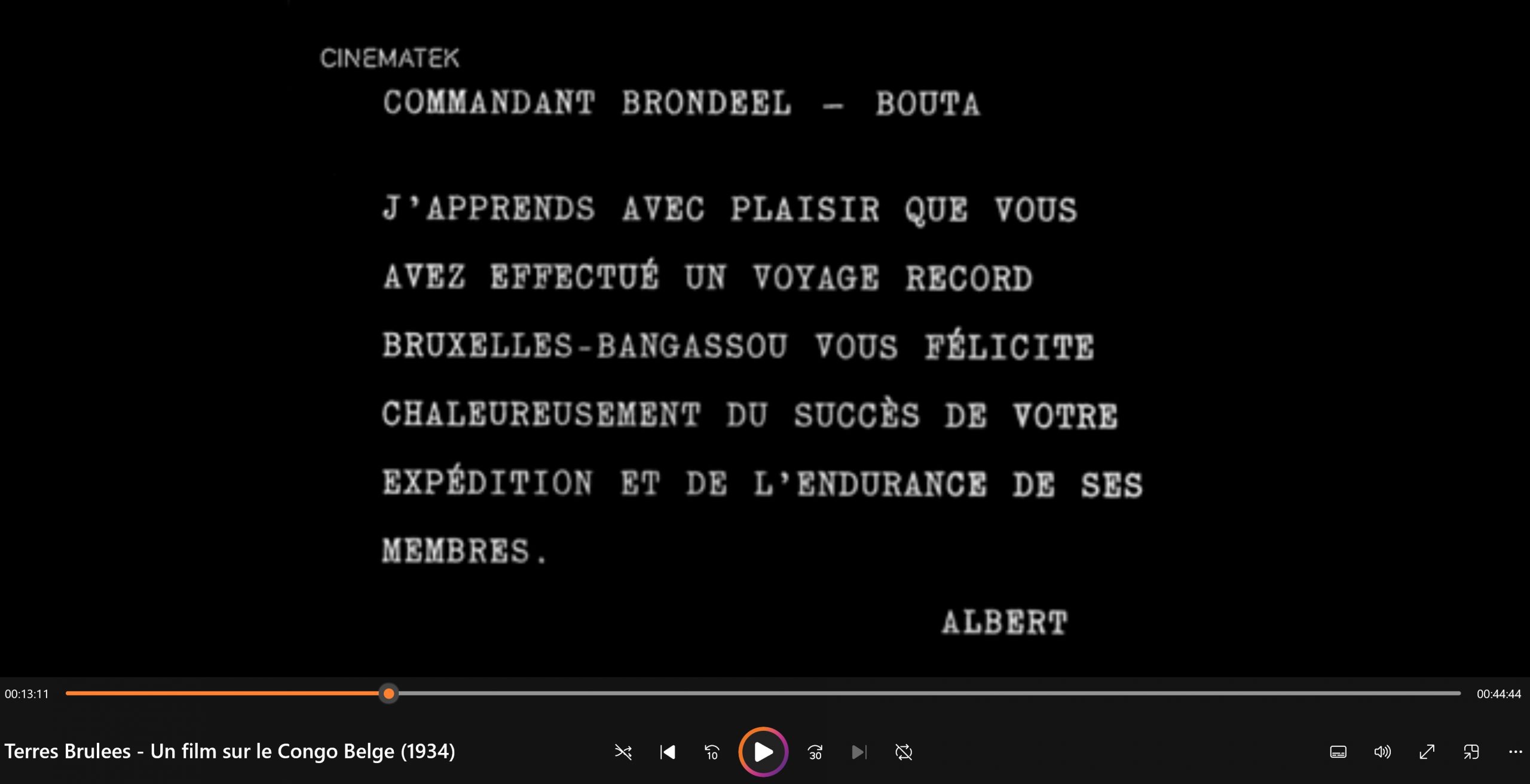
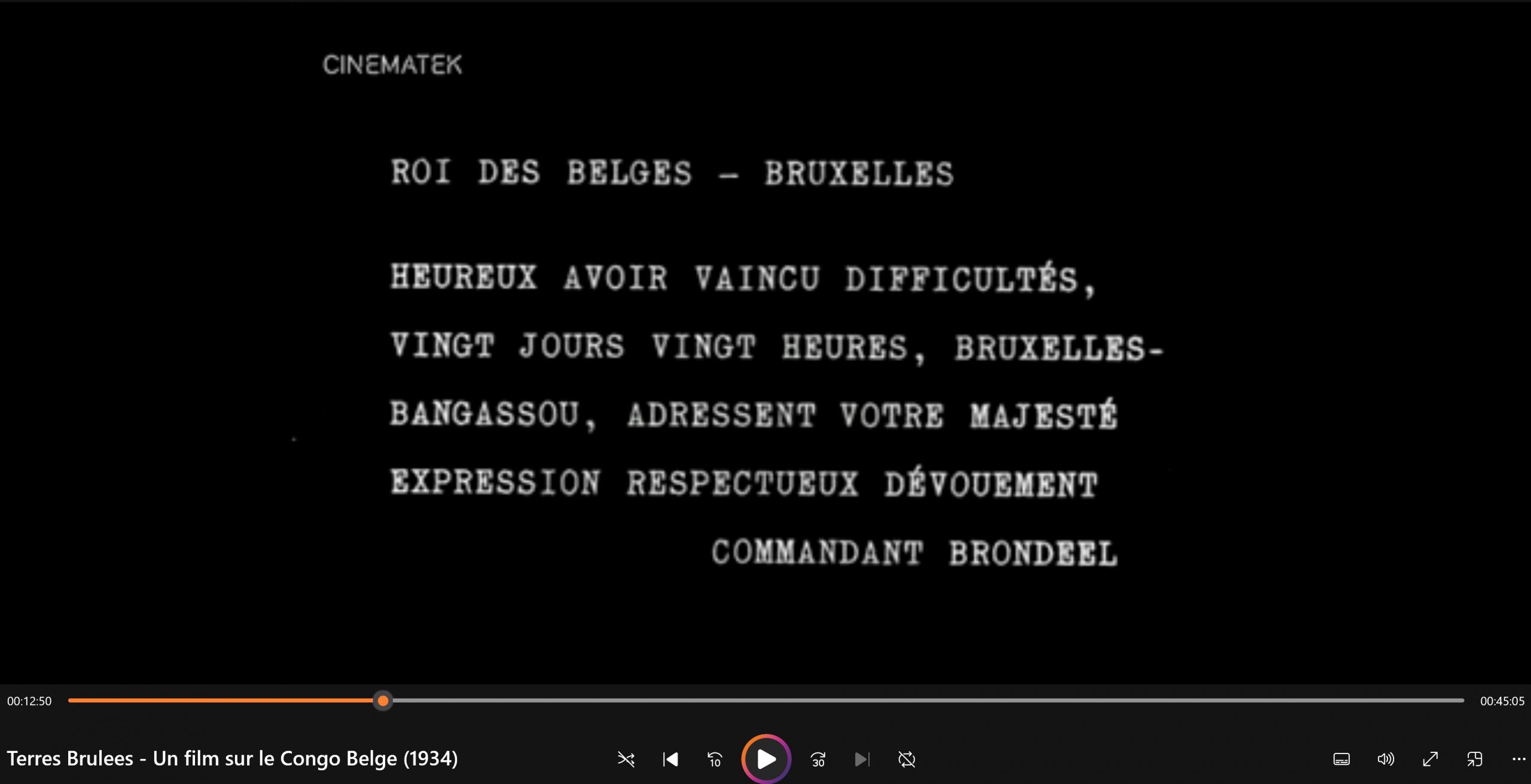


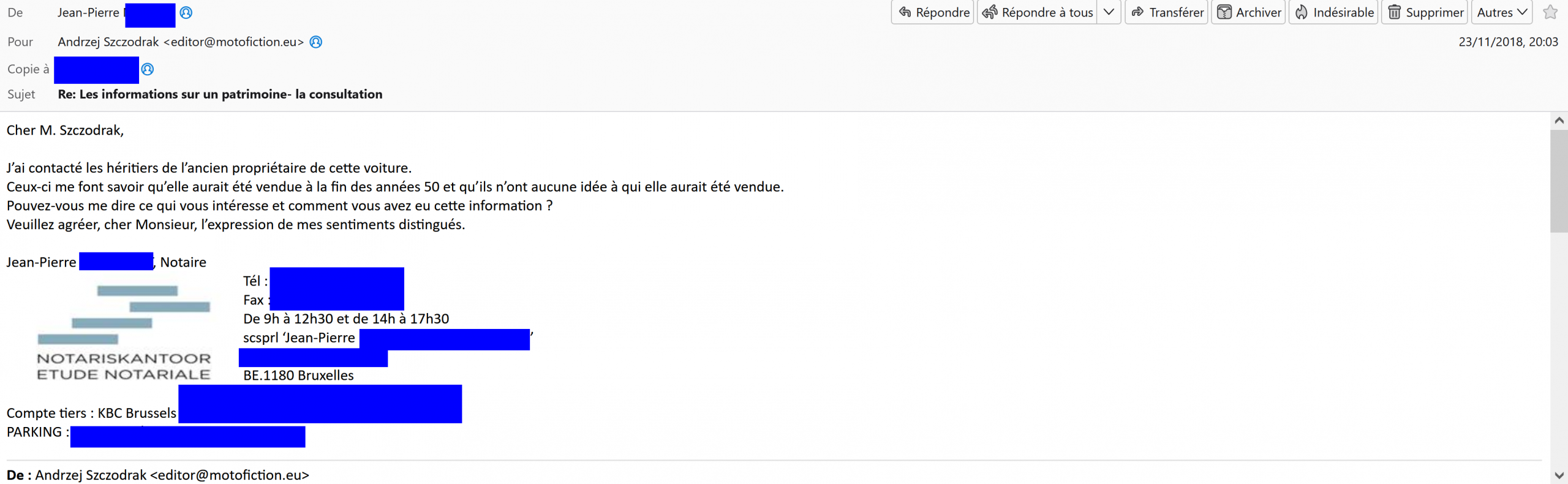
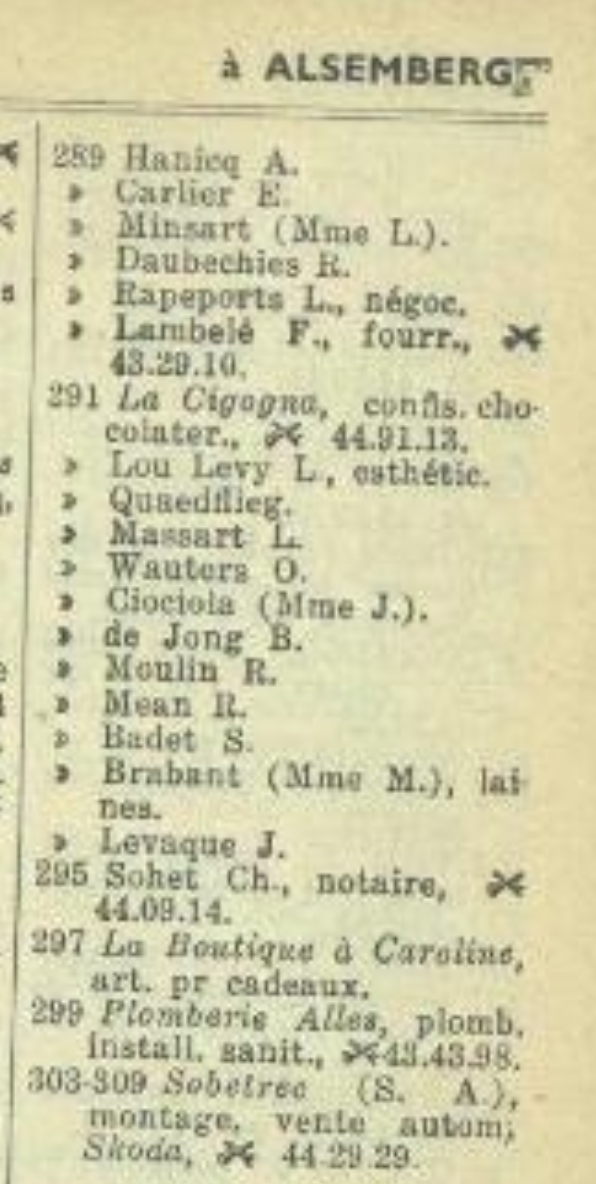



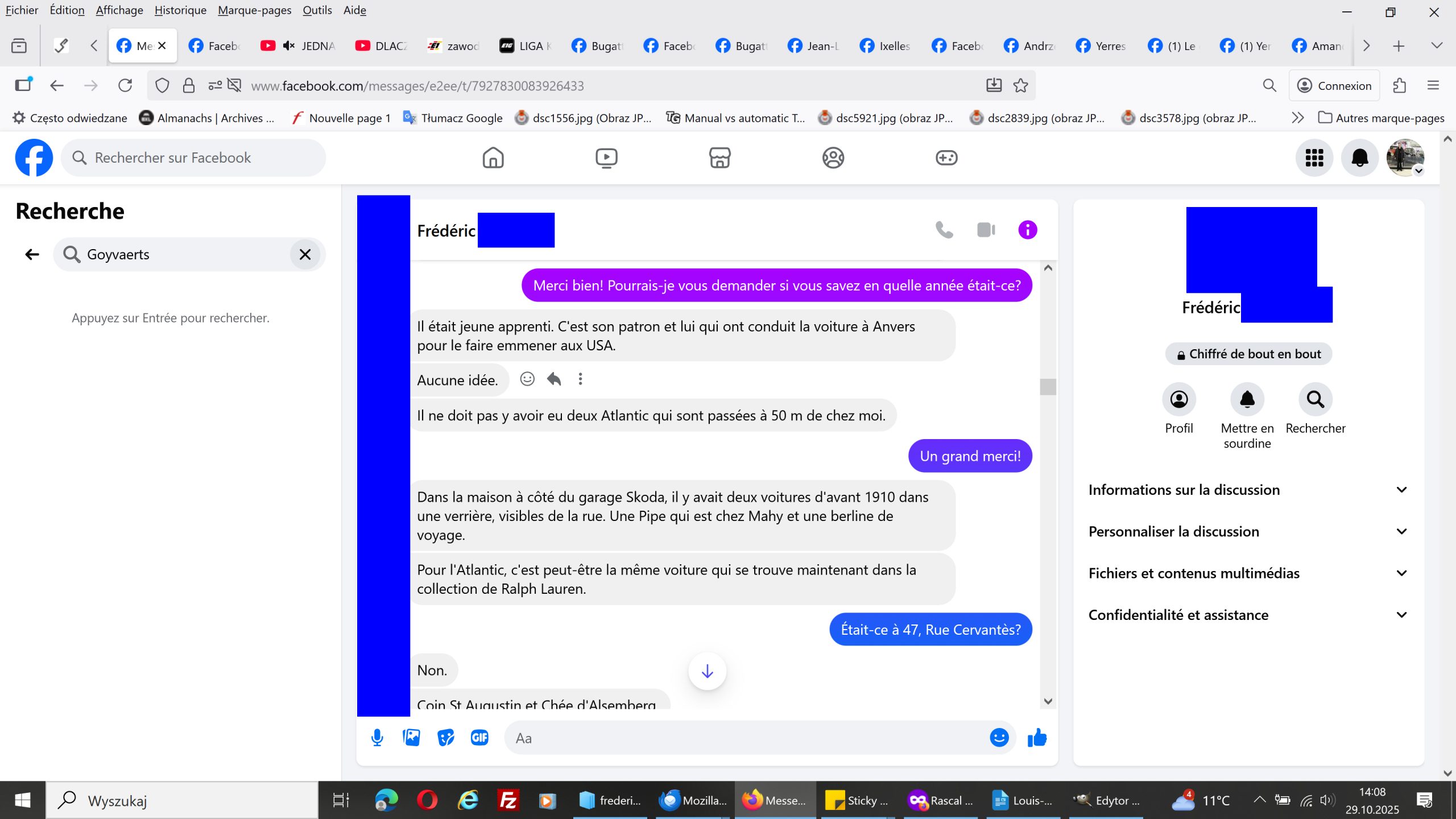

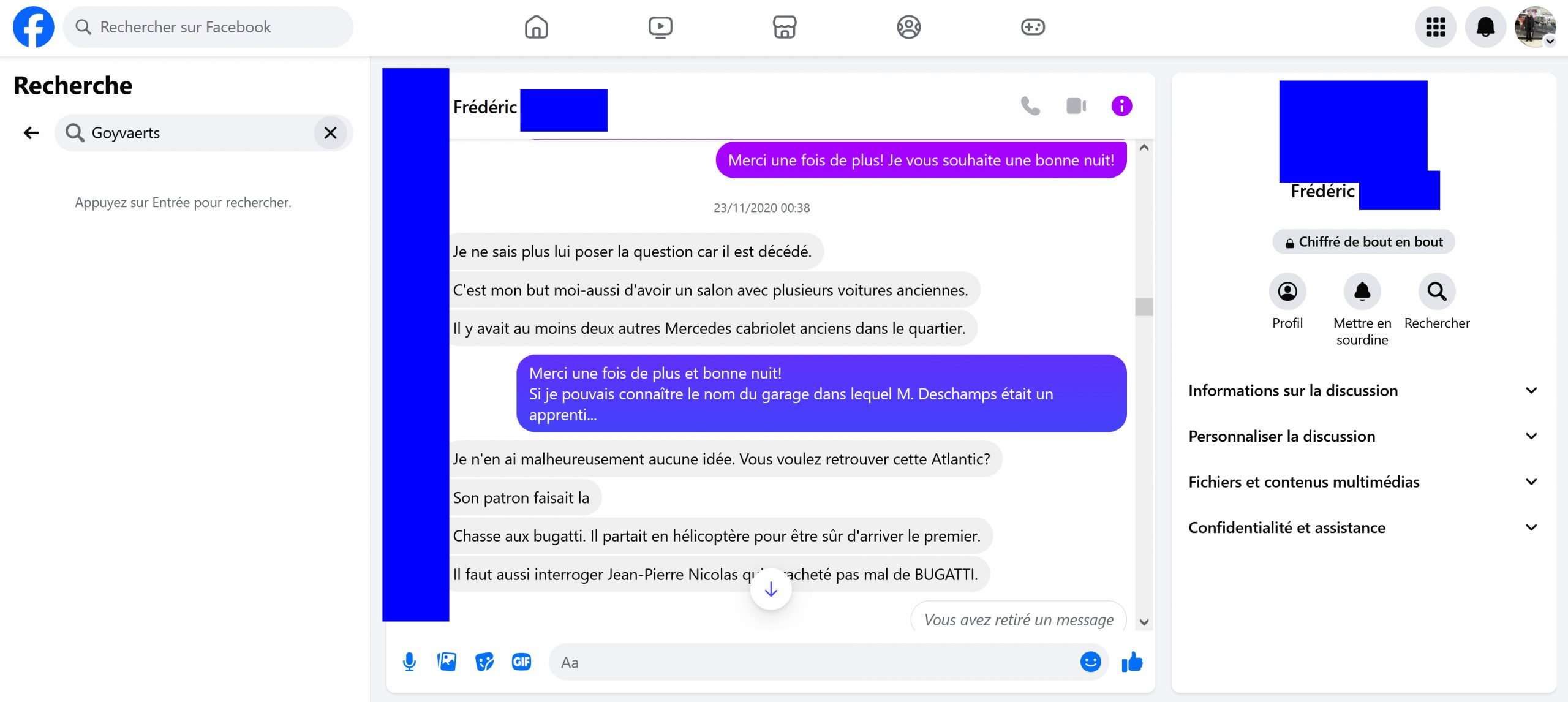

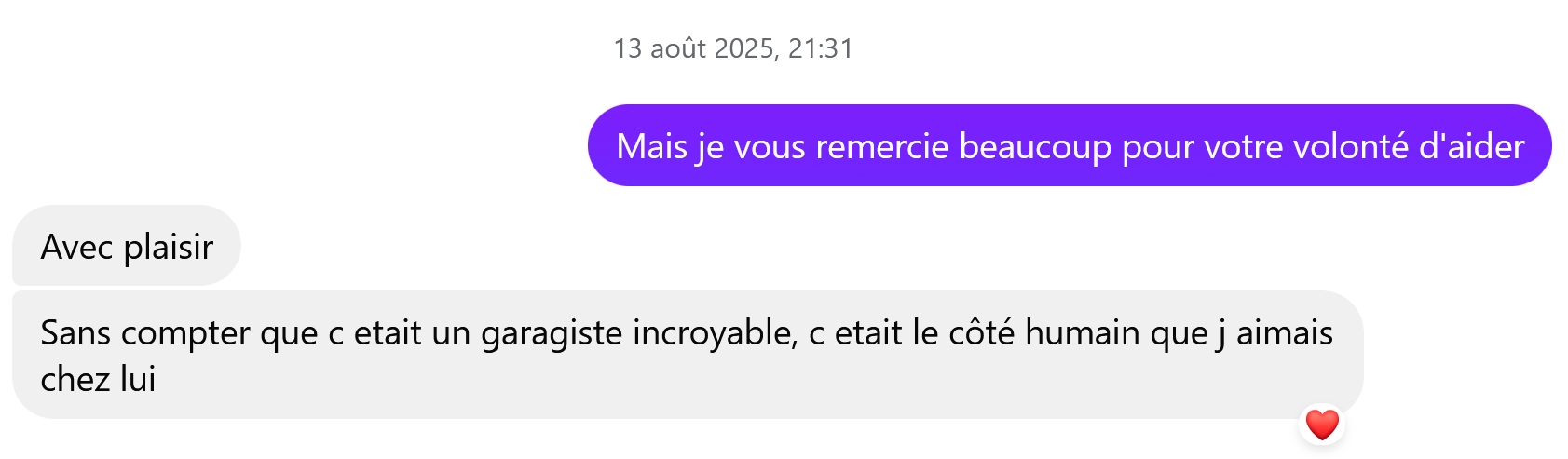

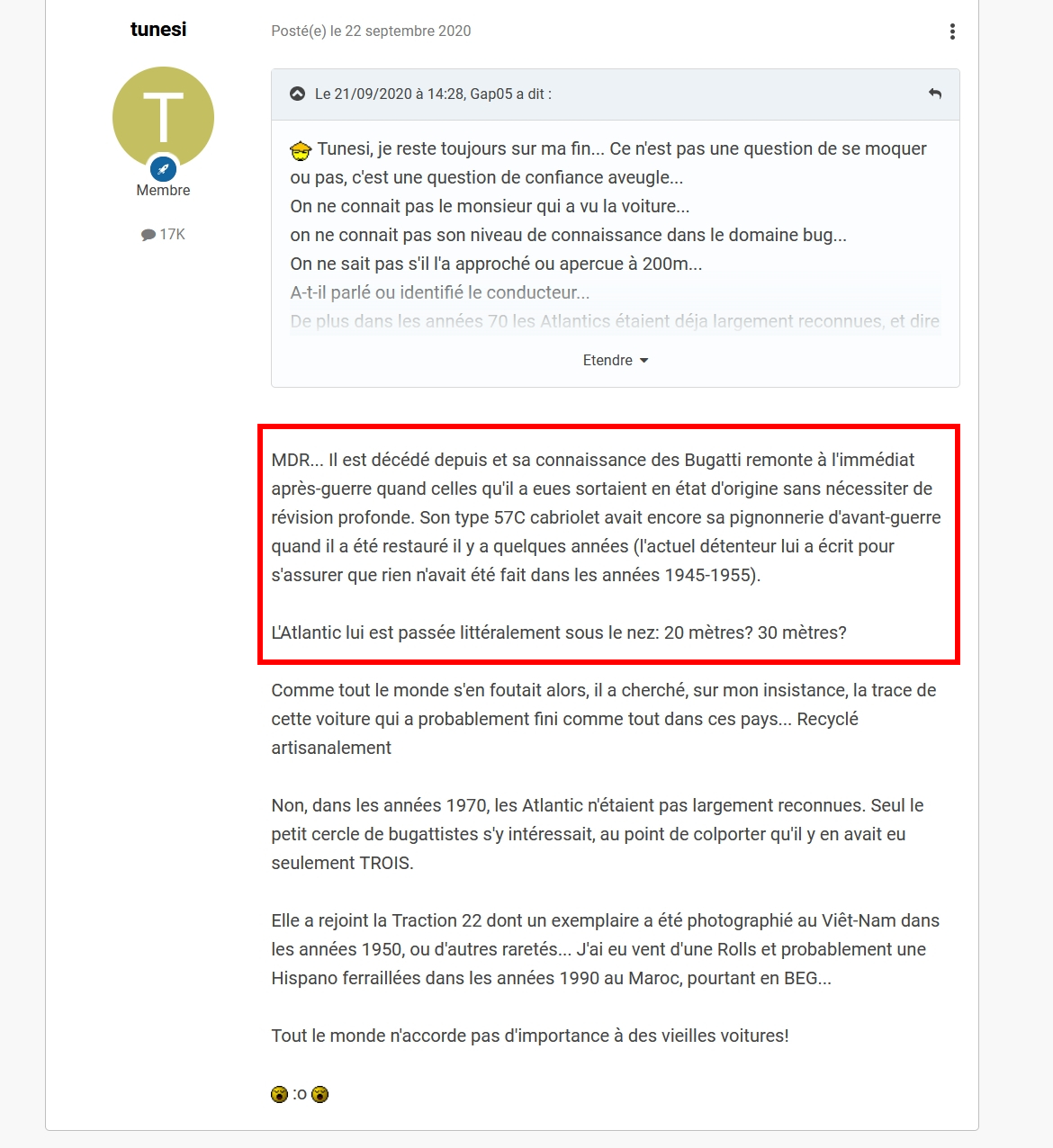






Awsome info and right to the point. I am not sure if this is actually the best place to ask but do you folks have any thoughts on where to get some professional writers? Thanks 🙂
My brother suggested I would possibly like this web site. He was entirely right. This put up truly made my day. You cann’t imagine just how much time I had spent for this information! Thank you!
Very interesting information!Perfect just what I was searching for!
Pretty component of content. I just stumbled upon your blog and in accession capital to say that I acquire actually enjoyed account your weblog posts. Anyway I’ll be subscribing on your feeds and even I achievement you access consistently rapidly.
Keep on working, great job!